 Flash News
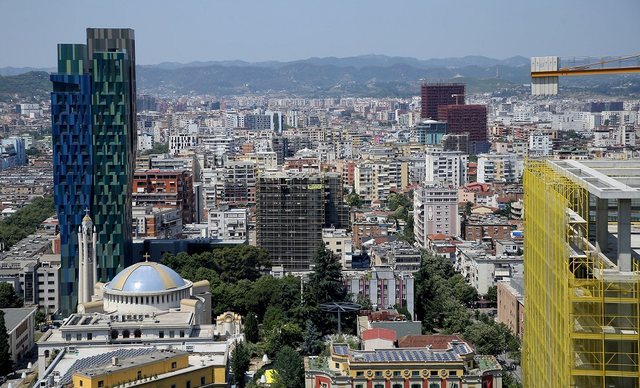
Juli has spent years working hard to build his family's pastry shop in Shkodra. But when asked what he expects from Albania's membership in the European Union, uncertainty is evident in his eyes.
"We've heard a lot. The children who live in Padua tell me that everything will be better and more orderly, but I'm worried that I won't be able to cope with these new rules," he says.
Juli's anxiety is a reflection of a more complex reality: European integration in Albania has for years remained a political monologue in the capital, without yet reaching businesses and citizens on the ground. While officials cheer record tourism and economic growth figures, citizens complain about the parallel increase in prices that makes this progress invisible to them.
The question that arises today is whether we are building a sustainable economy according to EU standards and which model awaits us across the border: the industrial success of the Czech Republic or the path of Bulgaria.
The growth paradox and the "bells" of Brussels
Beyond the official enthusiasm, the European Union is calling for deep reforms that touch the roots of our economic system. In its latest Progress Report, the European Commission issued a clear warning: “A large informal economy hinders the business environment and competitiveness.”
Although fiscal revenues have increased and the construction sector continues to expand at a rapid pace, Brussels notes that this growth is not being accompanied by sufficient structural reforms. The report points to weak competition, limited financial intermediation and unfinished reforms.
Economist Ornela Liperi says that European integration in Albania has been wrongly treated as a primarily political and electoral process, overshadowing market preparation.
"So far, the integration process has been seen more from two perspectives. The first, the political one, as a tool that parties and the government use as an argument to gain public trust and get votes. Second, from the perspective of individuals who are attracted by advantages such as free movement or opportunities for employment and study," says Liperi.
According to her, the main actor that will bear the brunt of this process, local business, has been left out of the spotlight.
"EU integration does not just mean opening chapters and approximating laws. It means profound transformation: a competitive economy, products that meet European standards, food safety, environmental protection, financial transparency and the fight against informality."
Between informality and oligopoly
Challenges on the ground remain chronic. The Progress Report highlights that informal employment increased again, especially in key sectors such as construction, tourism, services and tailoring.
Ekonomisti Zef Preçi argumenton se informaliteti i lartë, i cili vlerësohet të luhatet midis 28% dhe 32% të Prodhimit të Brendshëm Bruto në vitet e fundit, së bashku me mungesën e konkurrencës, janë minat më të mëdha në rrugën tonë europiane.
“Informaliteti përfshin aktivitete të padeklaruara, paga në të zezë, xhiro pa faturë dhe punësim pa kontratë. Ai ul bazën tatimore, shtrembëron statistikat dhe e bën të pamundur projektimin e politikave sipas standardeve të BE-së”, thotë Preçi. “Bizneset informale konkurrojnë me kosto artificialisht më të ulëta, duke dëmtuar firmat serioze dhe duke ulur motivimin për investime afatgjata.”
Përveç informalitetit, një tjetër shqetësim lidhet me përqendrimin e tregut, problem i ngritur shpesh në Parlament nga deputetë të të dy krahëve politikë, përfshirë Jorida Tabakun dhe Erion Braçen.
Preçi sjell si shembull tregun e karburanteve, ku indeksi Herfindahl-Hirschman, që mat përqendrimin e tregut, arrin nivele që sinjalizojnë oligopol.
“Në disa tregje kyçe, pak aktorë dominojnë dhe mbajnë çmimet lart. Kur bizneset besojnë se edhe tenderët publikë nuk zhvillohen mbi konkurrencë të vërtetë, kompanitë serioze tërhiqen. Krijohet një rreth vicioz ku pak kompani të lidhura me pushtetin përforcojnë pozitën e tyre dominuese”, shpjegon ai.
Modeli: ndërtimit & turizëmi?
Shtyllat që mbajnë në këmbë ekonominë aktuale — ndërtimi, turizmi dhe remitancat — po shihen me skepticizëm nga ekspertët për sa i përket qëndrueshmërisë afatgjatë.
“Modeli aktual është relativisht i qëndrueshëm në afatshkurtër dhe buron nga faktorë konjukturorë, por mbetet i brishtë dhe jo konvergjent me standardet e BE-së në afatgjatë”, argumenton Preçi.
Ai shton se ndërtimi është sektori më ciklik dhe më i ekspozuar ndaj luhatjeve.
“Shtimi i ndërtimeve pa rritje të produktivitetit krijon rrezik flluske në çmimet e pronave dhe kanalizon burimet financiare larg prodhimit dhe inovacionit.”
Në të njëjtën kohë, turizmi mbetet i ekspozuar ndaj krizave të jashtme, ndërsa emigracioni masiv që gjeneron remitancat po e zbraz paralelisht vendin nga kapitali njerëzor dhe forca punëtore e kualifikuar.
Mësimi nga Praga dhe Sofja
Për të kuptuar se ku mund të shkojë Shqipëria, mjafton të shohim historinë e dy vendeve të ish-bllokut komunist që u anëtarësuan në BE.
Çekia vend anëtar (2004); mbi 50 miliardë euro në Infrastrukturë, kërkim shkencor, inovacion, dixhitalizim.
PBB për frymë mbi 90% të mesatares së BE-së; papunësia ndër më të ulëtat në Europë; ekonomi e integruar plotësisht.
Në anën tjetër qëndron Bullgaria anëtarësuar (2007)
Rreth 20-25 miliardë euro investime në infrastrukturë dhe mbështetje e madhe për bujqësinë Por sot Bullgaria ende mbetet vendi më i varfër në BE; probleme kronike me korrupsionin; fonde të pezulluara shpesh nga KE; humbje masive e popullsisë nga emigrimi. |
This comparison proves that European funds are not automatically a guarantee of development. What makes the difference is the seriousness of the institutions and the ability of local businesses to face the competition of the common market.
"You don't know what strawberries you're eating"
According to Ornela Liperi, Albania is already late in preparing for the real economy. She recalls conversations with European officials raising the alarm about the lack of basic standards, such as traceability of food products.
"You don't know what strawberries you're eating," was the blunt comment of a senior European Commission official.
"If we want to be part of Europe, it is unacceptable not to have functional laboratories and guarantees for the origin and safety of products. Many Albanian businesses fear that they will not have the financial capacity to meet these standards and risk bankruptcy," says Liperi, adding that the government must urgently turn its attention from the ground to make the transition as painless as possible.
At the end of the day, billions in European funds are not magic; they are simply a tool. The Czech Republic showed that with strong institutions and vision, the EU can serve as a catalyst for economic development. Bulgaria proved that, without fighting corruption and informality, Brussels money can improve infrastructure, but not necessarily transform the economy.
Albania cannot see integration simply as a political trophy or as an opportunity for emigration. If institutions do not start today to prepare local businesses for the standards and competitiveness of the European market, EU accession may prove more challenging than expected.
Conversely, when Albania officially enters the European Union, pastry chef Juli in Shkodra and thousands of entrepreneurs like him may not find the large European market they expect, but the difficulty of surviving in it./acqj.al
Latest news
Is climate change strengthening the El Niño phenomenon?
2026-06-19 16:59:07
Israel and Hezbollah reach ceasefire agreement
2026-06-19 16:45:03
DP requests urgent interpellation with Rama regarding the protesters' 5 demands
2026-06-19 16:28:41
How prepared is the Albanian economy for the European market?
2026-06-19 15:55:28
Fight in Ali Demi area, one injured with a knife
2026-06-19 15:35:09
Murder of Santiago Malko, Special Appeal leaves Ilir Selmani under house arrest
2026-06-19 15:20:57
Two children drowned while bathing in the sea on Tale beach
2026-06-19 15:05:03
The 2026 World Cup "reds" early, red cards towards a historic record
2026-06-19 14:46:45
Albanian Language and Literature results for the 2026 Matura exam are published
2026-06-19 14:30:48
Two words about the boastful MP
2026-06-19 12:15:43
Mexico beats South Korea, advances to World Cup knockout stage
2026-06-19 10:57:14
The Transparency Board ceases to function
2026-06-19 10:17:33
Drought and flooding, scientists warn of the strongest El Niño in 140 years
2026-06-19 09:44:28
Oil in Albania costs 10.5% more than the European average
2026-06-19 09:09:11
Foreign exchange, June 19, 2026
2026-06-19 08:49:46
Protests/ Italian MEP criticizes Rama: Don't ignore citizens' demands
2026-06-19 08:27:27
With stable weather conditions, check out today's weather forecast
2026-06-19 08:12:37
Morning Post/ In 2 lines: What mattered yesterday in Albania
2026-06-19 07:55:49
Edhe makineritë e pajisjet në Shqipëri u kushtojnë bizneseve më shumë se BE
2026-06-18 22:53:17
EU announces strategic discussion on enlargement
2026-06-18 21:10:57
Brazil without Neymar in second World Cup match, striker rested
2026-06-18 20:54:31
Photo/ The moment when Rama's escort quickly leaves the crowd of protesters
2026-06-18 20:12:46
Rama in plenary session, protesters march towards Parliament
2026-06-18 19:27:06

Foods that help protect the skin from the sun
2026-06-18 18:23:48
Rama calls for expanded group meeting, focus on Koçek's departure
2026-06-18 17:48:27
Trump's Iran Deal and the 2015 Nuclear Deal: What's Different This Time?
2026-06-18 17:28:46
Doja "Metamorphosis", GJKKO sentences Pëllumb Gjoka to 6 years in prison
2026-06-18 16:17:35
A dead body was found in Ibë, suspected to belong to Eglant Koçi
2026-06-18 15:51:17
Shehaj against protesters' demands: We will go to the elections with Rama
2026-06-18 15:38:06
How the protests in Tirana gained international media attention
2026-06-18 14:21:14
Anti-cannabis operation in Kurbin, one person arrested, accomplice sought
2026-06-18 14:00:21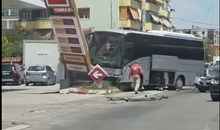
Accident at the entrance to Elbasan, bus collides with fuel sign
2026-06-18 13:51:19
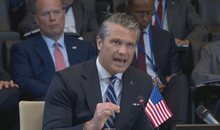
Hegseth explodes against NATO: We are reviewing our presence in Europe
2026-06-18 13:13:44
Excavations reveal mosaics from an early phase of the Elbasan Basilica
2026-06-18 12:55:41
Tensions in the trial against Meta, Kryemadhi and lawyer Cakrani fined
2026-06-18 12:37:26
56 million euros spent, no functional plant: Tirana "floats" in sewage
2026-06-18 12:29:00
The mayor of Roskovec appears before SPAK
2026-06-18 12:19:46
"Don't point the finger at me," parliamentary session is interrupted again
2026-06-18 12:05:28
The banner that "touched" Klosi: Rama or Bela, who was the reason?
2026-06-18 10:41:15
The signing of the US-Iran agreement lowers the price of oil on world markets
2026-06-18 09:49:07
Eating these foods helps cool the body during the summer heat
2026-06-18 09:41:18
Long lines and missed flights: EU warns of border easing during summer
2026-06-18 08:58:04
Prices 'fly', wages lag behind/ Albania surpasses the EU in food prices
2026-06-18 08:16:14

Weather forecast for today
2026-06-18 07:45:37