
 Flash News
Suspect in Velipoja massacre escapes, police searching for Hasan Ferracak
Check out the weather forecast for today.
The full decision of the Constitutional Court on the Veliaj case is revealed
Mexico's World Cup qualification celebrations turn into tragedy, three fans lose their lives
SPAK requested prison, GJKKO declares Majlinda Bufin innocent
Alarming figures/ In 55 out of 61 municipalities, the number of the population suffered a drastic decrease

Politiko
2024-08-25 09:10:09

The new population map that emerged from the 2023 Census shows that in the municipalities of the North, investments should be focused on education, while in the South on the elderly. The high concentration of the population in Tirana-Durres lays the need for greater investments in infrastructure, as the education sector must be completely reformed in the provision of services. Five municipalities have less than 5 thousand inhabitants, while a quarter of the municipalities (15) had less than 10 thousand inhabitants. 52% of the population lives in 7 municipalities, Tirana, Durrës, Elbasan, Shkodër, Fier, Kamze and Vorë, while 48% of the population lives in 54 other municipalities. New needs in education, services and infrastructure
The country's public institutions will have to carefully read the new Cens 2023 population map, in order to reformat educational policies, social services and especially investments in infrastructure.
The big centers, especially Tirana and Durrës, have increased further since 2011, as investments in the infrastructure of these cities have not moved at the same pace.
The new data show that a quarter of the population lives in the Municipality of Tirana from a fifth in 2011. In Durrës lives 6.4% of the country's population from 6.3% in 2011, while in all other municipalities, the population has suffered decline
In many of them, the closing of schools is signaled due to the decrease in the number of children, and in many others, investments must be made in social service networks for the elderly.
Mainly in the small municipalities of the South and Southeast, Himarë, Finiq, Pustec, Dropull, Selenica, Libohovo, the dependency ratio of the elderly (the percentage of the population +65 to the labor force) is very high at over 50%.
The data show that the government should increase investments in education in the cities of North, Has, Kukës, Dibra, Kamza and extend services for the elderly in the South of the country.
Businesses will find it easier to find employees in Tirana since the elderly population is concentrated in this region.
After extending the disclosure of preliminary data by at least 6 months compared to 2011, INSTAT did not publish one of the most important data of Cens 2023, the population living in rural and urban areas, while more than half of the publication of The first Cens devoted to the educational level of the population unable to work.
Urban planner Gent Kaprata said the census data confirmed what urban planners had announced. The high pace of construction in Tirana is not justified with the resident population from Census 2023. He said that around 40 billion euros have been invested in apartments and houses that are not needed throughout the country.
In a previous special interview for "Monitor", the director of INSTAT Elsa Dhuli, said that the reduction of the population and not only, as the structure of the population has undergone a series of changes, with the reduction of the dependency ratios of young people and the increase of the ratio of elderly dependency, can have multiple and complex impacts on the country's official indicators, as well as on the services provided, the education system, primary health care, the pension scheme, urban development, etc.
Municipalities that are in danger of disappearing
The new territorial reform of 2014 significantly reduced the number of local units from about 370 to 61 municipalities. The former communes were transformed into administrative units and the public services of the villages were concentrated in the cities.
The relocation of many services to the centers of the four regions has caused internal immigration of the population, influencing some small municipalities to be further reduced in population.
The 2023 Census data shows that the average population for a municipality fell by 39,337 inhabitants, from 45,885 in 2011, a reduction of 14.1%. But for some municipalities, the reduction has been stronger.
Five municipalities of the country, Pusteci, Libohova, Këlcyra, Fushë-Arrëzi and Konispoli had less than 5 thousand inhabitants, while a quarter of the municipalities (15) had less than 10 thousand inhabitants.
On the other hand, only 5 municipalities have more than 100 thousand inhabitants, Tirana with 598,176, Durres with 153,614, Shkodra with 102,434 and Fieri, with 101,963 inhabitants.
The municipalities of Shkodra, Elbasan, Durrës, Vlora and Fier have suffered the largest decrease in population in number with the data of the 2011 and 2023 Census. On the other hand, the largest increase in population in number has the Municipality of Tirana, Dropulli, Himara and Saranda.
In percentage terms, the municipalities with the largest population decline between the two censuses are the Municipality of Selenica, with 48%, Pustec with 43%, Puka with 44% and Rrogozhina, with 43%.
On the other hand, the population of the Municipality of Dropulli has increased by 135%, that of Himara by 45%, the Municipality of Saranda by 11% and that of Tirana by 7.3%.
The population according to municipalities shows that Shkodra has suffered the biggest decrease in numbers. In the Municipality of Shkodra, in October 2023, 102,434 inhabitants were counted from 135,612 inhabitants in 2011.
Shkodra is the capital of the North and one of the largest Albanian cities with importance in terms of culture, history and geographical position.
Also, the Municipality of Shkodra is one of the richest in natural resources and with high development potential. But all these advantages were not enough for the residents to leave.
After Shkodra, Elbasan had the largest decrease in population with a decrease of 26,613 people between the two censuses. In 2023, 115,101 inhabitants were counted in this city out of 141,714 in the 2011 census.
The municipality of Durrës decreased by over 21 thousand inhabitants. Elbasan and Durrës are part of the metropolitan area. Residents of these two cities have more employment opportunities than in other suburban regions.
The municipality of Tirana, the largest in the country, which is a center of gravity compared to others for internal emigration, has only increased by 40,754 inhabitants from 2011 to 2023.
The increase in the population of the capital is not good news for the builders in the capital, who have built for wrong projections so far with data that Tirana grows by 20-25 thousand inhabitants per year.
The data of the 2023 census show that there is a significant increase in the population in the municipalities where the Greek minority dominates. For example, in the Municipality of Dropulli in 2023, 8259 inhabitants were counted, while in 2011, only 3503 inhabitants.
While the population of the entire country has decreased by at least 14.8% from 2011 to 2023, in the Municipality of Dropulli the population has increased by 135%.
Also, the population in the Municipality of Himara in 2023 was 45% higher than in 2021. In this municipality, the 2023 Census data showed 8328 inhabitants, from 5738 inhabitants in 2011.
In the Municipality of Saranda, the population between the two censuses increased by 11.8% or by 2386 more inhabitants.
Out of 61 municipalities, only in 6 municipalities the population increased between censuses, while in 55 of them it was decreasing.
In addition to unions with minority populations and Tirana, the population of the Municipality of Berat (+2201 inhabitants) and Dimal (840 inhabitants) has also increased./ Monitor.al
Latest news
Balla attacks protesters: A group of social and political garbage
2026-07-02 13:16:48



Plenary session ends, protesters throw eggs at cars of SP MPs and ministers
2026-07-02 12:20:26








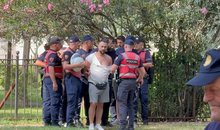

Parliament is armored before the protest, SP MPs enter early to avoid protesters
2026-07-02 09:18:08


Check out the weather forecast for today.
2026-07-02 08:29:47
Following Paloka, Julia Emiri is elected head of the DP National Council
2026-07-02 08:11:44
Morning Post/ In 2 lines: What mattered yesterday in Albania
2026-07-02 07:58:18

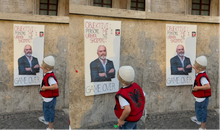
PHOTO NEWS/ "Rama, the most hated man in Albania"
2026-07-01 21:29:16
"DP will be renewed", Zhupa: We are creating a team for the new elections
2026-07-01 21:13:18




32 days of protest, Albanians determined to remove Rama
2026-07-01 19:32:54


The full decision of the Constitutional Court on the Veliaj case is revealed
2026-07-01 18:42:05
Lawyers' absences delay the Fier incinerator process in the Special Appeal
2026-07-01 18:04:05
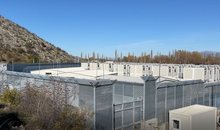
MEPs denounce obstacles in Gjadri camp, were not allowed to inspect cells
2026-07-01 17:24:39
MEPs did not receive guarantees from the Albanian government for Zvërnec
2026-07-01 16:58:34
Mexico beats Ecuador and secures ticket to the 1/8th of the World Cup
2026-07-01 16:38:36

Confidence in the economy falls in June, driven by services and construction
2026-07-01 15:44:15

Writer Ylljet Aliçka is declared "Honorary Citizen of Cologne"
2026-07-01 15:18:48

85% of people worry about things that never happen to them
2026-07-01 14:50:26
Vrau dhëndrin, Gjykata e Lartë prish dënimin me burg përjetë të Mexhit Picarit
2026-07-01 14:17:02
Berisha dënon ndërhyrjen e policisë në protestë: U ushtrua dhunë shtazore
2026-07-01 13:57:38
Berisha: Raporti i PPE sugjeron qeverinë teknike si zgjidhje, mbështet PD-në
2026-07-01 13:40:16
Dhunohet nga dy persona analisti Ilir Demaliaj
2026-07-01 13:23:29

Changes in the State Police, new leaders appointed in several police stations
2026-07-01 12:54:51


53% of deaths in Albania are caused by heart disease
2026-07-01 11:52:56

"Resign", Rama is expected with protests from Albanians in Düsseldorf
2026-07-01 11:18:24
SPAK requested prison, GJKKO declares Majlinda Bufin innocent
2026-07-01 11:02:31
"A short and cordial conversation", Berisha meets the Chancellor of Austria
2026-07-01 10:47:56
Protesters gather in front of SPAK, file lawsuit against “Albanian Files”
2026-07-01 10:32:25
Flamingos and three premises
2026-07-01 10:24:49



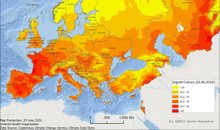
Map/ Albania among the areas most affected by the heat wave in Europe
2026-07-01 09:09:16


Horoscope, get to know the star forecast
2026-07-01 08:22:19
Stable and cloudy weather, forecast for this Wednesday
2026-07-01 08:09:33
Morning Post/ In 2 lines: What mattered yesterday in Albania
2026-07-01 07:54:58
Politico: "Flamingo Revolution" Escalates, MEPs Support Protest
2026-06-30 22:02:17
Cardinal Ernest Simoni Troshani visits the United Kingdom
2026-06-30 21:47:33

Haaland sends Norway into quarterfinals, Brazil next obstacle
2026-06-30 21:19:26

Fatal accident on the Durrës-Tirana highway, protesters hold 1 minute of silence
2026-06-30 20:46:28
"The people are violated, Belinda is honored", spicy banners from the protest
2026-06-30 20:22:04
Dy aksidente ne Pogradec, plagosen dy persona
2026-06-30 20:01:04

BE-ja nis përgatitjet financiare për anëtarësimin e Malit të Zi
2026-06-30 19:18:02
Star architects and power over territory
2026-06-30 18:45:24


Amid protests, Rama issues "check" for pensioners, 5 thousand lek summer bonus
2026-06-30 17:50:12


Arrests at Parliament, Dritan Goxhaj and two other protesters released
2026-06-30 16:55:04






Berisha condemns violence against protesters: I demand their immediate release
2026-06-30 15:28:35
Video/ Tensions at Parliament, police drag and lay young man on the ground
2026-06-30 15:17:25