 Flash News
Marta Kos's statement, DP reacts: It is based on Rama's false information
Neo-mountaineering and Neo-security
Ronaldo continues to defy time, sets new World Cup record
Rama is outraged by the EP report: Either Europe has gone crazy and corrupt, or there is something wrong...
Albanian academics abroad support protests: Government failures have brought about this crisis
The scandal of dubious diplomas: How accusations of plagiarism at the highest levels were "buried"

Politiko
2026-04-13 09:42:34
By Vincent Yusui van Gerven Oei
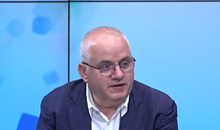
In October 2018, Taulant Muka, a young Dutch-educated epidemiologist, came to public attention after denouncing several senior members of the Socialist Party (SP) government for plagiarism. Among them were former Deputy Minister of Education Ervin Demo, SP MP Blerina Gjylameti, former Minister of Health Ogerta Manastirliu (temporarily rumored as a candidate for mayor of Tirana), former Minister of Defense Mimi Kodheli, SP MP and important figure Taulant Balla, as well as former director of the National Agency for the Information Society (AKSHI) Miranda Karçanaj (arrested for corruption), and former LSI leader Monika Kryemadhi (accused of corruption).
In all cases, Muka presented concrete evidence of plagiarism, including direct comparisons between the officials’ doctoral theses and dissertations and the copied materials. For example, Balla received his doctorate in 2015 with the maximum grade “summa cum laude” from the University of Iași in Romania, after copying extensive parts of Andrea Renda’s study “Policy-Making in the EU: Achievements, Challenges, and Proposals for Reform” for the Center for European Policy Studies in Brussels, in his thesis “The Reform of Decision-Making System in the European Union”.
The case was investigated by the university and forwarded to the Ministry of Education, but then “disappeared.” Of all these cases, only Demo – today the State Minister for Local Government – ended up leaving his post, being transferred as mayor of Berat.
In response, Prime Minister Edi Rama offered Muka the position of Deputy Minister of Education, replacing Demos. His appointment was seen as a common tactic, still used, to include government critics in formal positions to appease them and soften criticism. But just two weeks later, Muka resigned, citing “ethical, moral and professional reasons, as well as incompatibility with the work model at the Ministry of Education.”
Despite his successful career, which has taken him from Erasmus Medical Center in Rotterdam to pharmaceutical giant Novo Nordisk, the Institute for Preventive Medicine in Bern and the Center for Preventive Research at Stanford, Muka remains a prominent critic of the Albanian education system and academic standards. He agreed to speak about his engagement with Albania and how he sees the future of science and academia.
How did the concern about the quality of education and then about the academic credentials of politicians begin?
I was a medical student in Albania and have been protesting for the quality of education ever since. At that time I had no experience abroad and the internet was not like it is today. When I went to the Netherlands for my master's, doctorate and postdoctorate, I understood the problem more and more. There I realized that to become a professor you need publications, scientific research, grants and innovation. These things were missing and still are missing in Albania.
It all started with a TV show where I explained how to become a professor. I jokingly said, “What if I make my grandmother a professor?” And I tested some magazines where even a person without a higher education could publish articles. Some of them accepted.
This showed that even people without basic education could meet the “criteria” for a professor in Albania. Then I started investigating the cases of officials and found numerous plagiarisms. This showed that the problem was much bigger.
Muka explains that he was invited to the government as a deputy minister to “stop criticism from abroad,” but left after two weeks, as he saw no functional structure and no will for real reforms. He describes an administration that lacked procedures, transparency, and where the focus was on social media and public image, not on reforms.
He also criticizes the academic system, political interference in universities, corruption in higher education, and the lack of meritocracy. According to him, Albania has a system that produces diplomas without real quality and encourages young people to leave the country.
Muka warns that artificial intelligence will worsen the situation, as it will increase the number of diplomas, but not the quality of scientific research.
He says that the current system is oriented more towards political employment than scientific development, and that research funds are often administered by people without scientific qualifications.
According to him, mass emigration, lack of standards and political propaganda are severely damaging the education system and the country's development./ The Albanian Mechanism
Latest news
Actor and director Gjergji Lala dies at the age of 79
2026-06-17 22:14:10
Marta Kos's statement, DP reacts: It is based on Rama's false information
2026-06-17 21:37:31
A debut to forget, Ronaldo fails to make the difference in Portugal's equalizer
2026-06-17 21:22:15

Neo-mountaineering and Neo-security
2026-06-17 20:16:49
Ronaldo continues to defy time, sets new World Cup record
2026-06-17 19:52:19

Does Botox go to the brain? Here's what doctors say
2026-06-17 19:00:18
Suspected call center fraud scheme busted in Tirana, 7 arrested
2026-06-17 16:51:11
SP reacts after Koçek's statement about Eid
2026-06-17 14:51:45
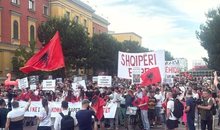
Protest/ Police prosecute 16 citizens and announce 2 others wanted
2026-06-17 14:01:20
EP report on Albania, alarm on elections, corruption, media and environment
2026-06-17 13:46:15


Renowned actor Gjergji Lala dies
2026-06-17 12:30:31
45-year-old man in Memaliaj injured after falling from scaffolding at work
2026-06-17 12:14:54
Eurostat: Albania, penultimate in Europe for well-being
2026-06-17 12:00:59
Berisha: DP supports the protest, Rama leads a regime without legitimacy
2026-06-17 11:34:55
Transparency Board sets new fuel prices, diesel and gasoline prices decrease
2026-06-17 11:24:32

Search continues in Ulza Lake for missing 37-year-old
2026-06-17 10:40:55

Nosebleeds and stress: what you need to know
2026-06-17 10:21:39
Cocaine trafficking network dismantled in Athens, 11 Albanians involved
2026-06-17 10:11:29
General Eric Wendt confirmed as US Ambassador to Albania
2026-06-17 09:58:32
Brazil-Morocco match breaks World Cup viewership record
2026-06-17 09:49:50
Accident in Fier-Lushnjë, two people end up in hospital
2026-06-17 09:12:44
Foreign exchange rate June 17/ How much the dollar and euro are bought and sold
2026-06-17 08:56:35

MEP raises voice on protests in Albania: Where is public money going?
2026-06-17 08:12:17
17 countries support US-Iran deal, call for immediate implementation
2026-06-17 07:53:26
Rain is expected in some areas, according to the weather forecast today
2026-06-17 07:19:03
Morning Post/ In 2 lines: What mattered yesterday in Albania
2026-06-17 06:59:23
Alimehmeti: Rama's resignation would pave the way for a transitional government
2026-06-16 22:51:14

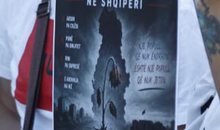
"Killed dreams in Albania", the spicy banners from the 17th protest
2026-06-16 21:17:28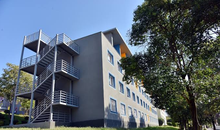
No alarm, no emergency exit: how students live in Student City dormitories
2026-06-16 21:02:08
Yamal's World Cup debut comes with a special dedication
2026-06-16 20:38:10
Protest schedule postponed due to high temperatures
2026-06-16 19:15:32
These 3 zodiac signs are considered ideal vacation companions
2026-06-16 18:54:57
With the red and black flag, tourists join the protest against Rama
2026-06-16 18:31:36
Secret destination in Europe where US-Iran deal expected to be signed revealed
2026-06-16 18:20:34
SPAK "freezes" the criminal group's luxury, seizing 150 million euros of assets
2026-06-16 17:44:56
Zhupa: Berisha will soon have meetings in the US
2026-06-16 17:22:37

Trump: The deal clearly states that Iran will not have nuclear weapons
2026-06-16 16:27:56
Why our brains don't function well in high-pressure situations
2026-06-16 16:19:13
How to stay safe while traveling in extreme heat
2026-06-16 15:39:24
Who is Dritan Gjika, the Albanian drug trafficking mafia in Ecuador?
2026-06-16 15:16:09
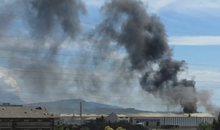
Large-scale fire at the former Metallurgical Plant in Elbasan
2026-06-16 14:43:46

World Cup icon signals end of career after 2026 World Cup
2026-06-16 13:53:07