 Flash News
Day 24 of the protest, I came from America, thousands will come!
Accident in Gjirokastra, a tourist van collides, two injured
Shocking in Prrenjas/ 69-year-old man sets his wife on fire, jealousy as the reason
Spiropali mocks Rama: Lightning bolts, algorithmic control and lewd language
American Chamber of Commerce raises alarm: Corruption and monopoly are hitting businesses in Albania
Industrial-Scale Kleptocracy: The Rise of Albania’s "Super-Electors"

Politiko
2026-04-22 16:16:52
Edi Rama is now living out his own jokes and provocations in reverse. There was a time when he wielded an axe to cut the "Gordian knot" of a wooden utility pole—leaning like the Leaning Tower of Pisa on a roadside where he intended to lay asphalt and line the pedestrian path with red plum trees. Yet, he has spent the last decade planting red and grey towers in every spot that once held a modest parking lot, a crooked pole, or a "broken-hearted" Tirana villa from the Zog era. Rama’s axe has been in a race with the Lictor’s fasces; but while the Italian influence laid out a symmetrical "T" that still makes the capital bearable, Rama’s axe has risen vertically in the form of skyscrapers—a fellatio performed by the former artist upon the former city.
Another of his signature tropes centers on money. "There is no mother’s son—or son of a whore—who can find their own money in my pockets," goes the phrase, serving as both an accusation and a defense. Rama has constantly played the role of the artist in love with his work and himself, someone supposedly indifferent to wealth.
His political legacy, however, tells a different story. He deepened hedonism, multiplied the number of greedy plutocrats surrounding him, and turned Albania into a nation obsessed with cash. Wealth at any cost, by any means—a monetary Machiavellianism where the parvenus grew rich overnight while genuine heritage was thinned out in favor of a "Year Zero" system. An Albania built like this cannot think about education, security, culture, or social cohesion; it thinks only of constructions, resorts, concerts, and mass tourism—all facades of a "Potemkin village."
This culture of a monetary boom created a new class of officials and power-brokers whose wealth grew exponentially. This mirrored the realization that elections are no longer a race, but "booty" that goes to the strongest—to those with the most resources.
This class can be dubbed the Super-Electors: a special corps that manages a massive electoral infrastructure from A to Z. The task of this special unit is threefold: To create the election "war chest; To manage the voter database; To run a simulation-manipulation system that makes voting look like an election.
To ensure this rot didn't break under its own weight, Rama positioned himself at the helm. He worked to empower these individuals within key institutions while simultaneously crafting a defensive narrative of "public servants" who live humbly. A prime illustration of this is Mirlinda Karcanaj, who, according to Rama, lived in a rented apartment and previously stayed with her parents in a communist-era building—the kind of "heart-wrenching" tales he loves to spin.
However, a seizure by SPAK (Special Anti-Corruption Structure) revealed a different reality. Officials from AKSHI (National Agency for Information Society), including Rama’s "ascetic" director, had accumulated assets worth tens of millions of euros. And remember: this is only the portion that was discovered. Imagine how many more millions likely sit in offshore banks, in foreign real estate under aliases, or in diamonds and gold bars—assets easy to possess and hide.
This reveals more than just the hypocrisy of "suffering champagne socialists." It exposes a systemic theft on an industrial scale that cannot be brushed aside with quips about those "eating plums behind my back" or similar nonsense.
Rama’s strategy has been clear: the creation of such massive personal and group wealth that it makes the systematic manipulation of elections possible. Even in the event of an upset or loss, this wealth is intended to serve as a base to make life impossible for political opponents and to engineer a swift return to power.
This means that Rama’s primary concern during these 13 years in power has not been the State, but the Deep State.
Latest news


Tourists join protest: We are not afraid, you are wonderful
2026-06-23 21:11:35
Protester: On July 4th, the diaspora will be here with us in the square
2026-06-23 20:45:34
Ronaldo sets historic World Cup record
2026-06-23 20:25:50
Former OSCE Deputy Ambassador in Tirana joins protest for Edi Rama's resignation
2026-06-23 20:07:37

Day 24 of the protest, I came from America, thousands will come!
2026-06-23 19:31:29
Librazhd-Prrenjas road blocked again
2026-06-23 19:16:06
Equality before the law: the deputy and the guardian
2026-06-23 18:10:28
Modric makes history, plays 200th match with Croatia tonight against Panama
2026-06-23 17:50:24
Accident in Gjirokastra, a tourist van collides, two injured
2026-06-23 17:29:07
Tonight England-Ghana for first place in the group, Croatia also on the field
2026-06-23 17:08:42

Si u kthye një investim në një lëvizje antikorrupsion në Shqipëri?
2026-06-23 16:00:13
Italia sekuestron dy miliardë euro asete të oligarkëve rusë
2026-06-23 15:36:38
Piktori ndërton një Shqipëri ku nuk do të ketë vend për shqiptarët!
2026-06-23 15:20:27

Fresh, elegant and bold: the color that is challenging summer
2026-06-23 14:45:21
Ylli Zalla escapes from RENEA, another pistol is found in her apartment
2026-06-23 14:36:22
He who curses his people in English
2026-06-23 14:17:17
The 2026 World Cup takes over the screens, breaking viewership records
2026-06-23 13:59:22
Heatwave hits France, at least 40 dead
2026-06-23 13:40:48
The first thing women see in a man
2026-06-23 13:30:03
Accident in Fier-Vlora, three injured near Mifoli
2026-06-23 13:17:05


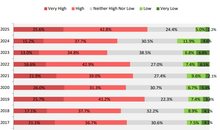
Business perception of corruption reaches historic high in AmCham Index
2026-06-23 12:20:36
Tabaku: Corruption and lack of competition are holding back the Albanian economy
2026-06-23 12:10:20
Spiropali mocks Rama: Lightning bolts, algorithmic control and lewd language
2026-06-23 12:00:54

Norway secures World Cup round of 16
2026-06-23 11:24:25


Three online scams that are taking millions of people
2026-06-23 10:20:07
Brussels issues arrest warrant for former EU commissioner
2026-06-23 10:09:05
Changes in the State Police, names of 8 new leaders
2026-06-23 09:20:37

Vance: 'Good progress' made on plan for final Iran deal
2026-06-23 09:06:27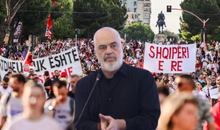
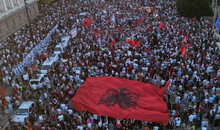
Three weeks of resistance, DW: What is keeping the protest alive in Albania?
2026-06-23 08:39:55
Horoscope, get to know the star forecast
2026-06-23 08:22:33

Clear weather and high temperatures, here's the forecast for this Tuesday
2026-06-23 07:56:53
Morning Post/ In 2 lines: What mattered yesterday in Albania
2026-06-23 07:43:15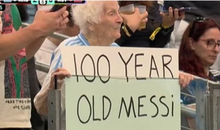

Thousands of citizens continue the march through Tirana: Edi Rama is finished!
2026-06-22 22:42:49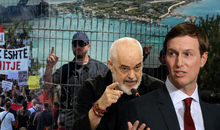
Kushner's company opposes Rama on Zvërnec: We are not involved
2026-06-22 22:20:13
Argentina secures qualification for the 2026 World Cup knockout stage
2026-06-22 21:21:21
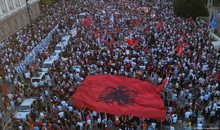
What is keeping the protest alive in Albania?
2026-06-22 20:34:23
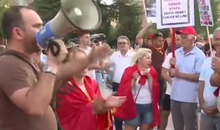
Day 23/ Tomorrow, unions protest in front of the Ministry of Economy
2026-06-22 19:53:15
Why the France-Iraq match risks not being played tonight
2026-06-22 18:48:29
Vetevendosje responds to Rama: We have no role in the protests in Albania
2026-06-22 18:28:30
Accident in Berat, motorbike hits Dutch tourist at white lines
2026-06-22 18:08:24
DW: Why is Bulgaria threatening to veto EU sanctions against Russia?
2026-06-22 17:49:13
The architect of the modern American economy passes away
2026-06-22 16:37:43
Germany loses defender, player ends World Cup early
2026-06-22 16:29:33
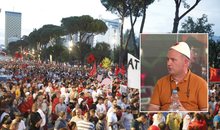
Activist: Starmer resigned, Rama says he is not dirty with these scandals
2026-06-22 16:08:50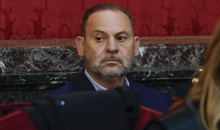
Former Spanish minister sentenced to 24 years in prison for corruption
2026-06-22 16:02:22
Trial for the 700 thousand euro tender, Benet Beci does not go to the GJKKO
2026-06-22 15:48:52
65-year-old man found dead in Korça
2026-06-22 15:44:47
OSHEE employee arrested in Lezha after being caught with a stolen vehicle
2026-06-22 15:31:57
Albanians among the most emotionally exhausted in the workplace in Europe
2026-06-22 15:02:18
Who are the 3 legends who have played in 6 World Cups?
2026-06-22 14:47:17
Changes in the Shkodra Police, here is who is appointed as the new director
2026-06-22 14:37:55
Man stabs wife, 28-year-old woman rushed to Tirana
2026-06-22 14:27:27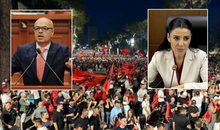
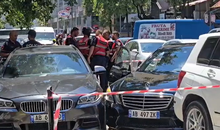
Chaos in Durrës, wanted man crashes into 5 cars while fleeing from police
2026-06-22 14:05:05
Euro hits new negative record, drops to 93 lek
2026-06-22 13:56:49