 Flash News
Day 24 of the protest, I came from America, thousands will come!
Accident in Gjirokastra, a tourist van collides, two injured
Shocking in Prrenjas/ 69-year-old man sets his wife on fire, jealousy as the reason
Spiropali mocks Rama: Lightning bolts, algorithmic control and lewd language
American Chamber of Commerce raises alarm: Corruption and monopoly are hitting businesses in Albania
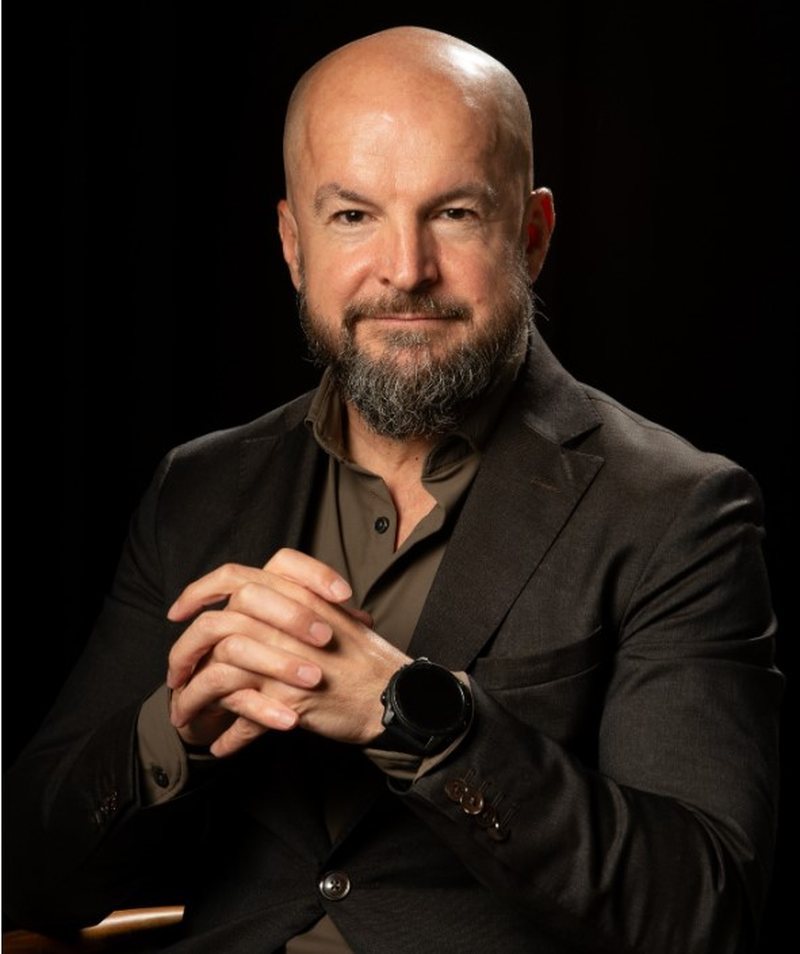
Alfred Lela
Today, several events took place that are connected to yesterday, but above all to Albania's past and present. The French Embassy issued a public statement in which it “strongly” condemned the violence, as it saw it, against a building under the care of a French foundation. For those who do not know, this concerns the former villa of the dictator Hoxha, now turned into a sort of art residence, nicknamed “Art Explora.”
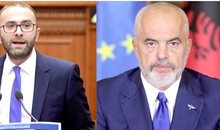
Also today, Edi Rama, the son of Kristaq—a sculptor linked to Hoxha’s regime, a member of the Central Committee—appeared in the courtyard of this villa to sing a hymn of lament over the ashes and imaginary soot allegedly caused by the “enemies of the class,” the political opponents in the opposition. A crow seeking carcasses is no news. But whom did the self-proclaimed Francophile, the chairman of the Socialist Party, have by his side? The granddaughter of Hysni Kapo, a comrade of Comrade Enver, a member of the Central Committee, a leader who passed away in a Parisian hospital bed. On the same day, a Socialist deputy, bearing a name à la française, circulated on social media the statement of “his” Embassy, adding a comment in which he linked the main opposition party to dictatorship.
His effort to draw this parallel is worn-out. For three decades, the left has tried to burden the right with a complex, telling it that it is half of the Communist Party. Paradoxically so—revealing that they themselves do not feel entirely comfortable in their own red skin.
The real paradox lies elsewhere. The same deputy, six months after being elected, saw his brother arrested as a member of the Durrës gangs. In the wiretaps of SPAK, the deputy’s name also appeared, along with the implication that he was in Parliament as a “request” of the gangs to the Socialist Party. The latter did not distance itself, and the deputy did not surrender his mandate.
What would have happened in France?
We do not know. On such matters, the French Embassy does not speak. Because those things are at the expense of Albanians. When something happens at their expense, however, they leap—like the rooster atop their national emblem. And they have the right to. But they cannot deny us the right to be astonished and ironic.
The French reaction is a deranged and unnecessary elitism. If not, a political bias based on the reports that the granddaughter of the dictator’s comrade-in-arms has sent them, and which the Embassy has chosen to defend the Francophiles on the left of Albania’s political spectrum.
Yet they should know that we here remember and see how, for example, the yellow vests burned and destroyed far more than the damage caused by ten torches at the dictator’s villa in Tirana. For a few cents in the price of fuel, not for several hundred million stolen by the “Frenchmen” of Tirana. That is simply to establish a definition of what violence is and what is not.
But we also know that part of the EU funds given to Albania through IPARD includes euros from French taxpayers. In that case, citizens of both countries lost out: the French, who gave the money, which did not go where it should have, and the deserving Albanians (the farmers), who did not receive it. The Embassy has said not a word about this, nor about other abuses. In this sense, their statement—at least on the level of public relations—is a la calamité.
But there is a deeper root that binds the French threads in these events, and it is tied to nearly a century of history. France, with its ideas, with the revolutions of 1830 and 1968, with communism and internationalism, inspired and supplied in Albania an entire array of politicians and activists, the most important of whom became Enver Hoxha. This requires a longer treatment, but the French school in politics triumphed by putting an end to the Deutsch culture based on the German-Austrian school, which faded after the Second World War. The Francophile legacy continued after the communist victory under Hoxha and is represented and personified today by the progressive socialist, Edi Rama. As an expression of this school should also be seen in his pairing with Aleksandar Vučić of Serbia, France’s preferred country in southeastern Europe.
As a continuation of this dominance must also be understood the attempts—and the impotence—of other schools, for example, the Anglo-American one, to occupy a central place in Tirana’s politics after the fall of communism.
The intertwining of all these events within a few days may be a coincidence. But it may also be the demonstration of a long-standing alignment whose roots continue to produce fleur du mal for Albania. The “French curse” continues with Edi Rama—and perhaps with him, the reign of the Francophiles in Tirana will also come to an end.
Which would be good news for Albania.
Latest news
Tourists join protest: We are not afraid, you are wonderful
2026-06-23 21:11:35
Protester: On July 4th, the diaspora will be here with us in the square
2026-06-23 20:45:34
Ronaldo sets historic World Cup record
2026-06-23 20:25:50
Former OSCE Deputy Ambassador in Tirana joins protest for Edi Rama's resignation
2026-06-23 20:07:37
Day 24 of the protest, I came from America, thousands will come!
2026-06-23 19:31:29
Librazhd-Prrenjas road blocked again
2026-06-23 19:16:06
Equality before the law: the deputy and the guardian
2026-06-23 18:10:28
Modric makes history, plays 200th match with Croatia tonight against Panama
2026-06-23 17:50:24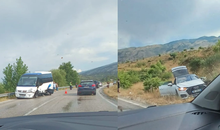
Accident in Gjirokastra, a tourist van collides, two injured
2026-06-23 17:29:07
Tonight England-Ghana for first place in the group, Croatia also on the field
2026-06-23 17:08:42


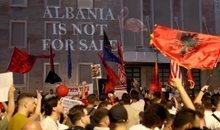
Si u kthye një investim në një lëvizje antikorrupsion në Shqipëri?
2026-06-23 16:00:13
Italia sekuestron dy miliardë euro asete të oligarkëve rusë
2026-06-23 15:36:38
Piktori ndërton një Shqipëri ku nuk do të ketë vend për shqiptarët!
2026-06-23 15:20:27
Fresh, elegant and bold: the color that is challenging summer
2026-06-23 14:45:21
Ylli Zalla escapes from RENEA, another pistol is found in her apartment
2026-06-23 14:36:22
He who curses his people in English
2026-06-23 14:17:17
The 2026 World Cup takes over the screens, breaking viewership records
2026-06-23 13:59:22
Heatwave hits France, at least 40 dead
2026-06-23 13:40:48
The first thing women see in a man
2026-06-23 13:30:03
Accident in Fier-Vlora, three injured near Mifoli
2026-06-23 13:17:05


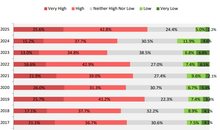
Business perception of corruption reaches historic high in AmCham Index
2026-06-23 12:20:36
Tabaku: Corruption and lack of competition are holding back the Albanian economy
2026-06-23 12:10:20
Spiropali mocks Rama: Lightning bolts, algorithmic control and lewd language
2026-06-23 12:00:54
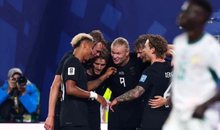
Norway secures World Cup round of 16
2026-06-23 11:24:25

Three online scams that are taking millions of people
2026-06-23 10:20:07
Brussels issues arrest warrant for former EU commissioner
2026-06-23 10:09:05
Changes in the State Police, names of 8 new leaders
2026-06-23 09:20:37
Vance: 'Good progress' made on plan for final Iran deal
2026-06-23 09:06:27
Three weeks of resistance, DW: What is keeping the protest alive in Albania?
2026-06-23 08:39:55
Horoscope, get to know the star forecast
2026-06-23 08:22:33

Clear weather and high temperatures, here's the forecast for this Tuesday
2026-06-23 07:56:53
Morning Post/ In 2 lines: What mattered yesterday in Albania
2026-06-23 07:43:15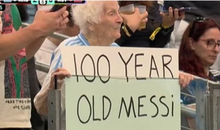
Thousands of citizens continue the march through Tirana: Edi Rama is finished!
2026-06-22 22:42:49
Kushner's company opposes Rama on Zvërnec: We are not involved
2026-06-22 22:20:13
Argentina secures qualification for the 2026 World Cup knockout stage
2026-06-22 21:21:21
What is keeping the protest alive in Albania?
2026-06-22 20:34:23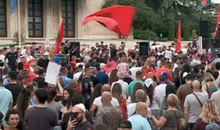
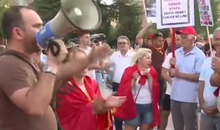
Day 23/ Tomorrow, unions protest in front of the Ministry of Economy
2026-06-22 19:53:15
Why the France-Iraq match risks not being played tonight
2026-06-22 18:48:29
Vetevendosje responds to Rama: We have no role in the protests in Albania
2026-06-22 18:28:30
Accident in Berat, motorbike hits Dutch tourist at white lines
2026-06-22 18:08:24
DW: Why is Bulgaria threatening to veto EU sanctions against Russia?
2026-06-22 17:49:13

The architect of the modern American economy passes away
2026-06-22 16:37:43
Germany loses defender, player ends World Cup early
2026-06-22 16:29:33
Activist: Starmer resigned, Rama says he is not dirty with these scandals
2026-06-22 16:08:50
Former Spanish minister sentenced to 24 years in prison for corruption
2026-06-22 16:02:22
Trial for the 700 thousand euro tender, Benet Beci does not go to the GJKKO
2026-06-22 15:48:52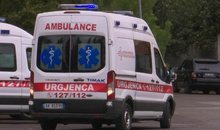
65-year-old man found dead in Korça
2026-06-22 15:44:47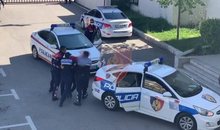
OSHEE employee arrested in Lezha after being caught with a stolen vehicle
2026-06-22 15:31:57
Albanians among the most emotionally exhausted in the workplace in Europe
2026-06-22 15:02:18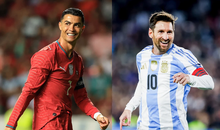
Who are the 3 legends who have played in 6 World Cups?
2026-06-22 14:47:17
Changes in the Shkodra Police, here is who is appointed as the new director
2026-06-22 14:37:55
Man stabs wife, 28-year-old woman rushed to Tirana
2026-06-22 14:27:27
Chaos in Durrës, wanted man crashes into 5 cars while fleeing from police
2026-06-22 14:05:05
Euro hits new negative record, drops to 93 lek
2026-06-22 13:56:49