Flash News
The boy killed the officer in Maliq, Violand Braçellari's mother speaks for the first time: The policeman shot first, he was not warned
Kosovo votes today for the new Parliament, over 2 million citizens eligible to vote
Morning Post/ In 2 lines: What mattered yesterday in Albania
Rama attacks international media: Why do you make a protest with 2,000 people so dramatic?
Protester suffering from cancer explodes: Oncology, Auschwitz in the middle of Tirana
The choir that does not remain silent before death: 60 years of song, memory and vocal heritage in Gjakova

Politiko
2025-07-27 18:56:54
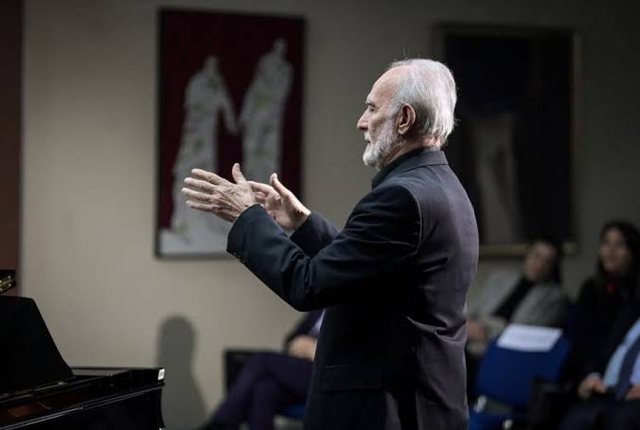
The solemn silence of the Gjakova cemetery is broken by the manly voices of a choir singing farewell. Near the grave of one of its members, the Gjakova Men's Choir pays tribute to their friend with a song by conductor Rauf Dhomi, which sounds like a tribute, but also a call to remembrance.
This ensemble, which has accompanied with songs prominent names of national culture such as Anton Çetta, Çesk Zadeja, Vaçe Zela, Tish Daija or Prince Leka Zogu, as well as hundreds of martyrs of the KLA war, is marking the 60th anniversary of its founding this year.
But beyond symbolic appreciation and public gratitude on deathbeds, local and central authorities in Kosovo have not yet taken any concrete initiative to commemorate or institutionally support him.
Its founder, composer and academic Rauf Dhomi, who counts the first two operas created in Kosovo, avoids speaking at length about the lack of state attention.
“When I started working back in June 1965, I didn’t think this choir would last this long,” Dhomi, currently an academic in Pristina and Tirana, told BIRN. “It’s hard to describe the great role this ensemble played with its songs in the patriotic education of the youth and the entire people,” he added.
Gjakova, a city with 95 thousand inhabitants, lives intensely with music, especially with singing. There are many musical groups, and their creation dates back several decades. Qamili i vogel, Ismet Peja, Mazllum Mezini, Florent Nushi, Shkëlzen Jetishi, are some of the most well-known names in this field.
The choir was founded in the early 1960s, at a time when Albanian culture in Kosovo was asserting itself under difficult political and social conditions. It was born as an artistic response to the need to preserve and develop the Albanian vocal tradition, being a form of cultural resistance to assimilation. In the decades that followed, the choir became an inseparable part of public and ceremonial life in the city.
Over the decades, the choir has had up to 54 members and has participated in over 170 cultural and commemorative activities in various Albanian cities, from Durrës and Korça, to Ulcinj and Tirana. It has been praised by personalities such as President Ibrahim Rugova and renowned musicologists such as Rifat Teqja, Engjëll Berisha, Zhani Ciko and prof. dr. Zekeria Cana.
In a city with a long musical tradition like Gjakova, the choir represents one of the collective artistic peaks.
“We worked in different sectors and Rauf tested us before joining the ensemble,” Mazllum Morina recalled. “Most of us joined the Choir in the late 1960s, after contributing to the “Hajdar Dushi” Ensemble,” he added.
Although he is over 80 years old, Mazllumi has been singing with a small folk ensemble for some time, not forgetting his connection to song.
As they accompany the founding member of the Choir, Shefik Pallaska, to his final home, at the funeral lunch they silently recall a Korça song, part of the repertoire over the years.
"The chief was careful about the lyrics of songs in other Albanian regions and their originality," added Mazllumi.
The Men's Choir is distinguished by its wonderful vocal and professional qualities, so their concern for continuity is no small one.
Although he now lives in Pristina, conductor Rauf Dhomi has offered to revive the choral ensemble.
"The desire of the choristers and young people who want to join its ranks is great, but the response from the authorities is lacking," he said.
"Just as a complete history of the 60-year journey of the Men's Choir is still missing," the conductor added.
In December, Dhomi will celebrate his 80th birthday with friends and colleagues, and he has a gift in mind.
"It would have been much nicer if the 60th anniversary of the Gjakova Men's Choir had been celebrated earlier," he concludes. Reporter.al
Latest news

How the Western Balkans became Europe's "factory"... what comes next?
2026-06-07 14:52:17
Violand Braçellari, who killed the policeman, is left in prison
2026-06-07 14:30:40
Armenians vote on country's future between East and West
2026-06-07 13:51:13
Former Republican Guard officer found dead in Mat River
2026-06-07 13:00:13
Strong tremors in Athens, two earthquakes one after the other
2026-06-07 12:41:55
Protest in Lushnje over hospital conditions: citizens denounce state negligence
2026-06-07 11:41:43
Tirana/ Over 1 kg of heroin seized, two arrested
2026-06-07 11:24:28


Elbasan's 22-year-old striker dies in accident
2026-06-07 09:47:09
Foreign exchange, the rate at which foreign currencies are sold and bought
2026-06-07 09:29:35
Albania, the automotive industry, between growth and loss of low-cost advantage
2026-06-07 08:54:15
Horoscope, get to know the star forecast
2026-06-07 08:34:25
Weather forecast, what are the temperatures expected to be like today?
2026-06-07 08:17:02
Morning Post/ In 2 lines: What mattered yesterday in Albania
2026-06-07 07:56:42
Aksident në aksin Fier–Levan, tre persona përfundojnë në spital
2026-06-06 21:57:40
How to save money during summer vacation?
2026-06-06 21:30:03
Luxembourg punishes Albania in the 8th minute
2026-06-06 20:39:18
Teacher in protest: Gratitude to Trump and the US for uprooting the Sorosites
2026-06-06 20:17:53




Putin rejects Zelensky's proposal for a meeting
2026-06-06 18:39:37

Germany on alert, Neuer in doubt for World Cup
2026-06-06 17:16:09
Even after the crisis, expensive oil remains a challenge for Albania
2026-06-06 16:52:57
Accident on the Pogradec-Qafë Thanë axis, two injured
2026-06-06 16:30:28
Albanians work 41 hours a week, but one hour of work produces only 995 lek
2026-06-06 16:12:47

Killed during the operation in Maliq, GoFundMe opens for Enea Mekolli's family
2026-06-06 15:24:24
WHO identifies future pandemic threats, what could threaten Europe
2026-06-06 15:05:34


Berisha: Rama is robbing the Gjipe canyon, using Ardit Bido to forge documents
2026-06-06 13:34:48



World Cup, Iranian players granted visas to enter the US
2026-06-06 12:07:25
After the Italy-Karaburun record, Eva Buzo swims across the island of Sazan
2026-06-06 11:34:07

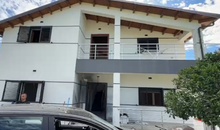
TNT attack at night in an apartment in Lezha, the couple was inside
2026-06-06 09:44:24

Without doctors; Is Albania ready to face new pandemic threats?
2026-06-06 09:03:28
A car hits and kills a person on the Fier-Vlora highway
2026-06-06 08:44:31
Rising temperatures, weather forecast for today
2026-06-06 08:22:32
Morning Post/ In 2 lines: What mattered yesterday in Albania
2026-06-06 08:01:15

"Dad Brain", How Fatherhood Changes the Male Mind
2026-06-05 21:44:40
50 thousand undeclared euros seized at Durres customs
2026-06-05 21:25:48
A citizen married for 30 years in Tirana, institutions declare her single!
2026-06-05 21:19:51
Rama blames Trump's enemies for Zvërnec's echo: The man didn't shave...
2026-06-05 20:56:29
Guard rapes protester during Rama's meeting /VIDEO
2026-06-05 20:39:18
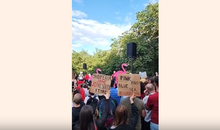
Protest against Rama also in Berlin
2026-06-05 20:14:09
Meta's lawyer: If Rama does not testify, the process is not complete
2026-06-05 20:01:14
How the US naval blockade has cost Iran $6 billion in oil revenue
2026-06-05 19:44:17

Even after the crisis, expensive oil still a challenge for Albania
2026-06-05 19:09:39
Kosovo Police Arrest Serbian List Activist
2026-06-05 18:50:39
Accident at Kombinat, car hits minor
2026-06-05 18:33:56
Rama clashes with Zvërnec resident: Who are you talking to?
2026-06-05 18:27:35
Von der Leyen: Albania should quickly follow Montenegro
2026-06-05 18:13:32
These zodiac signs will find love in June!
2026-06-05 18:01:33
Increased security for Rama's visit to Vlora
2026-06-05 17:46:32
The Rossoneri lose one place in the FIFA rankings
2026-06-05 17:32:56
Police remove 14 sea piers in Ksamil
2026-06-05 17:16:07
Urban accident near Tirana Court, several injured
2026-06-05 16:56:32
Belgium considers selling royal jewels to fill budget gaps
2026-06-05 16:45:02


Socialist MP Klevis Jahaj appears in SPAK
2026-06-05 16:01:00
Photo/ Hundreds of citizens bid farewell to Enea Mekolli
2026-06-05 15:39:58

Citizen puts knife to the neck of a street police officer
2026-06-05 15:03:38

A comparison of problematic projects in Belgrade and Zvërnec
2026-06-05 14:19:49
Berisha: We support the citizen protest for Zvërnec, but the DP is not involved
2026-06-05 13:29:19
Beautiful ugly protest
2026-06-05 13:10:56