 Flash News
Berisha: In the EPP I asked for international support for the civic protests, the DP fully supports them
"Mandi said he would bring out a refrigerator", the disappearance of Eglant Koç, the testimony of the author's supporter is revealed
"Protect the land", amid protests, EU reminds Rama of the condition for integration
Who are the 4 members of the criminal group arrested in Tirana?
Parents, be careful with the air conditioner! The doctor shows the first signs of laryngeal edema
Kurti: The State of Serbia continues to hide the truth about the murders in "Panda"

Politiko
2023-12-14 14:10:50
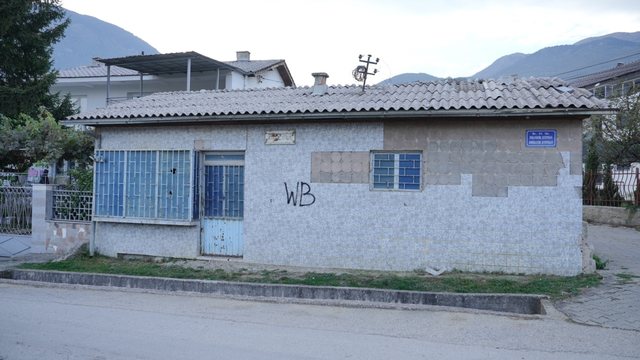
The Prime Minister of Kosovo, Albin Kurti, has said that the state of Serbia "continues to hide the truth about the murder of Serbian youth even after a quarter of a century", referring to the murders in the "Panda" bar in Peja on December 14, 1998.
"...As if he continues not to accept the crimes committed against Albanians during the 1998-99 war", Kurti wrote, adding that "this silence speaks of the unchanged political mindset of Serbia towards the Republic of Kosovo".
Through an article on Facebook, Kurti said that in this bar, on December 14, 1998, the Serbian authorities "staged the murder of six young Serbs".
Kurti also published some photographs, in which it can be seen that a commemorative plaque has been placed in front of the building where the murders took place.
The Government of Kosovo had decided to put the former Panda facility under permanent protection.
With the announcement of this decision, in October 2023, the Prime Minister of Kosovo, Albin Kurti, said that the bar will serve the collective memory of the crime that, according to him, was committed by Serbia.
On the evening of December 14, 1998, around 8:00 p.m., two masked people entered the cafe and fired a volley of bullets at those inside.
Killed on the spot were: Ivan Radević, 25 years old, Ivan Obradović, 14 years old, Vukota Gvozdenović, 16 years old, and Dragan Trifović, 17 years old.
That same night, as a result of the wounds received, Svetislav Ristić, 18 years old, and Zoran Stanojević, 17 years old, died in the hospital.
"Serbia killed six young Serbs, aged 14, 16, 17, 18 and 24 years old, in the attempt of the Milosevic regime to justify ethnic cleansing and genocide in Kosovo," Kurti wrote.
The killing of six young Serbs occurred at a time when inter-ethnic tensions in Kosovo were high.
The war between the Serbian forces and the Kosovo Liberation Army had already begun.
Exactly on the day of the murders in "Panda", some members of the KLA were killed in an ambush by Serbian forces, while they were carrying weapons from Albania.
The murders in "Panda" were seen as an act of revenge, which then led to raids and arrests of Albanians in Peja.
After the murders, Agron Kollçaku, Gazmend Bajrami, Xhevdet Bajrami, Vllaznim Pergeggaj, Beqir Loxha and Behar Bajri were arrested as suspects.
All were released 12 months later by a court in Belgrade, in the absence of evidence of their involvement in the murder.
About 14 years after the incident in "Panda", in 2013, Aleksandar Vučić, who at that time was the Deputy Prime Minister of Serbia, hinted that the crime "might not have been committed by Albanians".
In an interview for "Pink" Television in Serbia, he said that the disclosure of these murders could be a surprise in the future.
From that time, suspicions circulated that the murder could have been staged by the Serbian authorities.
The investigation of the case by the Prosecutor's Office of Serbia, which started in 2016, is still ongoing - without result.
The prosecutor earlier told Radio Free Europe that "dozens of witnesses have been questioned and numerous material evidences have been obtained", but "the case is still under investigation".
The families of the victims in the "Panda" case are constantly asking for a meeting with Vučić, now the president of Serbia, but such a meeting has not yet taken place./rel
Latest news

The 'parallel reality' of Rama's rallies in front of thousands of protesters
2026-06-10 13:41:46
The 2026 World Cup starts with new rules, VAR gets more powers
2026-06-10 13:34:27


Faces against the protest/ After Taulant Balla, Karlo Bolino appears
2026-06-10 12:51:23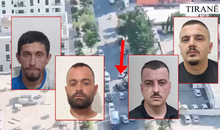
Who are the 4 members of the criminal group arrested in Tirana?
2026-06-10 12:39:29
The highest-paid professions in the first quarter are led by bankers and IT
2026-06-10 12:31:34
U shkarkua nga puna, punonjësi dhunon drejtorin e ministrisë së Mjedisit
2026-06-10 12:20:49
The board moves oil and gasoline prices again
2026-06-10 12:09:16
Çuçi criticizes the Prime Minister: O Rama, where are your institutions?
2026-06-10 11:54:49
Eraldo Nevruzi was killed in Dhërmi, Greece refuses to extradite Gerald Shehu
2026-06-10 11:30:43
TNT explosion near the Nikulaj family in Lezha
2026-06-10 11:23:03
Këlliçi explodes against Rama: The truth is out in the open
2026-06-10 11:08:45
When the Ayatollah of Albania clashes with the Ayatollahs of Iran
2026-06-10 10:56:57

Gjirokastër/ A minor lost his life after going into the pool to bathe
2026-06-10 10:33:07

Balluku seeks reinstatement, Supreme Court draws lots for recourse
2026-06-10 09:51:13
Elez Biberaj: Protests are not against Trump, but against kleptocracy
2026-06-10 09:30:57
Accused of attempted murder in Spain, 22-year-old arrested in Shëngjin
2026-06-10 08:46:20

Horoscope, what do the stars have in store for you today?
2026-06-10 08:17:52
Temperatures above 30 degrees, weather forecast for today
2026-06-10 08:00:52
Morning Post/ In 2 lines: What mattered yesterday in Albania
2026-06-10 07:47:57



Actor known for protests: I fled Albania because I didn't want to sell my soul
2026-06-09 20:32:34

Meçollari accuses protest: The environment has been altered in Palasa and Dhërmi
2026-06-09 19:38:17

Judge this protest by its opponents
2026-06-09 18:20:57
After four sessions, Ilir Beqaj concludes preliminary requests
2026-06-09 18:11:25
UN message to Iran, Lebanon and Gaza: Respect ceasefires
2026-06-09 17:06:22
10 days that shook the "system"
2026-06-09 16:53:28
Anti-drug operation in five cities in Kosovo, 5 arrested
2026-06-09 16:44:03
Accident in Greece, 16-year-old Albanian dies
2026-06-09 16:25:19

Rama 'clash' with Romanian journalist: They've blocked her brain!
2026-06-09 16:13:59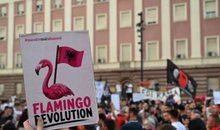
“Revolucioni i Flamingove” përplas Ramën me Iranin
2026-06-09 15:56:07



Vlora Prosecution seizes 5 million euros of assets
2026-06-09 14:29:19

Vučić's Kopjac is also in crisis
2026-06-09 14:11:14




The protest clashes Rama with the world media, the risk of an image crisis!
2026-06-09 13:01:41
Security expert raises the alarm: Criminal groups are sheltering in Kamza areas!
2026-06-09 12:36:03
Who is in command of Edi Rama today?!
2026-06-09 12:14:10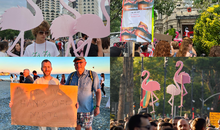
Rama's 'bluff'/ How foreign tourists are embracing the protests in Albania
2026-06-09 12:00:57

How Rama convinced the West that Albania's fate is linked to his name
2026-06-09 11:20:31

Berisha at the EPP conference: Albania is in the emergency room
2026-06-09 10:27:53
From towers to rivers: the invisible cost of the building boom
2026-06-09 10:04:25
Operation in Vlora, names of 6 arrested revealed
2026-06-09 09:44:49

Foreign exchange, how much foreign currencies are sold and bought today
2026-06-09 09:26:15

Horoscope, get to know the star forecast
2026-06-09 08:40:29
Alarming depopulation / In one year, 33 thousand young people leave Albania
2026-06-09 08:28:03