 Flash News
The number of people poisoned at the Police Academy rises to 64, under investigation by "Sori-AL" and AKU
Gunfight in Shkodra, two arrested, one wanted
Albania is 'scorching', temperatures up to 40 degrees are predicted
Weather forecast, how temperatures will vary throughout the day
Bombshell on "Albanian Files"/ OMA Architect: Rama becomes king, it is easier for us to continue working
Rama's alibi falls / The phenomenon of protest tourism is born in Albania

Politiko
2026-06-26 09:18:30
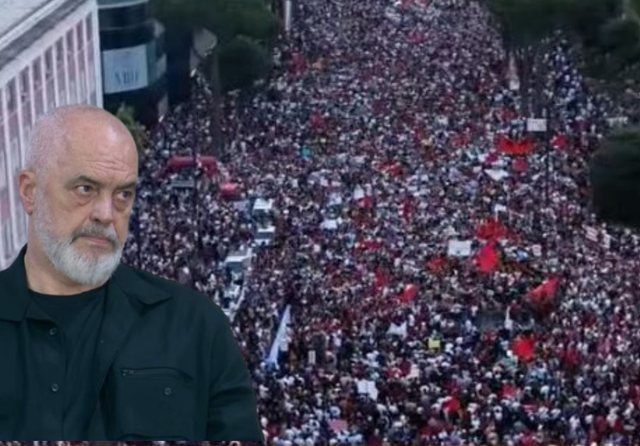
Namrata Samra, a girl from India booked Albania for the Alps, but left promoting an Albanian protest in front of hundreds of thousands of people. In the algorithmic economy, even protests can become tourist attractions…
Can a protest become a tourist destination? If you had asked this question to a tour operator ten years ago, they would most likely have laughed.
Protests drive away tourists. It's one of the oldest rules of the travel industry. They produce uncertainty, cancellations, and images that tourism ministries try to avoid at all costs.
But the age of TikTok is changing even that logic. In an internet where algorithms reward authentic events rather than perfect photos, protests have begun to produce a new form of tourist curiosity.
It is no coincidence that researchers are now calling it 'protest tourism'. Until yesterday, the phenomenon was associated with Hong Kong, Paris, Barcelona or Belgrade. Today, for the first time, its traces are also appearing in Albania.
Namrata Sarma didn't come from India to protest. She came to hike in the Albanian Alps. She had saved pictures of Theth, Lake Bovilla, and mountain trails on her phone.
Tirana was only planned as a two-day stopover before continuing her adventure. But the algorithm had other plans. Before the plane landed in Rinas, Instagram and TikTok had served her a different Albania. Videos of people marching at night with pink flamingos, banners and thousands of phone lights. Little did she know that a few days later she would become part of those videos.
When she emerged from dinner near Skanderbeg Square, it was around ten o’clock in the evening. At first she thought she was passing by a protest. Then she realized she had stepped into the middle of it. “The city seemed to have become one voice,” she recalls. “You could hear the horns, the shouts, the flags. There were young people, old people, whole families.”
This is no longer just a personal story. It is how tourism works in 2026. The protests have received widespread international attention. They have been covered by media outlets such as the Financial Times, The Guardian, Al Jazeera and Vanity Fair, among many others.
On social media, videos from the protests are circulating with millions of views. Just one video posted by an American tourist on Instagram, where he appears smiling among protesters in Tirana, reached over 280,000 views within a few hours.
Gabriel Bolling, a 22-year-old from Florida, came to Albania on a planned trip to discover the country, but found himself swept up in the enthusiasm of young Albanians marching demanding the resignation of the prime minister and the cancellation of a massive tourism project in the protected Narta lagoon.
Dozens of videos of tourists filming the marches, banners, and festive atmosphere of the protests have appeared on TikTok and Instagram.
Unlike the classic image of tense demonstrations, Albanian protests are being presented as family gatherings involving young people, children and the elderly. In some Instagram posts, tourists are directly addressed with the message:
“Don’t worry, the protests are peaceful.” This has created an interesting contrast. While the protesters aim to stop a tourism project, the protests themselves are generating a different kind of tourism.
There are no statistics yet showing how many people have booked a trip to Albania just to attend the protest. But there are increasing posts on Instagram and TikTok from tourists showing that the protest has become part of their experience in Tirana.
Some say they found themselves among the marches by chance, others publish videos from the protests to millions of followers, while the diaspora is organizing special trips to join the movement.
In fact, Tirana is experiencing something similar to what other European cities have seen in recent years. Modern tourists aren't just looking for monuments or beaches. They're looking for history.
They are looking for events that they can share on social media. A massive protest, with a pink flamingo as a symbol, creative banners, and thousands of participants creates exactly the kind of content that TikTok's algorithms spread quickly.
“I couldn’t just watch it as a spectacle,” the Indian tourist tells Monitor. She says that in India, protests remind us of barricades, water cannons, and fear. In Tirana, she felt the opposite. “I’ve never been to a protest where I felt so safe.”
This will probably never be measured in INSTAT statistics. No one records how many tourists extend their stay because they encounter a protest, how many videos they produce, how many bookings they inspire, or how many times TikTok's algorithm turns a citizen march into free advertising for a destination.
But the story of Namrata and many tourists like her shows that modern tourism is changing. /Monitor
Latest news

Gunfight in Shkodra, two arrested, one wanted
2026-06-26 10:18:10
Albania is 'scorching', temperatures up to 40 degrees are predicted
2026-06-26 09:36:54
Rama's alibi falls / The phenomenon of protest tourism is born in Albania
2026-06-26 09:18:30

"The situation as a couple will not..." what the stars predict for you
2026-06-26 08:40:20
Weather forecast, how temperatures will vary throughout the day
2026-06-26 08:33:33

Morning Post/ In 2 lines: What mattered yesterday in Albania
2026-06-26 07:56:32

Why will Paraguay be one of the host cities for the 2030 World Cup?
2026-06-25 22:36:05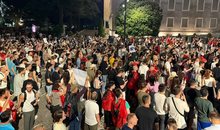
"Rama ik" invades the boulevard, drone footage shows the scale of the protest
2026-06-25 22:17:00

Protester: I came from London, let's give Rama the final blow!
2026-06-25 20:35:52
Citizens repeat 5 demands to the Prime Minister: We want a technical government
2026-06-25 20:14:30


Erotic messages during official hours, ILD demands dismissal of KLP member
2026-06-25 18:48:58

RSF: Journalists in Albania under pressure, government not keeping promises
2026-06-25 17:58:24

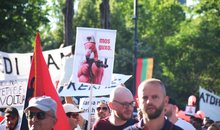
International academics support mass protests in Albania
2026-06-25 16:48:29
Kosovo not invited to NATO Summit, Ministry of Defense explains reasons
2026-06-25 16:10:01
Rama announced it
2026-06-25 15:56:19
Tiranë/ Grabitën banesën nën kërcënimin e armës, dy të arrestuar,
2026-06-25 15:47:50
Vala e të nxehtit dhe alkooli , një kombinim i keq për shëndetin
2026-06-25 15:36:35
What's happening with the Bënja baths, from curative to ponds
2026-06-25 15:22:25
They abused economic aid funds, security measures are given to 6 state employees
2026-06-25 15:05:51


Doctors sound the alarm: 4 kitchen items you should replace as soon as possible
2026-06-25 14:25:03

He stabbed his brother to death, the perpetrator was arrested in Kavaja
2026-06-25 14:00:36
Is the heat wave giving you 'mental fog'?
2026-06-25 13:53:08
Iran demands accountability for NATO's "complicity" in war
2026-06-25 13:35:13
Bardhi: Refusal of debates, violation of the Assembly's regulations
2026-06-25 13:21:57
Two powerful earthquakes hit Venezuela, at least 164 dead and hundreds injured
2026-06-25 13:12:19
Domestic production loses ground, economy increases dependence on imports
2026-06-25 13:00:16
SP rejects protesters' demands, rejects DP's request for a motion with debate
2026-06-25 12:48:15
The only beach in Europe that separates men from women with a wall
2026-06-25 12:31:17

Business Index: Corruption undermines investment confidence in Albania
2026-06-25 12:10:40
World Cup 2026: The picture of the 1/16 is formed, here are the qualified teams
2026-06-25 11:42:01
Accident near Milot Bridge, 4 injured, one in serious condition
2026-06-25 11:16:53
EU proposes tax reform to cut business costs by €8 billion a year
2026-06-25 10:50:06
Disregard for environmental protection hurts Albania's hopes for EU membership
2026-06-25 10:25:06

Details from the crime in Kavaja, how a brother killed his brother over a road
2026-06-25 10:01:42
German MEP joins protest against Rama: Money and power do not buy every beach
2026-06-25 09:52:02


Quarrel in Sukth, uncle stabs nephew
2026-06-25 09:09:44
Rama's fictional world, in front of human reality
2026-06-25 09:07:48
Foreign exchange, how much foreign currencies are sold and bought today
2026-06-25 08:54:17
Scandal repeats! 30 Security Academy trainees poisoned again
2026-06-25 08:39:10
Horoscope, what do the stars have in store for you today?
2026-06-25 08:12:17
Stable conditions, high temperatures expected
2026-06-25 07:58:55
Posta e mëngjesit/ Me 2 rreshta: Çfarë pati rëndësi dje në Shqipëri
2026-06-25 07:44:30
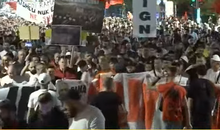
Thousands of citizens march through Tirana: Arrest Balluk!
2026-06-24 22:20:14
Family crime, 76-year-old man stabs his brother to death in Kavaja
2026-06-24 22:01:36

"Albanian Files", The Prime Minister between the Emperor and the Gangster!
2026-06-24 20:00:10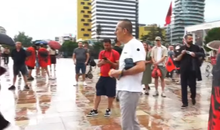
Rain does not deter protesters, they gather at "Skënderbej" Square
2026-06-24 19:33:28
Xhaka and Switzerland face a big test, group tickets are decided today
2026-06-24 19:13:01

A Dictator for Gen Z
2026-06-24 18:31:17
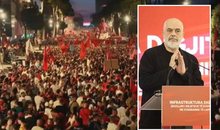
Amid protests in Tirana, Rama seeks "culprits" even within his own ranks
2026-06-24 17:29:04
The decisive match between Scotland and Brazil risks being postponed
2026-06-24 17:06:14
Tragedy in Italy, 63-year-old man kills wife and 24-year-old son with shotgun
2026-06-24 16:46:50


Albania ranks among countries with low gold reserves
2026-06-24 16:02:38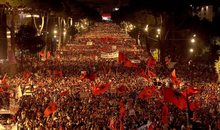
Accident on the Fier-Seman axis, two drivers injured
2026-06-24 15:27:24