
 Flash News
The boy killed the officer in Maliq, Violand Braçellari's mother speaks for the first time: The policeman shot first, he was not warned
Kosovo votes today for the new Parliament, over 2 million citizens eligible to vote
Morning Post/ In 2 lines: What mattered yesterday in Albania
Rama attacks international media: Why do you make a protest with 2,000 people so dramatic?
Protester suffering from cancer explodes: Oncology, Auschwitz in the middle of Tirana
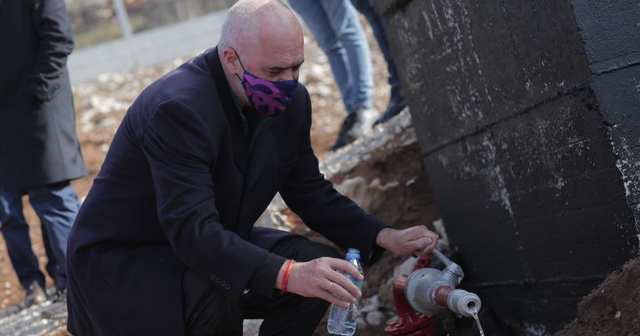
Durrës Waterworks is the second largest waterworks in Albania after Tirana and the company that serves the second largest city in the country with drinking water and sewage disposal. According to the 2022 balance sheet data, the Durrës water utility has 16.2 billion lek of debt [approximately 160 million euro] and 13.3 billion lek of assets [130 million euro]. In short, the pipes, buildings, plants, the director's chair, money in the bank and others like these, all together, are worth 130 million euros. But the company has 30 million euros more than that in liabilities to repay.
After the news about the state of the balance was published, initially in Monitor magazine, a government office called AKUM (National Agency for Water, Sewerage and Waste Infrastructure), declared that the situation in Durrës is not "bankruptcy", but reorganization.
"This process consisted of the aggregation of 61 former companies under the municipalities of the country and the creation of 15 new companies, where each municipality is again a shareholder, but now together with the Ministry of Infrastructure and Energy, which is the main shareholder with 51 %," the explanation said. AKUM did not announce in its statement where the money will come from to pay the obligations.
The water supply situation is neither new nor isolated in Durrës.
Across the country, water utilities are in dire financial straits with ongoing losses that have eroded their capital base, in many cases bringing it to zero. The data of the balance sheets of the main water supply and sewerage companies, analyzed by BIRN, show that with the exception of the Tirana and Shkodër water supply companies, the other companies are at a loss and in debt. The situation is not something unexpected, it has accumulated over the years.
For example, Durrës Water and Sewerage had 1.46 billion ALL of revenue and 2.48 billion ALL of expenses last year, with a net result of over 1 billion ALL of loss, or nearly 10 million euros. In 2021, the company had a loss of about 535 million ALL and in 2020, 256 million. In 2019, the losses were 550 million. The company last posted a profit in 2018. And despite four years of big losses, the company doesn't seem to have bothered much about cutting costs or boosting revenue.
The continuous losses do not seem to have caused any concern for the administration or for the Municipality of Durrës, which is the owner of the company.
The balance sheets of companies that provide water supply and sewage removal services in the cities of Durrës, Vlorë, Lezhë, Elbasan, Fier, Korçë, Berat-Kuçovo, Kavajë, Pogradec and Kukës, which include a significant part of the population , talk about a total loss of 1.9 billion alleks [19 million euros] for 2022. The same companies had losses in the amount of 936 million alleks for 2021.
The drastic increase in losses in the country's main aqueducts seems to have prompted the government to decide on a "reorganization", but it remains to be seen if this reorganization really aims at a concrete plan to change the situation that has been aggravated for years.
What can be seen from the state of the companies' balance sheets is that in 2022 the ten aforementioned water utilities had assets worth 51.4 billion ALL and liabilities worth 50.7 billion ALL. The remaining share capital after multi-year losses of 695 million ALL constitutes only 1.4% of the total assets. This means that the loss-absorbing capacity of these businesses is negligible and that, normally, the central government will have to reach into the taxpayers' pocket to bail these companies out of the water.
The situation is similar to the companies of the cities of Kamëz, Lušjë and Sarandë, which were analyzed separately because they did not publish a balance sheet for 2022. The data of 2021 show that these three water utilities together had a loss of 406 million Lek or about 4 million euros.
Water-Sewage Tirana and UK Shkodër seem to be the only companies that do not have such existential problems. Tirana, the largest company in the country, whose revenues account for more than half of the sector nationally, has historically been a profitable company, which seems to be a consequence of natural factors.
Tirana's water pipes are free-flowing while the density is high, keeping costs low. In 2022, the citizens of Tirana pay 4.5 billion lek for water and sewage removal, while the company closed the year with 994 million lek in profits.
However, the water supply of Tirana continues not to provide drinking water supply, so much so that the municipality of Tirana itself has opened a tender to buy bottled water for its employees.
Losses in the network, which are caused by the lack of control over the network and illegal connections, are, according to the company's own assessment reported to the Water Regulatory Authority, 60% of the water thrown into the network. In a word, for every 1 cubic meter of water taken from the sources, 600 liters are lost on the road, while 400 liters are paid by the consumer. Despite this, the money that citizens pay for substandard water supply is enough to cover losses at such levels as well as to ensure profits. Ujjejelës Kanalizime Tirana is also one of the unique cases in the country in which a publicly owned company has come under investigation by the Competition Authority for abuse of its dominant position. The investigation a few years ago came after the company's request to ERRU to increase the water tariff,
Shkodra is the other company with a stable financial balance. The new Shkodër municipality administration did not submit the 2022 balance sheet within the deadline, according to the legal obligation, while the 2021 balance sheet shows that the company had balanced expenses with income. The company's share capital of 1.6 billion ALL is equal to 25% of total assets, which were 6.5 billion ALL.
Free streams on the net
The problems of UK Durrës, apart from the obvious mismanagement, are also related to a physical problem. Durrës has no water sources nearby, as is the case with most other Albanian cities, and therefore, water is drawn from artesian wells in the area of Fushëkuqe, 44 kilometers away, to be transported to the warehouse by pipelines before being distributed to the consumer. Raising the water from underground and pumping it to the consumer brings the company a significant electricity bill. This is a very different situation with other cities, such as, by the way, Tirana, where water comes from the mountain, passes through free-flowing pipes, is used on the road to generate electricity before being distributed to consumers without the need for electric pump to set it in motion. But the heaviest bill for Durrës, as well as for the whole country, it seems that it comes not only from the difficulty of securing water, but also from the mismanagement of companies and allowing massive losses in the network. According to the data of the Water Regulatory Body, during the past year, 77% of the water supplied in Durrës was lost in the network, due to defects or thefts, while the rest of only 23% was paid by the consumers. In short, the company has to raise with pumps from the area of Fushëkuqe and transport to Durrës one cubic meter of water, in order to actually sell and collect only 230 liters. while the rest of only 23% was paid by consumers. In short, the company has to raise with pumps from the area of Fushëkuqe and transport to Durrës one cubic meter of water, in order to actually sell and collect only 230 liters. while the rest of only 23% was paid by consumers. In short, the company has to raise with pumps from the area of Fushëkuqe and transport to Durrës one cubic meter of water, in order to actually sell and collect only 230 liters.
In 2016, the company received a loan from the World Bank along with technical assistance on how to resolve the situation. The solution was obvious. If losses are reduced, the amount of electricity needed to transport water from a distance is reduced. If losses are reduced from 77 to 50%, then electricity consumption is halved. If they are reduced from 77 to 25%, electricity consumption drops by two thirds. It's just that since 2016, losses haven't decreased, the electric bill has increased, and other company costs, including salaries for employees who have to identify and eliminate leaks or illegal connections, have also increased.
The country's other main aqueducts are in a similar condition, although their sizes are smaller. Vlora Waterworks ended last year with a loss of 340 million ALL (3.4 million euros). In 2021, the company lost 244 million ALL. The accumulated losses year after year have caused the company to have 8.3 billion ALL of assets and 8 billion ALL of liabilities, with a financial leverage (shareholder capital in relation to assets) of only 3%, thereby taking the lead of Durrës. According to the data of the Energy Regulatory Body, 76% of the water supplied to the network is lost in Vlora, while the company has almost 4 workers for every one thousand network connections.
Elbasan is the other city where the water supply company loses almost 70% of the supplied water, while the company closed the year 2022 with a loss of 251 million lek (nearly 2.5 million euros). The water supply of Fier (191 million lek), the one of Berat-Kuçovo (140 million lek) or the one of Kavaja (139 million lek) is also at a loss. In these three cases, the losses are respectively 70, 54 and 54%. Albania is a very rich country with water resources, estimated at around 9,500 cubic meters per capita. However, according to ERRU data, 22% of the population is not served by public water supply, while 56% is not served by sewage removal service, which means that they pour it where they can.
On the other hand, even 54% of the population that has sewage removal service is mostly not served by plants for processing these waters, pouring them directly into the river. Such is the situation for the capital as well, where a plant that was supposed to process water has been stalled for a decade, while the municipality has not provided any information about what is happening with it./BIRN
Latest news
Former Republican Guard officer found dead in Mat River
2026-06-07 13:00:13
Strong tremors in Athens, two earthquakes one after the other
2026-06-07 12:41:55

Protest in Lushnje over hospital conditions: citizens denounce state negligence
2026-06-07 11:41:43
Tirana/ Over 1 kg of heroin seized, two arrested
2026-06-07 11:24:28




Elbasan's 22-year-old striker dies in accident
2026-06-07 09:47:09
Foreign exchange, the rate at which foreign currencies are sold and bought
2026-06-07 09:29:35
Albania, the automotive industry, between growth and loss of low-cost advantage
2026-06-07 08:54:15
Horoscope, get to know the star forecast
2026-06-07 08:34:25
Weather forecast, what are the temperatures expected to be like today?
2026-06-07 08:17:02
Morning Post/ In 2 lines: What mattered yesterday in Albania
2026-06-07 07:56:42
Aksident në aksin Fier–Levan, tre persona përfundojnë në spital
2026-06-06 21:57:40
How to save money during summer vacation?
2026-06-06 21:30:03


Luxembourg punishes Albania in the 8th minute
2026-06-06 20:39:18
Teacher in protest: Gratitude to Trump and the US for uprooting the Sorosites
2026-06-06 20:17:53




Putin rejects Zelensky's proposal for a meeting
2026-06-06 18:39:37



Germany on alert, Neuer in doubt for World Cup
2026-06-06 17:16:09
Even after the crisis, expensive oil remains a challenge for Albania
2026-06-06 16:52:57
Accident on the Pogradec-Qafë Thanë axis, two injured
2026-06-06 16:30:28
Albanians work 41 hours a week, but one hour of work produces only 995 lek
2026-06-06 16:12:47


Killed during the operation in Maliq, GoFundMe opens for Enea Mekolli's family
2026-06-06 15:24:24
WHO identifies future pandemic threats, what could threaten Europe
2026-06-06 15:05:34


Berisha: Rama is robbing the Gjipe canyon, using Ardit Bido to forge documents
2026-06-06 13:34:48



World Cup, Iranian players granted visas to enter the US
2026-06-06 12:07:25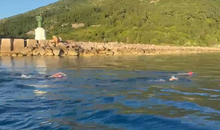
After the Italy-Karaburun record, Eva Buzo swims across the island of Sazan
2026-06-06 11:34:07


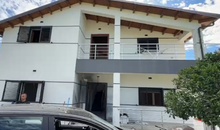
TNT attack at night in an apartment in Lezha, the couple was inside
2026-06-06 09:44:24

Without doctors; Is Albania ready to face new pandemic threats?
2026-06-06 09:03:28
A car hits and kills a person on the Fier-Vlora highway
2026-06-06 08:44:31
Rising temperatures, weather forecast for today
2026-06-06 08:22:32
Morning Post/ In 2 lines: What mattered yesterday in Albania
2026-06-06 08:01:15
"Dad Brain", How Fatherhood Changes the Male Mind
2026-06-05 21:44:40
50 thousand undeclared euros seized at Durres customs
2026-06-05 21:25:48
A citizen married for 30 years in Tirana, institutions declare her single!
2026-06-05 21:19:51
Rama blames Trump's enemies for Zvërnec's echo: The man didn't shave...
2026-06-05 20:56:29
Guard rapes protester during Rama's meeting /VIDEO
2026-06-05 20:39:18
Protest against Rama also in Berlin
2026-06-05 20:14:09
Meta's lawyer: If Rama does not testify, the process is not complete
2026-06-05 20:01:14
How the US naval blockade has cost Iran $6 billion in oil revenue
2026-06-05 19:44:17
Even after the crisis, expensive oil still a challenge for Albania
2026-06-05 19:09:39
Kosovo Police Arrest Serbian List Activist
2026-06-05 18:50:39
Accident at Kombinat, car hits minor
2026-06-05 18:33:56
Rama clashes with Zvërnec resident: Who are you talking to?
2026-06-05 18:27:35
Von der Leyen: Albania should quickly follow Montenegro
2026-06-05 18:13:32
These zodiac signs will find love in June!
2026-06-05 18:01:33
Increased security for Rama's visit to Vlora
2026-06-05 17:46:32
The Rossoneri lose one place in the FIFA rankings
2026-06-05 17:32:56
Police remove 14 sea piers in Ksamil
2026-06-05 17:16:07
Urban accident near Tirana Court, several injured
2026-06-05 16:56:32
Belgium considers selling royal jewels to fill budget gaps
2026-06-05 16:45:02


Socialist MP Klevis Jahaj appears in SPAK
2026-06-05 16:01:00
Photo/ Hundreds of citizens bid farewell to Enea Mekolli
2026-06-05 15:39:58

Citizen puts knife to the neck of a street police officer
2026-06-05 15:03:38

A comparison of problematic projects in Belgrade and Zvërnec
2026-06-05 14:19:49

Berisha: We support the citizen protest for Zvërnec, but the DP is not involved
2026-06-05 13:29:19
Beautiful ugly protest
2026-06-05 13:10:56

Berisha: Enea Mekolli is a hero twice, his killer was financed with state funds
2026-06-05 12:25:45