 Flash News
When “irony” becomes an alibi: Rama, the starchitects and “The Albanian Files”
Shooting in Germany, 5 killed and several injured
Fire in Llakatund, Vlora, wind favors rapid spread of flames
Shooting in Pogradec, young man with criminal record injured
The two football giants on the field, Brazil and Germany, are looking for a ticket to the 1/8th.
Hospital autonomy without results: Lack of access and overloaded services

Politiko
2026-06-29 21:55:56
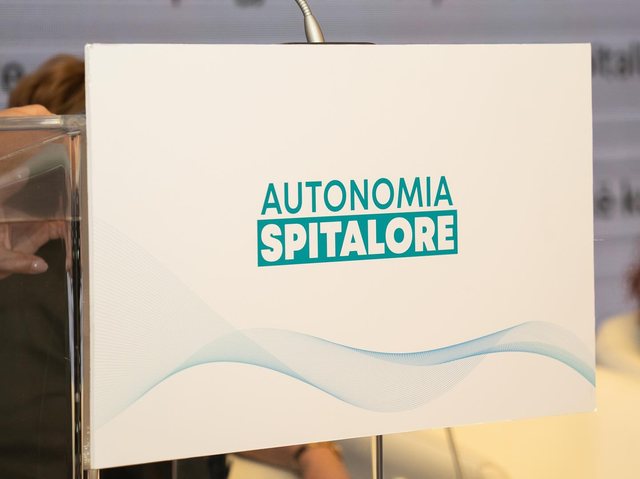
The reform that aimed to give public hospitals more autonomy, efficiency and accountability, four years after its launch, has not yet translated into measurable improvement in the quality of service to patients.
A monitoring by the organization Together for Life (TFL) has found that the gap between the reform's objectives and its implementation remains considerable.
Hospital autonomy was presented as one of the most important reforms in the governance of the public health system in Albania. The logic was that public hospitals, by gaining more space in financial and administrative management, would be able to better organize resources, improve the quality of services, and reduce dependence on central decision-making.
But according to the published monitoring report, this transition remains incomplete. The analysis, based on monitoring of QSUNT, Fier Memorial Hospital and the regional hospitals of Durrës, Vlorë, Shkodra and Lezha, concludes that the establishment of new structures has not yet been accompanied by measurable results in the functioning of the system or in the patient experience.
Essentially, the report raises a question that goes beyond the administrative organization of hospitals: how is the success of a health reform measured? If the objective is to improve care, then the criteria are not the number of structures established or legal acts adopted, but waiting times, access to services, quality of treatment, more efficient use of public funds and the patient experience.
From this perspective, monitoring suggests that the reform has advanced more quickly in building the institutional architecture than in producing concrete results.
One of the main objectives of autonomy was to strengthen regional hospitals, so that they could provide more services closer to patients' homes and reduce dependence on the Mother Teresa University Hospital Center. Four years later, this objective remains unmet.
QSUNT continues to handle the bulk of specialized services, while regional hospitals have failed to increase capacity to the extent that was anticipated. As a result, pressure on the university hospital remains high, with consequences ranging from staffing levels to the organization of services and waiting times for patients.
In this sense, autonomy is not assessed by the powers transferred to institutions, but by their ability to use them to improve access to services. According to the report, this change has not yet become apparent.
Another key component of the reform was financial autonomy. The idea was that hospitals would be more able to generate revenue and reinvest it in improving services. However, the report finds that the main instrument in this regard—dual practice—still falls short of expectations.
Fier Memorial Hospital appears to be the most advanced institution in implementing this mechanism and monitoring patient satisfaction. However, even there, there is still no evidence of a measurable impact on revenue growth or organizational performance of the hospital. In other institutions, the practice is implemented to a limited extent, due to non-competitive fees, low demand and lack of economic incentives.
One of the most significant findings of the report is related precisely to the lack of evidence.
The Executive Director of Together for Life, Eglantina Bardhi, stated during the presentation of the report that "Monitoring shows that to date there is a lack of sufficient evidence to demonstrate a direct and measurable impact of the reform on the patient experience, the quality of care and health outcomes."
Even the Ministry of Health admits that some elements of the reform are still under development.
The Director of Hospital Policies, Flutura Beqo, described dual practice as a mechanism still in its "infantile stage", while saying that work is being done to cost services and create instruments that will support the financial and managerial autonomy of hospitals.
This stance implies that the responsible institutions themselves consider the reform still incomplete.
However, four years after its launch, the expectation is no longer related to the establishment of new structures or the drafting of new procedures. At this stage, the reform is expected to produce measurable results.
The report thus raises a broader issue about how public reforms in Albania are assessed. Institutional changes are often measured through legal acts, established structures or new organizational models.
In healthcare, however, success is determined by other indicators: whether patients receive service faster, whether hospitals function better, and whether public funds are used more efficiently. Without clear indicators and measurable outcomes, it becomes difficult to assess whether autonomy has actually changed the way the system works.
Four years after the launch of the reform, hospital autonomy remains a project in transition. The institutional framework has been built and objectives have been defined, but according to Together for Life's monitoring, the results that would justify the reform are not yet visible.
The challenge for responsible institutions is no longer to argue the need for autonomy, but to demonstrate, through data and performance, that it is improving the functioning of hospitals and the quality of care that patients receive./ acqj.al
Latest news

Duel in Boston, Germany and Paraguay fight for qualification
2026-06-29 21:40:51
German MEP speaks from protest: Government should listen to citizens
2026-06-29 21:28:52
Six MEPs join the protest against Rama
2026-06-29 21:11:10
Protesters "occupy" the Polytechnic, demand the return of the banner
2026-06-29 20:51:09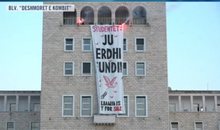
Japonia trondit Brazilin, mbyll pjesën e parë në avantazh
2026-06-29 20:11:55
"Rama resigns", protesters begin march towards the Prime Minister's Office
2026-06-29 19:53:55
Vapa ekstreme, si mund të përmirësohet gjumi gjatë netëve të nxehta
2026-06-29 19:28:55
Gazetari holandez: Deklaratat e Ramës nuk i besojnë më as socialistët
2026-06-29 19:00:23
Protest for Rama's resignation extends to Turin
2026-06-29 18:41:11
Will Vučić become the Prime Minister of Serbia again?
2026-06-29 18:22:02
New heat wave in the US raises concerns about the 2026 World Cup final
2026-06-29 18:01:00
Photo/ 40°C in Tirana, citizens "invade" fountains to escape the heat
2026-06-29 17:44:25
Extreme heatwave tests healthcare systems in Europe
2026-06-29 17:30:39
11 early behaviors linked to success and wealth building
2026-06-29 17:12:42
Accident in Fier-Levan, two injured after two vehicles collide
2026-06-29 16:56:47
Behind the scenes/ Why is SPAK delaying the request for Balluk's arrest?
2026-06-29 16:40:54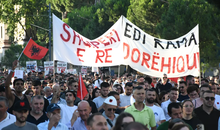
Police continue proceedings after the protest, 31 citizens prosecuted
2026-06-29 16:23:02
Lawyer Kujtim Cakrani terminates legal representation of Ilir Meta
2026-06-29 16:08:51
After World Cup failure, South Korea coach targets threats
2026-06-29 15:53:15
Albanian children put violence and mental health at the top of their concerns
2026-06-29 15:33:21
When “irony” becomes an alibi: Rama, the starchitects and “The Albanian Files”
2026-06-29 15:15:32
The bullet damaged his main vein, the injured man is headed to Trauma.
2026-06-29 15:01:57
Shooting in Germany, 5 killed and several injured
2026-06-29 14:56:00

Fire in Llakatund, Vlora, wind favors rapid spread of flames
2026-06-29 13:57:09
Shooting in Pogradec, young man with criminal record injured
2026-06-29 13:41:16
Who are the Israeli businessmen who pay for Edi Rama's private jet trips?
2026-06-29 13:27:33
Europe is "scorching", over 1,300 victims of extreme heat
2026-06-29 13:06:55

Belgian newspaper: Protests exposed Rama's image as a gangster
2026-06-29 12:14:00
Scotland coach resigns after World Cup exit
2026-06-29 11:36:35


Police officer dies in Vërmica, suspected of being hit by a driver from Albania
2026-06-29 10:05:08
"Banjat e Benja between Harese and the destruction of Albanian nature"
2026-06-29 09:32:24
Foreign exchange rate June 29/ How much the dollar and euro are bought and sold
2026-06-29 09:13:34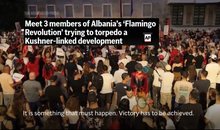
AP dedicates report to protest: "Flamingo Revolution" draws world attention
2026-06-29 08:56:11
Avoid peak hours, temperatures reach up to 39 degrees today
2026-06-29 08:19:42
Morning Post/ In 2 lines: What mattered yesterday in Albania
2026-06-29 08:02:17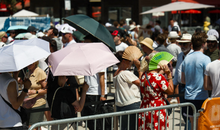
Over 1,300 dead from heatwave in Europe
2026-06-28 21:57:50

Mrekulli në Venezuelë! Foshnja 18-ditëshe shpëtohet pas 32 orësh nën gërmadha
2026-06-28 21:11:49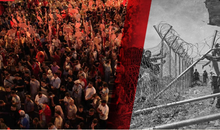
State capture through territory
2026-06-28 20:56:31
Ronaldinho returns to the field after 11 years
2026-06-28 20:43:17
Why do we cry when we are happy? Science gives the answer
2026-06-28 20:20:29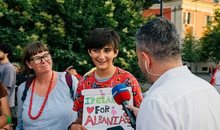

29th protest in Tirana, citizens march towards the Prime Minister's Office
2026-06-28 19:38:10

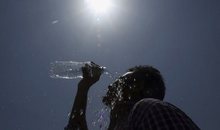
WHO warns: Europe is experiencing one of the deadliest heatwaves
2026-06-28 18:33:01
"The Albanian Files": How did Albania turn into a money laundering laboratory?
2026-06-28 18:14:59
Before the EU, 20% of construction sites lack safety standards
2026-06-28 17:58:11
Publikohet formacioni më i mirë i raundit të tretë në Botëror
2026-06-28 17:35:31
Si të mbroheni nga vala e të nxehtit?
2026-06-28 17:12:55
Berisha heads to Vienna for the EPP Assembly, focusing on the report on Albania
2026-06-28 16:49:42
Why don't Germans have air conditioning at home?
2026-06-28 16:30:40
Fire in Mallakastër, Bylis Archaeological Park at risk
2026-06-28 16:10:22
Conflict with brothers over properties, former director of Vlora Police arrested
2026-06-28 15:53:52
Rama retracts statement: I did not say "F*ck you" to Albanians
2026-06-28 15:39:23
Chain accident on the Durrës-Tirana highway, two injured
2026-06-28 15:20:25


EU grants $5.6 million in aid to Venezuela after devastating earthquakes
2026-06-28 13:22:38


Citizen "nails" Shalsi: Nikaj-Mërturi has not seen any investment from you
2026-06-28 11:19:40
62-year-old prisoner dies after being in the same cell with his son
2026-06-28 11:01:53
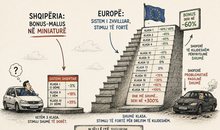
Albania, bonus-malus in "miniature", how do we compare with Europe
2026-06-28 10:24:39
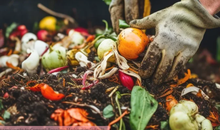
Agricultural waste, untapped potential for the circular economy in Albania
2026-06-28 09:44:41
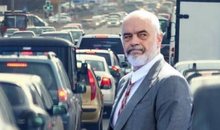
Tourist Albania "stuck" in traffic
2026-06-28 09:00:18
Horoscope, discover the star forecast for your sign
2026-06-28 08:40:31
Weather forecast for today, June 28, 2026
2026-06-28 08:18:30
Morning Post/ In 2 lines: What mattered yesterday in Albania
2026-06-28 08:02:47
7 phobias of people you've probably never heard of
2026-06-27 22:00:07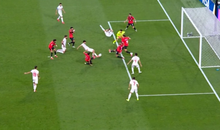
VAR anulon golin e Iranit, publikohen pamjet që ndezin polemika
2026-06-27 21:34:04

Protein discovered that may be linked to brain aging and memory
2026-06-27 20:45:28
Italian MEP joins protest against Rama
2026-06-27 20:18:16