 Flash News
Mathematics exam grades released
The number of people poisoned at the Police Academy rises to 64, under investigation by "Sori-AL" and AKU
Gunfight in Shkodra, two arrested, one wanted
Albania is 'scorching', temperatures up to 40 degrees are predicted
Weather forecast, how temperatures will vary throughout the day
Agriculture and industry are declining, who is contributing to economic growth?

Politiko
2026-06-26 14:02:38
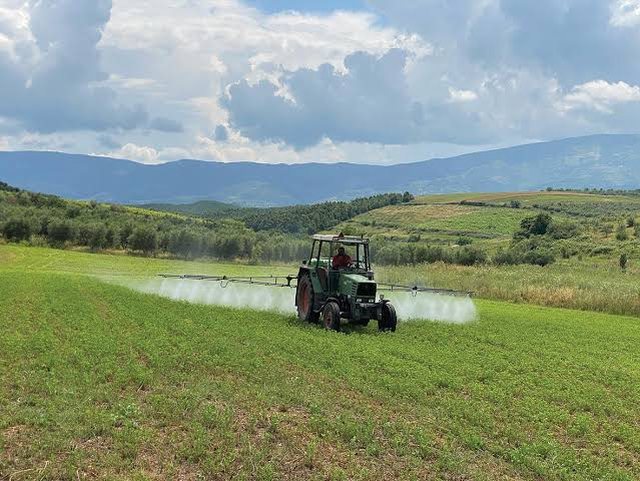
One of the arguments most often heard in public opinion is that Gross Domestic Product (GDP) is growing. And it is true. According to INSTAT, the Albanian economy also grew during 2025.
But the question that thousands of young people who are protesting today are asking is much more important than the numbers themselves: What economy is growing? Who is contributing to its growth? The INSTAT report shows that agriculture, one of the most important sectors of the Albanian economy, made a negative contribution. Industry made a negative contribution. Meanwhile, a significant part of the growth came from public administration, education, health and net taxes on products.
So, while the productive economy weakens, the distributive economy continues to expand.
This is where the problem begins. And this problem did not arise today. For more than a decade, Albania has not been moving towards an economy based on production, competition and merit. On the contrary, a model has been gradually built where the weight of the state has constantly increased and where public administration has become an important instrument of power.
Meanwhile, in many Western countries, administrative bloat is avoided, as governments know very well what consequences it brings. They know that a state that artificially expands beyond the real needs of society harms productivity, burdens taxpayers, and creates a relationship of dependence between citizens and the government.
In developed democracies, the success of a government is measured by the number of businesses created, productivity that increases, exports that expand, and opportunities that open up for citizens.
For years, a different philosophy has been cultivated in our country. Many people have become accustomed to seeing the state not as a guarantor of equal rules, but as the main source of economic privilege.
Meanwhile, public funds, which should have gone to the development of production, education, agriculture, scientific research, or support for entrepreneurship, have been used largely to feed an increasingly large and expensive state.
But something has changed. The young. The generation protesting today seems to have understood better than anyone else that this economic and political model only produces dependence instead of freedom.
Because it's not just a protest against a government. It's a protest for meritocracy. For economic freedom. For dignity. For the right of every young person to build their life thanks to the skills they have and not thanks to the connections they can provide. After all, the protesters are not asking how much GDP has increased.
They are asking a much deeper question:
If this is the path to success, why is the generation that should build the future of Albania leaving? And until this question is given an honest answer, the protests will not only continue, but will find more and more citizens who will join them. /Eduart Sharka, Monitor
Latest news
"The second Enver" defeated us worse than the first one!
2026-06-26 14:56:35
Bardhi on attacks on protesters: The demand is Edi Rama's resignation
2026-06-26 14:37:28
Scorching weekend, June ends with high temperatures of up to 39 degrees
2026-06-26 14:22:48
Agriculture and industry are declining, who is contributing to economic growth?
2026-06-26 14:02:38
'Karavasta Park corruption affair'/ DP: The company "Voltalia" was favored!
2026-06-26 13:45:15
Drug gang in Mykonos destroyed, led by an Albanian
2026-06-26 13:27:21
Mathematics exam grades released
2026-06-26 13:09:10
Poisoning of 64 Security Academy students, "Sori-Al" administrator questioned
2026-06-26 12:36:15

File 5D/ GJKKO releases Taulant Tushen from house arrest
2026-06-26 11:10:30
Be careful with the algorithm, but not with the causes that concern Rama
2026-06-26 10:53:16
Gunfight in Shkodra, two arrested, one wanted
2026-06-26 10:18:10
Albania is 'scorching', temperatures up to 40 degrees are predicted
2026-06-26 09:36:54
Rama's alibi falls / The phenomenon of protest tourism is born in Albania
2026-06-26 09:18:30

"The situation as a couple will not..." what the stars predict for you
2026-06-26 08:40:20
Weather forecast, how temperatures will vary throughout the day
2026-06-26 08:33:33

Morning Post/ In 2 lines: What mattered yesterday in Albania
2026-06-26 07:56:32

Why will Paraguay be one of the host cities for the 2030 World Cup?
2026-06-25 22:36:05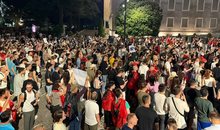
"Rama ik" invades the boulevard, drone footage shows the scale of the protest
2026-06-25 22:17:00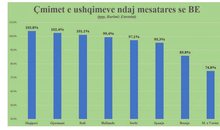
Protester: I came from London, let's give Rama the final blow!
2026-06-25 20:35:52
Citizens repeat 5 demands to the Prime Minister: We want a technical government
2026-06-25 20:14:30
Erotic messages during official hours, ILD demands dismissal of KLP member
2026-06-25 18:48:58

RSF: Journalists in Albania under pressure, government not keeping promises
2026-06-25 17:58:24

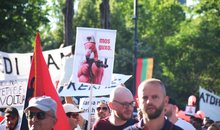
International academics support mass protests in Albania
2026-06-25 16:48:29
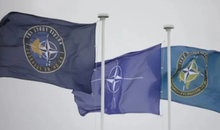
Kosovo not invited to NATO Summit, Ministry of Defense explains reasons
2026-06-25 16:10:01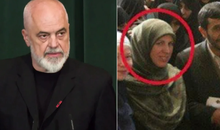
Rama announced it
2026-06-25 15:56:19
Tiranë/ Grabitën banesën nën kërcënimin e armës, dy të arrestuar,
2026-06-25 15:47:50
Vala e të nxehtit dhe alkooli , një kombinim i keq për shëndetin
2026-06-25 15:36:35
What's happening with the Bënja baths, from curative to ponds
2026-06-25 15:22:25
They abused economic aid funds, security measures are given to 6 state employees
2026-06-25 15:05:51


Doctors sound the alarm: 4 kitchen items you should replace as soon as possible
2026-06-25 14:25:03
He stabbed his brother to death, the perpetrator was arrested in Kavaja
2026-06-25 14:00:36
Is the heat wave giving you 'mental fog'?
2026-06-25 13:53:08
Iran demands accountability for NATO's "complicity" in war
2026-06-25 13:35:13
Bardhi: Refusal of debates, violation of the Assembly's regulations
2026-06-25 13:21:57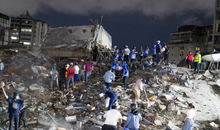
Two powerful earthquakes hit Venezuela, at least 164 dead and hundreds injured
2026-06-25 13:12:19
Domestic production loses ground, economy increases dependence on imports
2026-06-25 13:00:16
SP rejects protesters' demands, rejects DP's request for a motion with debate
2026-06-25 12:48:15
The only beach in Europe that separates men from women with a wall
2026-06-25 12:31:17

Business Index: Corruption undermines investment confidence in Albania
2026-06-25 12:10:40
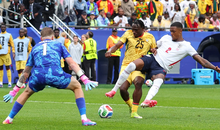
World Cup 2026: The picture of the 1/16 is formed, here are the qualified teams
2026-06-25 11:42:01
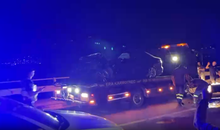
Accident near Milot Bridge, 4 injured, one in serious condition
2026-06-25 11:16:53
EU proposes tax reform to cut business costs by €8 billion a year
2026-06-25 10:50:06
Disregard for environmental protection hurts Albania's hopes for EU membership
2026-06-25 10:25:06
Details from the crime in Kavaja, how a brother killed his brother over a road
2026-06-25 10:01:42
German MEP joins protest against Rama: Money and power do not buy every beach
2026-06-25 09:52:02

Quarrel in Sukth, uncle stabs nephew
2026-06-25 09:09:44
Rama's fictional world, in front of human reality
2026-06-25 09:07:48
Foreign exchange, how much foreign currencies are sold and bought today
2026-06-25 08:54:17
Scandal repeats! 30 Security Academy trainees poisoned again
2026-06-25 08:39:10
Horoscope, what do the stars have in store for you today?
2026-06-25 08:12:17
Stable conditions, high temperatures expected
2026-06-25 07:58:55
Posta e mëngjesit/ Me 2 rreshta: Çfarë pati rëndësi dje në Shqipëri
2026-06-25 07:44:30
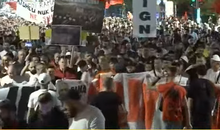
Thousands of citizens march through Tirana: Arrest Balluk!
2026-06-24 22:20:14
Family crime, 76-year-old man stabs his brother to death in Kavaja
2026-06-24 22:01:36
"Albanian Files", The Prime Minister between the Emperor and the Gangster!
2026-06-24 20:00:10
Rain does not deter protesters, they gather at "Skënderbej" Square
2026-06-24 19:33:28