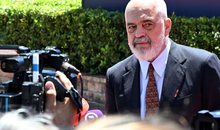
In several consecutive promises, mainly during election campaigns in 2017 and 2021, Mayor Erion Veliaj said with conviction that Tirana would be supplied with water in 100% of its territory.
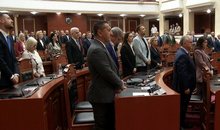
"The good news for citizens is that we are starting the last major investment so that not only 70% of Tirana will have 24-hour supply, but 100% of Tirana will be supplied with water," Veliaj declared in 2021, while accompanied by Prime Minister Rama, they inspected the works at the Bovilla plant.
Despite promises and the increase in the price of water in Tirana, since January 2018, the current situation shows that numerous areas in the capital have problems with the supply of drinking water, especially in its two units 1 and 2, but also in villages.
Water is supplied on a limited schedule and in some cases is completely absent, and the "solution" remains the supply by water tankers from the Tirana Water and Sewerage Company.
"Currently, the problematic areas in the drinking water supply are: the New Sauk area; the Old Sauk area; Mjull Bathore; the Selita area," says UKT.
Water with a "drip"...!
In some neighborhoods of Tirana, water supply has been problematic. Two of the densely populated areas, Selita and Sauku, are on the red maps as having serious problems with the normal supply of drinking water.
Faktoje.al contacted citizens from other neighborhoods of Tirana, where it turned out that in the 5 Maji Neighborhood, on "Siri Kodra" street, and from the Ali-Demi area to near the Çollak Neighborhood, in the southeast of Tirana, citizens are complaining about interruptions in water supply.
Referring to the problem areas, UKT tells Faktoje that the reason for the shortage is related to water waste. “…drinking water is wasted for irrigation, washing vehicles, filling leaking and damaged swimming pools, etc. The amount of drinking water is calculated per capita and not for its waste,” says UKT.
According to her, the misuse of drinking water by individuals for various reasons as well as interventions in the network are the main causes of the imbalance in water distribution.
Deposits as a solution
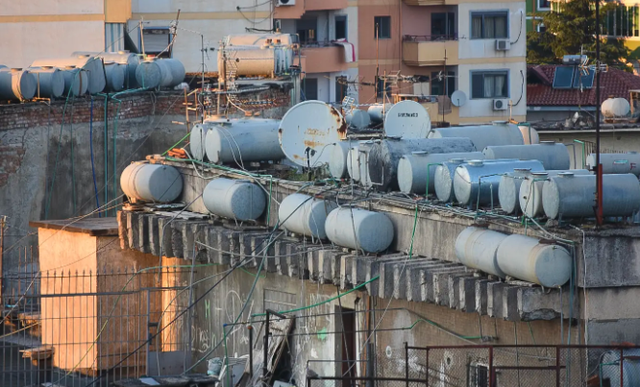
Another promise from Mayor Veliaj for Tirana was that with the uninterrupted supply of water to Tirana, the residents themselves would have to remove the deposits that were mainly located on the terraces of buildings. This request turned into an "order" to remove them immediately after the tragic earthquake of November 26, 2019.
"This story has been going on for a long time in our city. We decided to remove all water tanks from the terraces, not to leave them without an alternative, but so that in cooperation with the administrators of the buildings they have the opportunity, like the new buildings, in the common space, on the first floor or in one of the parking spaces, to install a common tank for all residents; so, not each one his own," said Mayor Erjon Veliaj.
Currently, the tanks are a salvation for residents as the water that comes with a limited schedule in some areas is only 1 hour, especially in Sauk, and if they were not equipped with tanks, the problems would be even greater. When asked what to do when there is no water for more than 24 hours, UKT replied: "When the shortage exceeds 24 hours, we assist in the supply with trucks to cover the areas of housing that have a water shortage until the problem is resolved."
Tirana far from the promise
The WRA (Water Regulatory Authority) report for 2024 reviewed the water supply in 61 municipalities in the country, with only Lezha being an exception with uninterrupted supply while other municipalities have problems.
Tirana is also among the four municipalities in the country that supply residents with 13-20 hours of water per day. The WRA notes that another problem remains the collection of water consumption fees.
"The WRA has recommended to water utilities that they should pay special attention to equipping 100% of consumers with meters so that consumers pay for the real volume of water consumed, but also to the fact that flat-rate billing leaves room for water waste by consumers for irrigation, especially those in private homes and rural areas," the report states.
While UKT, in its response to Faktoje, says that, "for 2025, the main project is the continuation of the expansion of the Bovilë drinking water treatment plant with 1200 l/sec, as well as the identification or elimination of leaks and waste of drinking water, by cooperating with other institutions and through new technologies."
conclusion
Tirana continues to face a shortage of drinking water in some of its areas, especially in units 1 and 2, mainly during the summer months. Despite the investments made in improving the distribution network and in the Bovilla plant, the capital continues to be regularly supplied with drinking water. We will consider the promise of 24-hour drinking water supply by the mayor of Tirana, Erion Veliaj, an unfulfilled promise./ Faktoje.al
Latest news

Guard rapes protester during Rama's meeting /VIDEO
2026-06-05 20:39:18
Protest against Rama also in Berlin
2026-06-05 20:14:09
Meta's lawyer: If Rama does not testify, the process is not complete
2026-06-05 20:01:14
How the US naval blockade has cost Iran $6 billion in oil revenue
2026-06-05 19:44:17
Even after the crisis, expensive oil still a challenge for Albania
2026-06-05 19:09:39
Kosovo Police Arrest Serbian List Activist
2026-06-05 18:50:39
Accident at Kombinat, car hits minor
2026-06-05 18:33:56
Rama clashes with Zvërnec resident: Who are you talking to?
2026-06-05 18:27:35
Von der Leyen: Albania should quickly follow Montenegro
2026-06-05 18:13:32
These zodiac signs will find love in June!
2026-06-05 18:01:33
Increased security for Rama's visit to Vlora
2026-06-05 17:46:32
The Rossoneri lose one place in the FIFA rankings
2026-06-05 17:32:56
Police remove 14 sea piers in Ksamil
2026-06-05 17:16:07
Urban accident near Tirana Court, several injured
2026-06-05 16:56:32
Belgium considers selling royal jewels to fill budget gaps
2026-06-05 16:45:02
Socialist MP Klevis Jahaj appears in SPAK
2026-06-05 16:01:00
Photo/ Hundreds of citizens bid farewell to Enea Mekolli
2026-06-05 15:39:58

Citizen puts knife to the neck of a street police officer
2026-06-05 15:03:38

A comparison of problematic projects in Belgrade and Zvërnec
2026-06-05 14:19:49

Berisha: We support the citizen protest for Zvërnec, but the DP is not involved
2026-06-05 13:29:19
Beautiful ugly protest
2026-06-05 13:10:56
Berisha: Enea Mekolli is a hero twice, his killer was financed with state funds
2026-06-05 12:25:45

Transparency Board sets new fuel prices
2026-06-05 11:38:15

The Director of the Albanian Railways, Ergys Verdho, appears again at SPAK
2026-06-05 11:02:56

Foreign exchange/ How much foreign currencies are bought and sold today
2026-06-05 09:49:44
From Rama's hands to the ministries, 16 institutions change their dependence
2026-06-05 09:37:06

Two cars collide on the Kardhiq-Delvinë axis, one dead and 3 injured
2026-06-05 08:35:38
With alternating clouds, what is the weather forecast for today?
2026-06-05 08:20:50

Morning Post/ In 2 lines: What mattered yesterday in Albania
2026-06-05 07:57:11
Hasimja: Albania is losing a historic chance for EU integration
2026-06-04 22:57:39
US Senate confirms Eric Wendt as US ambassador to Albania
2026-06-04 22:30:33


Andoni Iraola is officially Liverpool manager
2026-06-04 20:52:27
Killed in the line of duty, family refuses to bury officer in Martyrs' Cemetery
2026-06-04 20:26:26
EU to provide $116 million in aid to Lebanese army
2026-06-04 18:12:12

Plane crashes in Croatia, at least 4 dead
2026-06-04 16:31:32
Berisha: Lands in Zvërnec were seized by Pjerini from Lezha and Agaç from Berat
2026-06-04 16:26:52
Minatorët e Bulqizës vijojnë bojkotin e punës, kërkojnë rritje pagash
2026-06-04 16:17:31
Former Montenegrin police chief banned from entering Serbia
2026-06-04 16:05:34
The moment when Gjesti enters the record company's offices armed
2026-06-04 15:03:29

The Euro-Lek exchange rate falls again, heading towards the threshold of 95 Lek
2026-06-04 14:33:00
Balluk's wealth "collapses", SPAK seizes his villa in Dhërmi
2026-06-04 14:00:13
Watermelon, the heart's ally in summer
2026-06-04 13:56:33
The board continues to "ping pong" with fuel prices, oil increases again
2026-06-04 13:39:24
Bardhi asks Rama to the Assembly: The interpellation is not delegated!
2026-06-04 13:21:54
House of Representatives approves measure to end Iran war
2026-06-04 13:14:35
Car ends up in canal, residents save father and son
2026-06-04 12:55:58
SPAK requests 98 years in prison for Durim Bami, Aldo Avdyli and 5 others
2026-06-04 12:39:43

Video/View from the scene where the policeman was killed in Maliq
2026-06-04 11:52:46
SPAK knocks on Igli Tare, former footballer included in Balluku file
2026-06-04 11:16:36


Four ways your attention is manipulated
2026-06-04 10:52:57
Policeman's murder, Bardhi reacts: Shocked, I strongly condemn the serious act
2026-06-04 10:30:35