 Flash News
Tomatoes, eggs and peppers, the "arsenal" of protesters for MPs in front of the Parliament
Greek customs officers' protest blocks Kapshtica, traffic suspended for 4 hours
Rain, storms and hail, the weather worsens today in some areas of the country
Disloyalty with Zvërnec/ Rama's proposals for canceling or not the project are revealed
A truck carrying a defective car was involved in an accident on the Librazhd-Elbasan axis.
Eurostat: Albania ranks fourth in Europe for deaths from air pollution

Politiko
2026-07-27 08:46:40
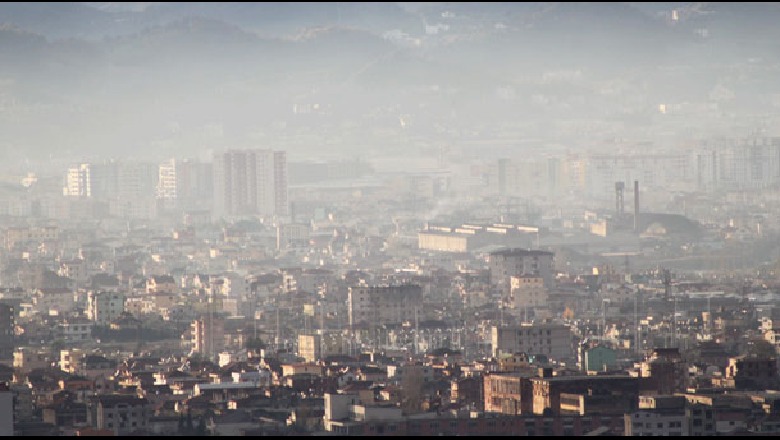
Although Albania does not have a developed industry on the scale of major European economies, it ranks among the countries with the most serious health consequences from air pollution.
With 129 premature deaths per 100,000 inhabitants, the country is fourth in Europe for mortality attributable to exposure to fine PM2.5 particles, according to the latest Eurostat data for 2023.
Higher levels than Albania are recorded only in North Macedonia, with 146 deaths per 100,000 inhabitants, Bosnia and Herzegovina, with 139, and Serbia, with 132.
Albania's indicator is more than three times higher than the European Union average, which in 2023 was 41 premature deaths per 100,000 inhabitants.
What does the indicator measure?
The Eurostat indicator measures the number of premature deaths attributable to exposure to fine particles in the air, known as PM2.5.
These particles are smaller than 2.5 micrometers in diameter. Due to their very small size, they can penetrate deep into the lungs and cause inflammation or worsen the condition of people suffering from heart and lung diseases.
Premature deaths are those that occur before the expected age of death, calculated according to life expectancy in each country, gender and age group. The estimates are based on the methodology of the European Environment Agency.
PM2.5 is created mainly by the burning of solid fuels for heating homes, industrial activities, and transportation.
Exposure is not only related to the presence of heavy industry, but also to the heating method, fuel quality, age of vehicles, waste incineration, and geographical conditions that impede the dispersion of pollution.
The Balkans bear the heaviest burden
The data shows a strong divide between the Balkans and the northern and western parts of Europe.
After Albania comes Kosovo, with 121 deaths per 100,000 inhabitants. Montenegro records 89 deaths, while Croatia 75. Neighboring European Union countries also show high levels: Bulgaria has 104 deaths per 100,000 inhabitants, Greece 98 and Romania 74.
At the other end of the scale are the Nordic countries. Finland records just one premature death per 100,000 inhabitants, Sweden two, Estonia three and Norway four. In Iceland the figure is zero.
Albania has a rate about 129 times higher than Finland, over six times higher than Portugal, and almost five times higher than Germany.
Why North Macedonia has the highest rate
North Macedonia leads the European ranking with 146 premature deaths per 100,000 inhabitants.
According to the OECD, the annual average concentration of PM2.5 in this country reached 22.3 micrograms per cubic meter in 2021, the highest level in the Western Balkans and more than four times above the World Health Organization guideline.
The main sources of pollution are the burning of lignite for energy production, industry, old and insufficiently controlled vehicles, open burning of waste, and heating of homes.
The World Bank estimates that residential heating is one of the most important sources of pollution in the Western Balkans, especially during winter. In North Macedonia and Kosovo, the residential sector generates almost half of PM2.5 emissions.
The geographical position of cities, especially Skopje, worsens the situation, as atmospheric conditions and terrain favor the accumulation of pollutants near the surface.
The EU has halved deaths, but differences remain large
In the European Union, the number of premature deaths related to PM2.5 has fallen significantly over the last two decades.
In 2005, fine particle pollution was attributed to around 423,600 premature deaths in the EU. The number fell to around 346,400 in 2007, 286,600 in 2018 and 182,400 in 2023.
Despite improvements at the European level, the gap between countries remains wide. Southeastern and Eastern European countries continue to have a much higher health burden than Nordic and Western European countries.
Target for 2030
The indicator is linked to Sustainable Development Goal SDG 11, which aims for more sustainable cities and communities, and specifically to reducing the negative environmental impact of cities, paying particular attention to air quality.
The European objective is to reduce by at least 55%, compared to 2005, the health impacts of air pollution expressed through premature deaths from PM2.5 by 2030.
The threshold set for the EU is around 190,600 deaths in 2030. With around 182,400 deaths recorded in 2023, the European Union as a whole has already fallen below the target level, but the situation varies significantly from one country to another./Monitor
Latest news
Greek customs officers' protest blocks Kapshtica, traffic suspended for 4 hours
2026-07-27 09:42:00

Eurostat: Albania ranks fourth in Europe for deaths from air pollution
2026-07-27 08:46:40
Rain, storms and hail, the weather worsens today in some areas of the country
2026-07-27 08:31:40
58th protest, citizens return to the Parliament in the last session
2026-07-27 08:16:00
Morning Post/ In 2 lines: What mattered yesterday in Albania
2026-07-27 07:59:52
Ekspertët zbulojnë ngjyrën ideale të dhomës së gjumit për të fjetur më mirë
2026-07-26 21:46:01
What is behind the record strengthening of the lek?
2026-07-26 21:00:00



The 4 zodiac signs that are considered the most trustworthy
2026-07-26 19:42:24

Joshua after the fight with Kristian Prengë: I just thought about keeping calm
2026-07-26 18:33:26
Fires sweep southwest France, over 220,000 people evacuated near Bordeaux
2026-07-26 18:17:06
Debate over donations brings healthcare system financing back into focus
2026-07-26 17:55:00

Rita Ora tells her family story: I am proud to be an immigrant
2026-07-26 17:20:00
Massive fire engulfs Soda Forest, pine areas at risk
2026-07-26 16:59:57
When 'Besa' doesn't even convince the left: Who came out against Rama's 'Besa'?
2026-07-26 16:45:00
Fire in Zvërnec, smoke covers Vlora
2026-07-26 16:23:13
Grevë në doganat greke, kufizime disaorëshe në 4 pikat kufitare me Shqipërinë
2026-07-26 16:07:46
Meteorology warns of scorching August, temperatures could reach up to 40°C
2026-07-26 15:54:00
The end of July could bring financial luck to these 3 zodiac signs
2026-07-26 15:36:00





Zhupa: Saranda hostage to a poorly designed terminal, wasted time, traffic
2026-07-26 14:03:54
Milot–Balldren: Si turp, si faj, si brengë, si pabesi!
2026-07-26 13:20:41
Shooting in Debar, a 38-year-old man in handcuffs, 9 people are being prosecuted
2026-07-26 13:02:44
He bought products and paid with fake euros, 24-year-old arrested in Durrës
2026-07-26 12:45:15
Mountains Package/ Bardhi: Even Diella no longer trusts Rama, resigns
2026-07-26 12:28:15


Scandal with medical student exams, Minister of Education resigns
2026-07-26 11:08:36
War crisis, the world is consuming less oil
2026-07-26 10:47:53
Triple accident on the Peqin-Elbasan axis, two people injured
2026-07-26 10:26:28

Car bursts into flames after accident on Tirana-Durres highway
2026-07-26 09:23:47
Clear skies across the country, weather forecast for today
2026-07-26 09:01:36
Accident in Vlora/ 52-year-old dies, five others injured (Names)
2026-07-26 08:42:00
Horoscope July 26, 2026, discover the star predictions
2026-07-26 08:23:48
Morning Post/ In 2 lines: What mattered yesterday in Albania
2026-07-26 07:56:03


22-year-old man injured by gunfire in Laç
2026-07-25 20:13:01
Red and black flags and calls for change, Albanians protest in Munich
2026-07-25 19:38:39
Former socialist minister announces candidacy for Vlora Municipality
2026-07-25 18:54:12
Fires engulf France and Spain, around 270,000 people evacuated
2026-07-25 18:32:36
The master of loloisms or the lolo of the workers?!
2026-07-25 18:10:38

Musk predicts the end of money: You won't need it in 2036
2026-07-25 17:26:57
REL Analysis: Who is lobbying the United States from Serbia and why?
2026-07-25 17:03:59
Two-faced, cynical and bankrupt!
2026-07-25 16:44:00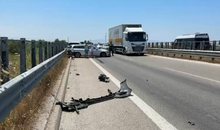
Accident on the Tirana-Durrës highway, two vehicles collide near Maminas
2026-07-25 16:28:27
Lee Kang-in leaves PSG, transfer to Atletico Madrid is official
2026-07-25 16:12:00


Coffee may help protect the liver from obesity
2026-07-25 14:58:00

KTA: Floods caused 100 million dollars in losses in agriculture in 1 decade
2026-07-25 14:24:13
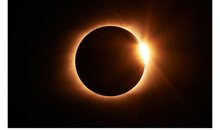
The solar eclipse of August 12, the rare spectacle that will fascinate Europe
2026-07-25 13:51:15
Babo's Covenant and the Expulsion of Braça
2026-07-25 13:26:14

Do you have faith? What about institutions?
2026-07-25 12:56:42
Berisha: Rama ignored the protesters' demands
2026-07-25 12:30:00

Mashtronte klientët me servis automjetesh në Astir, arrestohet 37-vjeçari
2026-07-25 10:36:21
Fires near Madrid hit NASA facilities, space communications station evacuated
2026-07-25 10:21:36
Noise "suffocates" cities, Vlora leads at night, Tirana and Saranda follow
2026-07-25 10:00:35

Horoskopi, zbuloni parashikimin e yjeve për shenjën tuaj
2026-07-25 08:43:31
Suspect arrested for murder of Italian journalist hiding in abandoned building
2026-07-25 08:37:06

Morning Post/ In 2 lines: What mattered yesterday in Albania
2026-07-25 08:04:15

After Rama's statements, GoFundMe for the Bulku family reaches $150,000
2026-07-24 20:58:29
Një sprint i fundit për investitorët para kufizimeve të BE-së?
2026-07-24 20:37:05
10 reasons why Prrenjas should not merge with Librazhd
2026-07-24 20:17:57
Not just the face and body, here are the areas we forget to protect from the sun
2026-07-24 20:01:11


The Assembly meets in plenary session on Monday
2026-07-24 18:51:19