 Flash News
The balance in Roskovec is getting heavier, Refit Buzi's ex-mother-in-law also passes away
Mother of autistic boy responds to Rama: Don't use my son! I wasn't protesting, I was taking him to therapy
Refit Buzi killed his ex-father-in-law and seriously injured his ex-mother-in-law, commits suicide
"The Atlantic": Protestat nuk janë kundër Trump, shënjestra është Edi Rama
Strong storm and hail, Elbasan is affected by bad weather
10 reasons why Prrenjas should not merge with Librazhd

Politiko
2026-07-24 20:17:57
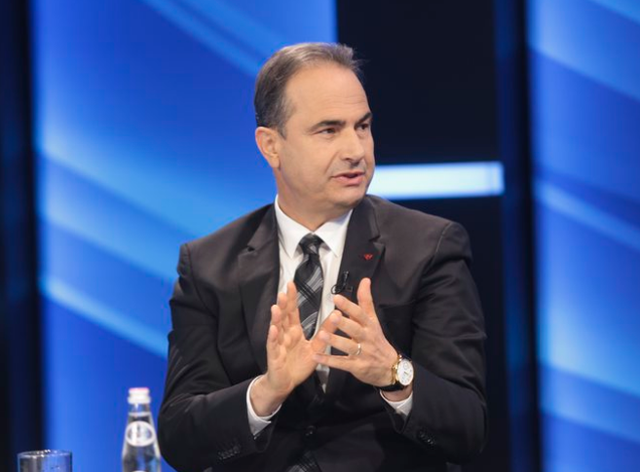
By Luciano Boci
1. Prrenjas has sufficient demographic mass to be a separate municipality.
According to the 2023 Census, the Municipality of Prrenjas has 18,768 inhabitants, organized into four administrative units: Prrenjas, Qukës, Stravaj and Rrajcë. This is not a ghost municipality with a few hundred inhabitants, but a territory with a population comparable to many other municipalities that continue to exist separately. Librazhd has 23,312 inhabitants. So, the merger would not be the integration of an insignificant unit, but the merging of a complete community into another.
2. The merger would create a municipality that would be too large and difficult to administer.
Prrenjas and Librazhd are separated by about 29 kilometers of road, while many villages of Rrajca, Stravaj, Qukës, Lunik or Stëbleva are much further from the possible administrative center. A map can connect them with a line. The resident, meanwhile, must make the route in reality, not with a mouse.
3. The administrative center would be moved away from the citizens of Prrenjas.
Services currently received in Prrenjas would gradually be concentrated in Librazhd: documentation, urban planning, economic assistance, local taxes, permits, forest and land administration. For residents of remote areas, this means more time, more expenses and less access.
4. Prrenjas has a distinct territorial and economic identity.
Prrenjas is naturally connected to the axis Qukës–Rrajcë–Qafë Thanë, Qafë Plloçë, with mining, agricultural, forestry, tourist activities and with the corridor towards Pogradec in North Macedonia. Librazhd has another functional extension, along the Shkumbini valley and towards the areas of Çermenika and Stëbleva. The two territories can cooperate without being forced to lose their institutional individuality.
5. Prrenjas is a strategic border and transport hub.
Its position near Qafë Thanë gives Prrenjas a specific role in transport, trade, tourism and cross-border cooperation. A territory with this profile needs an administration that focuses precisely on these opportunities, not an administrative periphery that competes for attention with an even larger space.
6. The union would weaken the political representation of the area.
Prrenjas would lose its mayor, a council focused on its own problems, and some of its weight in decision-making. In a joint council, the needs of Qukës, Rrajca, and Stravaj would compete with those of the seven administrative units of Librazhd. The usual result is known: the center gets the investments, the periphery gets the promises.
7. Administrative savings are not proven.
Removing the name “municipality” does not eliminate the needs of the territory. Local offices, field workers, road maintenance, water supply, cleaning, civil protection and social services are still needed. Some management positions may be removed, but the real costs of service remain. They may even increase due to distances and a larger territory.
8. Union does not solve depopulation, on the contrary
Depopulation is fought with jobs, roads, schools, health, support for agriculture and investment. It is not fought by eliminating local institutions. When an area is losing residents, the answer cannot be to remove its administrative center. This is like closing the ambulance to a patient because he is sick.
9. Prrenjas has a coherent urban and rural network.
Its four administrative units form a connected territory around the city of Prrenjas and the national axis. Rrajca Qukësi, the Prrenjas unit and Stravaj are units that have an identifiable center and a functional relationship between them.
10. Reform should bring power closer, not further away.
The fundamental principle of decentralization is subsidiarity. Decisions should be made as close to the citizen as possible. The Prrenjas–Librazhd Union would do the opposite. It would expand the territory, move the center away, and reduce accountability.
So Prrenjas should not be merged with Librazhd because it is a territory with a population, identity, economy, strategic position and special needs. It does not need to be merged, but to be strengthened.
Territorial reform should not produce large municipalities on the map that are unattainable in real life. Prrenjas should remain a separate municipality, with more powers, more funding, and more services for its citizens.
Latest news
Një sprint i fundit për investitorët para kufizimeve të BE-së?
2026-07-24 20:37:05
10 reasons why Prrenjas should not merge with Librazhd
2026-07-24 20:17:57
Not just the face and body, here are the areas we forget to protect from the sun
2026-07-24 20:01:11


The Assembly meets in plenary session on Monday
2026-07-24 18:51:19
Revolta vazhdon, qytetarët mblidhen për të 55-ën ditë në sheshin 'Skënderbej'
2026-07-24 18:10:00

9 në 10 europianë do ta konsideronin mundësinë e shpërnguljes jashtë vendit
2026-07-24 17:30:00

Republika Srpska lobbies with millions in the US for its independence
2026-07-24 16:21:00
Lightning strikes herd of cattle in Pogradec, 10 sheep and goats die
2026-07-24 16:15:00
"The Atlantic": Protestat nuk janë kundër Trump, shënjestra është Edi Rama
2026-07-24 15:54:06
Reforma territoriale 2.0 e PS: Bashkitë që rrezikojnë shkrirjen
2026-07-24 15:29:00
Dështojnë negociatat për t’u dorëzuar, Refit Buzi kërcënon me vetëv*asje
2026-07-24 15:16:00

RENEA in negotiations with Refit Buzin, the 35-year-old threatens suicide
2026-07-24 14:30:07
Strong storm and hail, Elbasan is affected by bad weather
2026-07-24 14:12:20
"They have 'parked' their face instead of their butt", who is Edi Rama with?
2026-07-24 13:22:24
Rama admits failure in healthcare: Elderly people queue up before sunrise
2026-07-24 13:01:53
The constitutive session of the Kosovo Assembly is scheduled for August 6th.
2026-07-24 12:21:36
Accident on the Peqin-Elbasan segment, van hits pedestrian to death
2026-07-24 11:31:19




The killers of justice celebrate the tenth anniversary of the corpse
2026-07-24 09:13:17
With rain and clouds, what is the weather forecast for today?
2026-07-24 08:09:53
Morning Post/ In 2 lines: What mattered yesterday in Albania
2026-07-24 07:53:51
A fight with hard objects in Shëngjin, one person injured
2026-07-23 22:56:03
EU Ambassadors Visit Northern Kosovo: Rule of Law to Be Applied Equally
2026-07-23 22:41:44
Bushati: The protest aged the face of Rama's government
2026-07-23 22:15:28
Taxis take the place of citizens for free car charging in parking lots in Tirana
2026-07-23 21:55:06
Violence as a portrait of governance
2026-07-23 21:34:55
Former footballer criticizes Rama for protest: You surpass even Enver Hoxha
2026-07-23 21:18:47
Activist: The police protecting Rama and Balluku had received orders to shoot us
2026-07-23 20:57:25


Vacationer in Vlora injured by boat propellers, suspected of having cuts on leg
2026-07-23 18:21:00
Video/ Protesters 'wash' SP MP's car with eggs
2026-07-23 18:04:23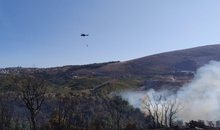
Fire continues to spread in the villages of Finiqi, firefighter injured
2026-07-23 17:48:02
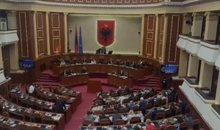
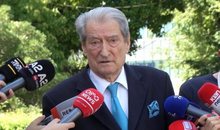
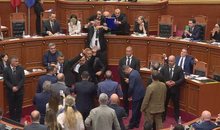
The moment Bardhi throws water at Rama, Peleshi expels him from Parliament
2026-07-23 16:29:07
Rama në Kuvend, opozita bllokon foltoren, mazhoranca mbyll diskutimet
2026-07-23 15:42:56
Drones 'scan' Berat, hundreds of fines for traffic violations
2026-07-23 15:21:53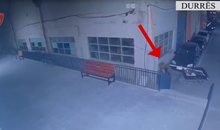
7 theft cases solved in Durrës, 29-year-old arrested
2026-07-23 15:07:51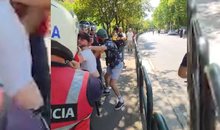
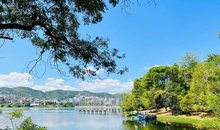
From Bovilla to the Adriatic: Polluted waters everywhere!
2026-07-23 14:45:02
Core inflation reaches highest level since 2023
2026-07-23 14:31:22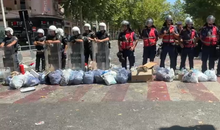
"Don't protect the trash", the protesters' symbolic message to the Police
2026-07-23 14:21:49
European Union fines Google $1 billion
2026-07-23 14:11:18

EU calls for repeal, government paves way for privatization of protected areas
2026-07-23 13:21:00
Protesters pelt Interior Minister Besfort Lamallari with eggs
2026-07-23 13:28:00

Tear gas and pepper spray, 17 people end up in hospital
2026-07-23 13:06:10
The opposition blocks the podium, the plenary session is interrupted
2026-07-23 12:52:00
Berisha condemns Balla's characterization of protesters as "terrorists"
2026-07-23 12:42:00
Zhupa-Vengut: Where are the two planes for the fires?
2026-07-23 12:29:53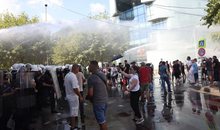
Eggs thrown during protest, police escort 5 citizens
2026-07-23 12:20:00
Tabaku sfidon deputetët socialistë që të përballen me qytetarët në protestë
2026-07-23 12:10:23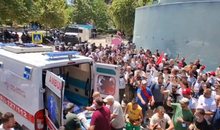
Citizen loses consciousness during protest, taken to hospital by ambulance
2026-07-23 12:03:53
"Crime MP", protesters 'ambush' Sara Mila
2026-07-23 11:46:05

Emërohet shefi i ri i Komisariatit të Vlorës
2026-07-23 11:17:08