
 Flash News
Serious accident near TEG, a concrete mixer falls from the overpass onto the highway
Facebook, Instagram and Messenger out of service for many users!
Bad weather in Saranda, a fisherman is found dead at sea
Violation of Muçi Shaljani's employment procedures, 6 months in prison for two former AMP officials
She lost contact with her family, the Brazilian embassy asked for help/ The story of the woman involved in prostitution in Albania is revealed
Did the reinvestment of profits influence the "Glorious Uprising" of the lek?

Politiko
2026-07-22 18:40:58

Irena Beqiraj
The best compliment I get and give to someone I disagree with is not "You're right", but "You made me think"!
Only reexamining knowledge helps you understand the complexity where everything seems simple.
So the debate about whether the reinvested profits of foreign companies have influenced the "Glorious Uprising" of the strengthening of the lek, made me think and reread again.
One of the most difficult differences for finance students to understand has always been the difference between net income and cash flow. In the not-so-simple Corporate Financial Analysis course, I always started explaining this difference with the famous expression that "Net profit is an opinion, net cash flow is a fact."
Net profit is an opinion because its value depends on the standards and methodologies followed in financial reporting, so the value of profit would change depending on them. While cash flow does not. That is why when evaluating a company, analysts pay more attention to cash flow and not net profit.
That said, when foreign companies reinvest profit, even though it is considered an increase in capital and is presented as such, the economic event is not accompanied by an additional monetary injection either in the company or in the economy. So it is simply a movement of amounts without monetary effect from the profit account to the capital account, without affecting the company's net cash flow and without creating an additional monetary base in the economy.
That said, the event of reinvesting profit is not accompanied by any new currency addition in the foreign exchange market, and as such creates neutrality in both the balance of payments and the exchange rate.
Since no cross-border money physically moves to ensure mathematical neutrality and a zero effect on the balance of payments, the Eurostat methodology stipulates that the 830 million euros of reinvested profits during 2025 are recorded in the balance of payments in two accounts as both an inflow and an outflow, thus zeroing out their effect on the balance of payments as well.
This theoretical explanation is also supported by empirical studies.
International empirical evidence does not show a strong direct link between retained earnings (reinvested profits) of foreign companies and the overvaluation of the domestic currency, precisely because retained earnings do not involve new flows or necessarily imply any foreign exchange transactions. Instead, the evidence shows only indirect effects and is conditional on whether reinvestment and FDI are generally associated with higher productivity and export expansion.
In Albania, the structure of foreign investment has little or no connection with productivity growth and exports. In fact, their low or no productive nature significantly limits their effect on the economy.
In short, theory and empirical studies converge on the same point: reinvested profits have little or no impact on the appreciation of the lek, because they do not affect the immediate demand for foreign currency or domestic currency. Any impact they have comes indirectly through increased productivity and export promotion!
The ultimate goal of this debate is not to produce consensus, much less dominance, but to push critical thinking, which is the main feature that distinguishes an ordinary economist from a good economist.
Because ordinary economists are like drivers who consider themselves good but can fall on the right road!
Latest news


Did the reinvestment of profits influence the "Glorious Uprising" of the lek?
2026-07-22 18:40:58

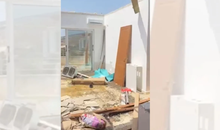
Storm destroys roof of 12-story building in Saranda, four families homeless
2026-07-22 17:30:00
Concrete mixer falls from height onto TEG roundabout, one victim and one injured
2026-07-22 17:01:00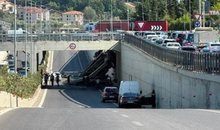





Real Madrid launches attack for Rodri
2026-07-22 15:35:40
Facebook, Instagram and Messenger out of service for many users!
2026-07-22 15:25:54


Guardiola in talks to coach Italy
2026-07-22 14:34:55


Academician Emin Riza, prominent researcher of cultural heritage, passes away
2026-07-22 13:41:12
Summer depression: Why do some people feel worse in the hot months?
2026-07-22 13:31:44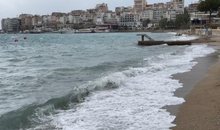
All vessels in Saranda are prohibited from going to sea.
2026-07-22 13:20:54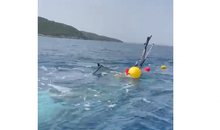
Bad weather in Saranda, a fisherman is found dead at sea
2026-07-22 13:13:00
This is the policeman from Kosovo who allegedly committed suicide in Kukës
2026-07-22 13:02:54




Hegseth: War with Iran has cost the US $37.5 billion
2026-07-22 12:10:00

Kontroll në burgun e Drenovës, Laert Haxhiut i gjendet telefon në qeli
2026-07-22 11:40:28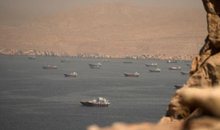
Could the US-Iran battle for Hormuz be a victory for Russia and China?
2026-07-22 11:26:48


Albania: a development model based on money laundering?
2026-07-22 10:56:56
After the "Cuban Package", Rama in Theth with the "Mountain Package"
2026-07-22 10:56:00

Euromoney crowns Credins bank as “Best Bank for Corporate Responsibility 2026”
2026-07-22 10:32:23
Kukës/ A police officer from Prizren is found without signs of life
2026-07-22 10:24:06

Albanian 'hawk' who terrorized England sentenced to 10 years in prison
2026-07-22 10:00:39
Strong storms sweep the country this weekend, here are the most at risk areas
2026-07-22 09:50:52
How do air conditioners affect health?
2026-07-22 09:38:00
France becomes first EU country to ban social media for children under 15
2026-07-22 09:27:11
Van collides with tractor on Rrogozhina-Lushnjë road, one injured / NAME
2026-07-22 09:19:00
The war for the algorithm: Hundreds of fake profiles target protest supporters
2026-07-22 09:05:36
Fire at waste landfill, toxic smoke invades Fushë-Krujë
2026-07-22 08:39:23

Unstable air masses and rain, this is the weather forecast for this Wednesday
2026-07-22 08:02:03

The storm also hits Albania, strong winds empty the Lungomare in Vlora
2026-07-21 22:34:30

770 kg of cocaine seized in Italy, most of the packages with Serbian flag
2026-07-21 21:46:44

Bad weather in Kosovo, one person dies, two others injured
2026-07-21 21:05:34


Protests against Rama's "algorithm", engaged voices from the square speak
2026-07-21 19:39:00
"Rama is gone", protesters gather again in Tirana after 52 days of resistance
2026-07-21 19:12:27



From Latin America to Kosovo/ How are women trafficked for sexual services?
2026-07-21 18:23:03
Nico Williams dedicates World Cup trophy to Neymar
2026-07-21 18:05:03
After three years in Tirana, Silvio Gonzato closes his mission in Albania
2026-07-21 17:41:00
Fire near apartments in Elbasan, explosions during firefighters' intervention
2026-07-21 17:22:00
Blendi Gonxhja insults protesters: A bunch of fools throwing stones
2026-07-21 16:55:46


The criminal returns to the scene of the crime!
2026-07-21 15:54:42
Emergency on London-Tirana flight, Ryanair plane makes forced landing
2026-07-21 15:42:41

Why does everyone want an Aquarius in their life?
2026-07-21 14:47:07

Albanians in the square for troubles, Gonxha in trouble for JLo
2026-07-21 14:29:00

The Supreme Court rejects Veliaj's appeal regarding pre-trial detention terms
2026-07-21 13:54:11


Assassination in Elbasan, suspected target was "Ot Kilë's" nephew
2026-07-21 13:10:57
Vokshi: MEP's statements sink Rama, SPAK to launch investigations
2026-07-21 12:59:36

Was Einstein ever wrong?
2026-07-21 12:32:36

Former Mayor of Divjaka Fredi Kokoneshi Appears in the Criminal Court
2026-07-21 12:14:35




Veliaj's lawyer fined for failing to appear at hearing
2026-07-21 11:12:41

Haxhiu seals the departures of 7 Serbian prosecutors
2026-07-21 10:53:36