 Flash News
The Supreme Court publishes the list of candidates for the Supreme Court of Kosovo, 7 judges in the race for 3 positions
From the cash register to the money bag, footage reveals the movements of the former chief of finance at the Durrës Post Office
Assassination in Elbasan, suspected target was "Ot Kilë's" nephew
Berisha makes strong accusations against Rama: He transported the money with a private plane, we will return the request for an investigative commission
'The country is emptying', IRI survey hits the government: Emigration is the number one failure, followed by corruption and prices
How Albania became the country with the highest cost of living in the Balkans within a decade

Politiko
2026-07-21 13:20:18

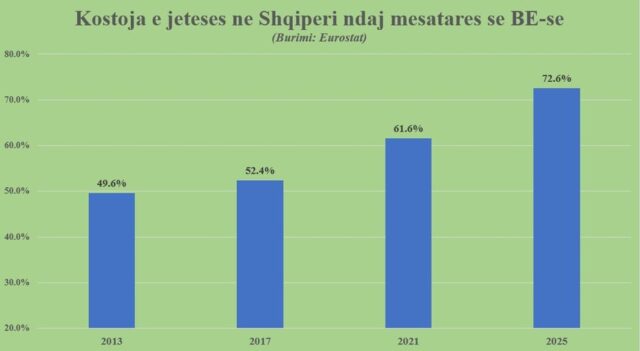
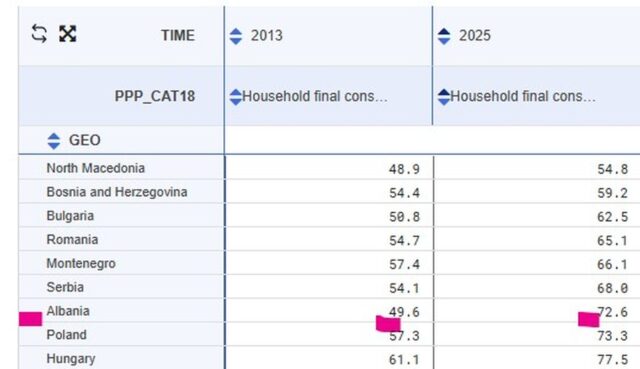
In 2013, Albania was the second-lowest cost of living in Europe. According to Eurostat, when Edi Rama took office as prime minister, the cost of living in Albania was 49.6 percent of the European Union average, ranking only behind Macedonia, where the overall price level was 48.9 percent of the EU average.
All other countries in the region and those of the European Union had a higher price level, ranging from 50.8 percent to 142.2 percent of the EU average.
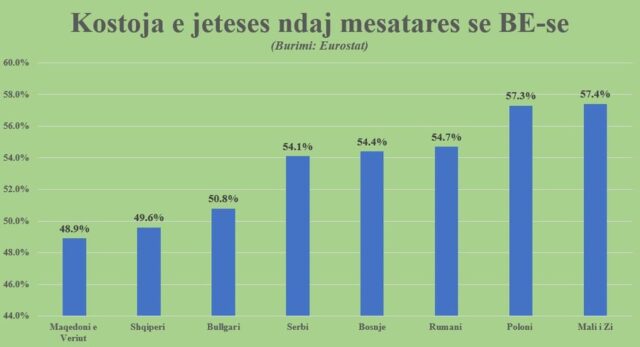
But the affordable cost of living in Albania would increase rapidly in the following years, as prices would rise at a rapid pace for all categories of goods and services.
In 2017, after a full mandate of the joint government between the Socialist Party and the former Socialist Movement for Integration, ironically referred to by the opposition as the Alliance of Stinks, the cost of living in Albania increased by 2.8 percentage points, reaching 52.4 percent of the European Union average.
Once again, the country continued to remain among the three freest in Europe, but the first mandate of the Socialists was only the prologue of what was to come.
In the first two years of Edi Rama's second term, now with the wheel and the pan all in his own hands, the cost of living in the country increased at an explosive pace, almost 6 full percentage points compared to the EU average, reaching 58.3 percent of the Union average.

Albania had now officially become the country with the most expensive cost of living, not only in the 6 Western Balkan countries, but had also left behind two European Union countries, namely Bulgaria and Romania, where the average cost of living was 53.6 and 55.5 of the EU average, respectively.
In the last year of the EU presidency, 2021, the overall cost of living in Albania reached 61.6 percent of the EU average. Albania had already surpassed Poland in terms of price levels, a country not only an EU member but also considered one of the new economic superpowers of the Union.
However, the more the worse. A third term would be even more fatal in terms of increasing the cost of living for Albanian citizens.
At the end of last year, the overall price level in Albania was 72.6 percent of the EU average. So in the last 4 years, the cost of living in Albania increased by an explosive 11 percentage points compared to the European Union average, while compared to 2013 it has increased by a full 23 percentage points.
In North Macedonia and Bosnia, the price level remained below 60 percent of the EU average, while in Serbia and Montenegro the indicator was below 68 percent.
Food and technology are emptying Albanians' pockets
In recent years, in addition to the average cost of living in EU countries and those in the accession process, Eurostat also began publishing detailed price data by group of goods and services.
These data show that above all, there are two categories of expenses that are taking the breath away from Albanian citizens. They are the prices of vital products, namely the group of food and non-alcoholic beverages, and the expenses that Albanians make on information and communication technology.
According to Eurostat, food prices in Albania are higher than the European Union average, namely 103.8 percent of the Union average. The data shows that food prices in Albania are more expensive than in Germany, the Netherlands, Italy, Portugal and many other countries that are several times richer than Albania.
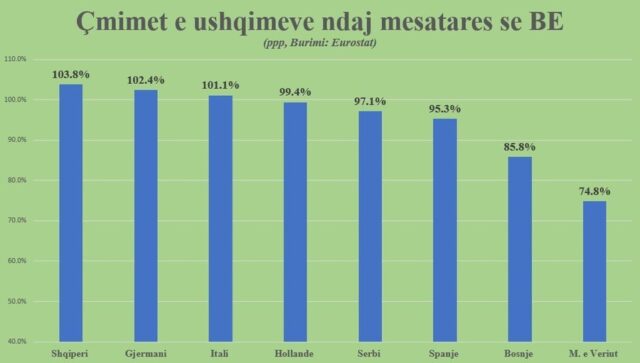
This indicator is the one with the highest weight in the overall cost of living in Albania and the factor that most determines why Albania is now the most expensive country among similar economies.
The unstoppable increase in the price of basic basket products, both in absolute terms and in terms relative to the European Union, comes at a time when the market is largely dominated by imported products and when the euro has depreciated by almost 33 percent against the lek, which should normally have reduced food prices in Albania, as these goods are mainly purchased in euros and sold in lek.
But the entire depreciation of the euro has apparently been captured entirely by merchants' profits, with no effect on price reductions for citizens.
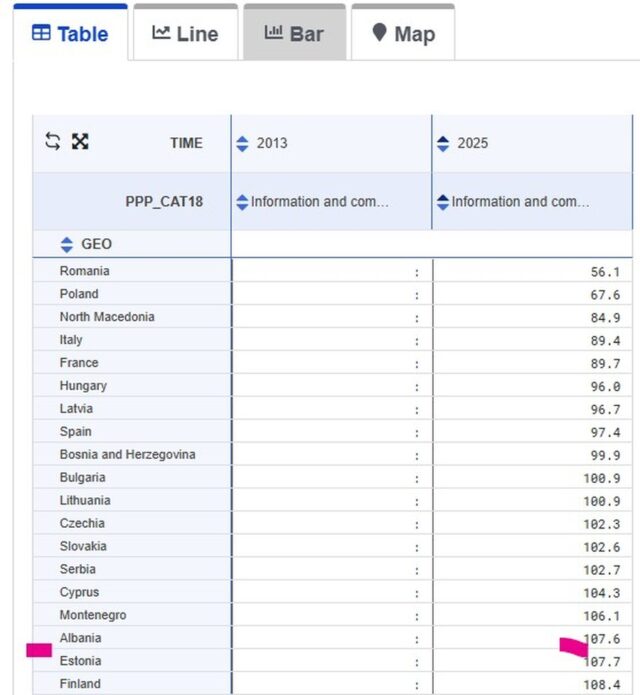
Meanwhile, the second group of products with unaffordable prices is that of technology and communication. This includes the prices of computers, servers, telephones, that is, all communication and information technology products. In this category, Albania has prices that are 107 percent of the European Union average, leaving behind countries like France, Italy and Spain.
But while price increases are rapidly converging towards European Union levels, Albanians' incomes have grown much more slowly.
According to Eurostat, for the period 2013-2025, the cost of living in Albania increased by a full 23 percentage points compared to the European Union average. For the same period, income or GDP per capita according to purchasing power increased by only 13 percentage points, from 30 percent of the EU average in 2013, to 43 percent at the end of last year.
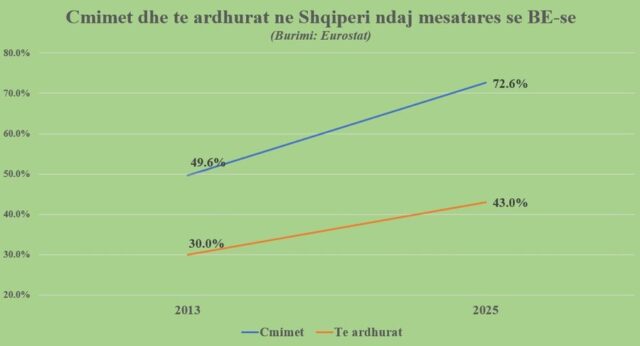
When prices rise more than incomes, the result is impoverishment of consumers and families. This is what has happened to Albanians over the last 12 years. /Kapitali.al
Latest news
The criminal returns to the scene of the crime!
2026-07-21 15:54:42
Emergency on London-Tirana flight, Ryanair plane makes forced landing
2026-07-21 15:42:41

Why does everyone want an Aquarius in their life?
2026-07-21 14:47:07
Albanians in the square for troubles, Gonxha in trouble for JLo
2026-07-21 14:29:00

The Supreme Court rejects Veliaj's appeal regarding pre-trial detention terms
2026-07-21 13:54:11


Assassination in Elbasan, suspected target was "Ot Kilë's" nephew
2026-07-21 13:10:57
Vokshi: MEP's statements sink Rama, SPAK to launch investigations
2026-07-21 12:59:36
Was Einstein ever wrong?
2026-07-21 12:32:36
Former Mayor of Divjaka Fredi Kokoneshi Appears in the Criminal Court
2026-07-21 12:14:35
Veliaj's lawyer fined for failing to appear at hearing
2026-07-21 11:12:41
Haxhiu seals the departures of 7 Serbian prosecutors
2026-07-21 10:53:36
Who benefits from the "strategic investor"?
2026-07-21 10:30:00


Sinaloa Cartel Boss Sentenced to Life in Prison
2026-07-21 10:00:21
Korça/ 66-year-old man found dead inside burned vehicle
2026-07-21 09:37:07
Foreign exchange, how much foreign currencies are bought and sold today
2026-07-21 08:50:57
Britain raises alarm: Albanians are running gangs from prison cells
2026-07-21 08:34:38

Horoscope, get to know the star forecast
2026-07-21 08:06:53

Why drinking alcohol during the day makes you feel more drunk
2026-07-20 22:58:31
Artan Hoxha provides details about the injury of 3 young people in Elbasan
2026-07-20 22:50:00
Cako: Our thoughts will change with waves, expect an alien "attack"
2026-07-20 22:31:39
Rrezikonte mbytjen në lumin Vjosa në Këlcyrë, shpëtohet turistja 10-vjeçare
2026-07-20 21:49:04
Shots fired at a bar in Elbasan, waiter injured
2026-07-20 21:07:42
Massive fire in an apartment in Greece, residents evacuated
2026-07-20 20:48:16
Accident in front of the Foreign Ministry in Tirana
2026-07-20 20:21:15

MEP warns Rama: EU is following the money, there will be consequences
2026-07-20 19:41:54
Fire along the Fier-Vlora highway, making vehicle traffic difficult
2026-07-20 19:27:12
Albanian arrested in Italy after 14 years for drug conviction
2026-07-20 19:02:28
Air pollution at alarming levels, the state 'turns a blind eye'
2026-07-20 18:01:57
Plenary session postponed to Thursday after tensions
2026-07-20 17:30:54
Albania is "burning" from the heat, up to 47°C, here's when the cool down comes
2026-07-20 16:46:58
Mother and son in danger of drowning on Shëngjin beach are rescued
2026-07-20 16:01:03
The 10 best national teams in World Cup history
2026-07-20 14:40:00
Andy Burnham officially appointed as new UK Prime Minister
2026-07-20 14:24:00
Two laws that do not solve the real problems of Albanian agriculture
2026-07-20 13:59:00
Berisha-Ballës: Rama ordered Maznik to act unilaterally on territorial reform
2026-07-20 13:51:25
Vokshi: 12 gangs have worked to support the SP in all regions
2026-07-20 13:25:32
"My job is done," Keir Starmer officially resigns
2026-07-20 13:11:39
Why numbers don't dampen protest
2026-07-20 13:01:26
Rama to convene parliamentary group and government on Friday
2026-07-20 12:55:00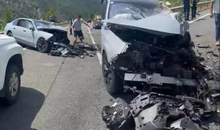
Car and truck collide on the Milot-Rrëshen road, 4 people injured
2026-07-20 12:46:16

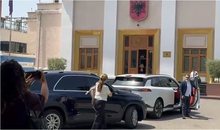
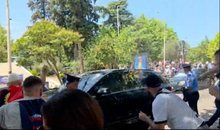
Protesters throw eggs at Kumbaro and Çuçi's vehicles
2026-07-20 12:05:00

With whips in their hands, citizens mock socialist MPs: Rama's sheep!
2026-07-20 11:32:54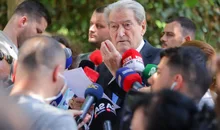
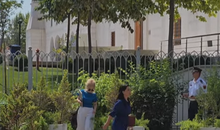
Evis Kushi and Iris Luarasi are greeted with whistles from protesters
2026-07-20 11:15:00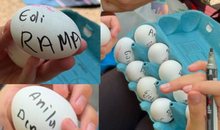

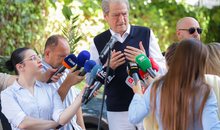
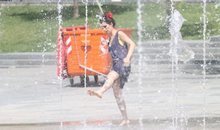
African heat wave ends, temperatures drop significantly from Wednesday
2026-07-20 10:51:08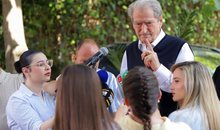
Berisha: I found large bundles of narco-euro in the corridors of SPAK
2026-07-20 10:41:37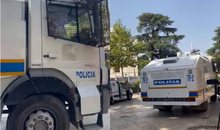
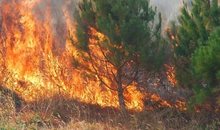
Flames engulf Iballa forests, arson suspected
2026-07-20 10:29:00
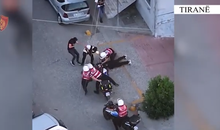
52-year-old arrested in Tirana, caught with grenades and TNT ready to explode
2026-07-20 10:01:30
Rubio: Iran is using the Strait of Hormuz as a tool of pressure
2026-07-20 09:53:00
Rodri named best player of the 2026 World Cup
2026-07-20 09:47:42