 Flash News
The Supreme Court publishes the list of candidates for the Supreme Court of Kosovo, 7 judges in the race for 3 positions
From the cash register to the money bag, footage reveals the movements of the former chief of finance at the Durrës Post Office
Assassination in Elbasan, suspected target was "Ot Kilë's" nephew
Berisha makes strong accusations against Rama: He transported the money with a private plane, we will return the request for an investigative commission
'The country is emptying', IRI survey hits the government: Emigration is the number one failure, followed by corruption and prices
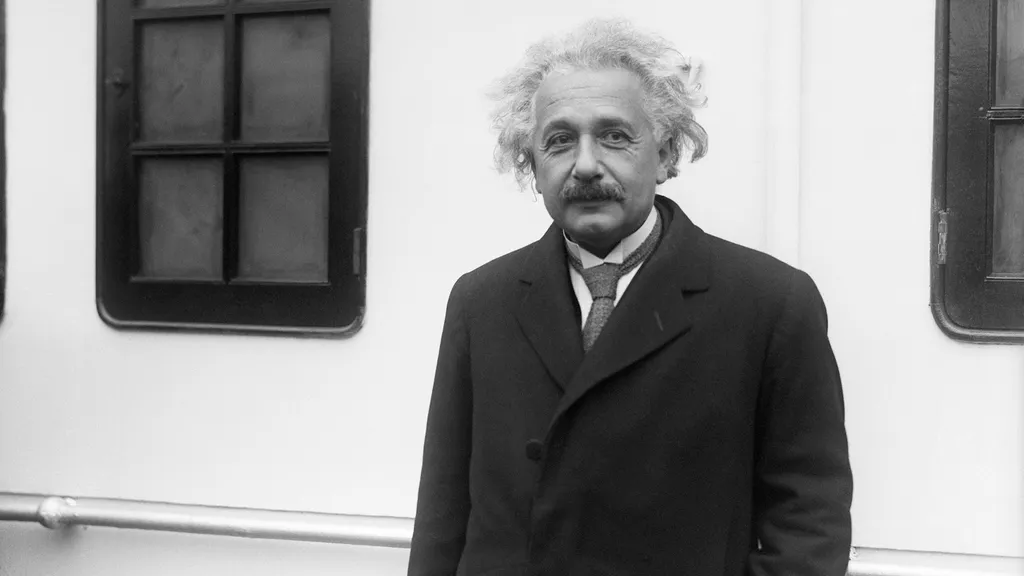
Albert Einstein gave us the theory of relativity, explained the photoelectric effect, and predicted the existence of gravitational waves. He revolutionized the way we understand space, time, and gravity.
In fact, he is so famous for his intelligence that the name "Einstein" has become synonymous with the word "genius." But being a genius doesn't mean being infallible. So, was Einstein ever wrong?
"He was definitely wrong about a lot of things," Nicolás Yunes, a theoretical physicist at the University of Illinois at Urbana-Champaign, told Live Science. "We remember him mostly for the things he was right about, because they shook the scientific world and, over time, influenced everyone on Earth."
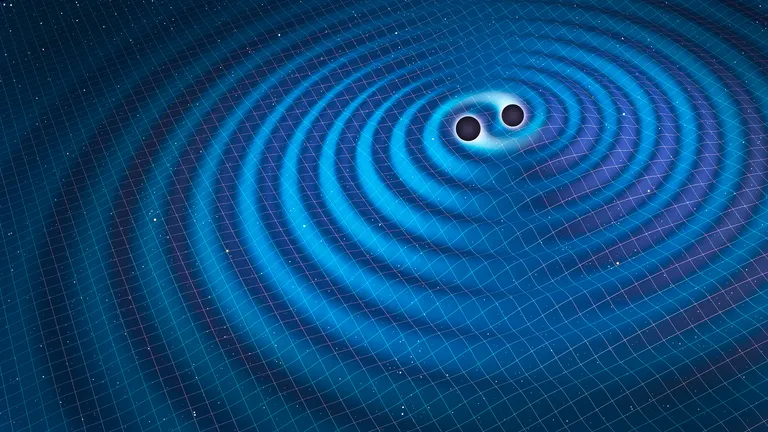
One of his most famous predictions, for example, was accompanied by a mathematical error. In 1916, Einstein correctly realized that the acceleration of matter could create ripples in space-time, which we now call gravitational waves. But when he and physicist Nathan Rosen tried to describe these waves mathematically, they ran into a problem: any solution to the equations of general relativity that allowed for gravitational waves “blew up,” Yunes explains.
"They contained singularities... divergences. And solutions that explode in this way cannot represent physical reality."
As a result, Einstein changed his mind and concluded that gravitational waves could not exist. He prepared an article and submitted it for publication to the journal Physical Review, which had just begun to use the peer-review system.
An anonymous reviewer discovered an error in Einstein's calculations. When he found out, he was so angry that he retracted the article and sent it to another journal.
However, the reviewer was right. The mathematical infinities that Einstein had found were merely a consequence of the way he chose to describe coordinates. Just as lines of longitude on Earth seem to converge at a "singularity" at the North Pole, even though nothing unusual happens on the ground, Einstein's mathematical problem could also be solved using a different coordinate system.
Unbeknownst to Einstein, the reviewer befriended his assistant and explained the error to him. The latter pointed it out to Einstein, who corrected the error and reprinted the article with the opposite conclusion: gravitational waves exist.
"Impossible" infinity
Surprisingly, Einstein made the same mistake again, or so it seemed.
Kur analizonte matematikën e vrimave të zeza, ai sërish hasi pafundësi matematikore, këtë herë në kufirin e një vrime të zezë. Edhe kësaj here arriti në përfundimin se një objekt i tillë nuk mund të ekzistonte.
"Ajnshtajni mbeti skeptik për ekzistencën e vrimave të zeza," tha për Live Science John D. Norton, profesor në Departamentin e Historisë dhe Filozofisë së Shkencës në Universitetin e Pittsburgh-ut.
"Ai ishte i bindur se do të kishte një singularitet në vetë horizontin e ngjarjeve të vrimës së zezë, ndërsa sot ai konsiderohet thjesht si pika nga e cila nuk ka më kthim për asgjë që bie brenda saj."
Por kësaj here Ajnshtajni nuk u bind se kishte gabuar. Sipas Nortonit, kjo nuk ishte thjesht kokëfortësi, por pasqyrim i bindjeve të tij filozofike për mënyrën se si matematika dhe fizika duhej të lidheshin me njëra-tjetrën.
"Ai nuk u bind nga analizat alternative që tregonin se pafundësitë matematikore ishin vetëm pasoja të metodave matematikore që ai parapëlqente," tha Norton.
Ajnshtajni dhe mekanika kuantike
Kundërshtimi i Ajnshtajnit ndaj mekanikës kuantike është ndoshta gabimi i tij më i njohur.
Objeksioni i tij kryesor lidhej me fenomenin e ngatërrimit kuantik, sipas të cilit dy grimca mund të lidhen në mënyrë të tillë që matja e njërës ndikon menjëherë te tjetra, pavarësisht distancës që i ndan.
Në një letër të vitit 1947 drejtuar kolegut të tij Max Born, Ajnshtajni shkroi:"Nuk mund ta besoj seriozisht këtë, sepse teoria nuk mund të pajtohet me idenë se fizika duhet të përshkruajë një realitet në hapësirë dhe kohë, pa veprime të çuditshme në distancë."
Ajnshtajni mendonte se ky fenomen i menjëhershëm binte ndesh me relativitetin special, sipas të cilit asgjë nuk mund të lëvizë më shpejt se drita. Prandaj ai besonte se mekanika kuantike ishte e paplotë dhe se duhej të ekzistonte një teori më e thellë që do ta shpjegonte realitetin.
"Ai vdiq pa e pranuar mekanikën kuantike," thotë Yunes.
Vetëm në vitin 1964, pothuajse dhjetë vjet pas vdekjes së Ajnshtajnit, John Bell tregoi se ngatërrimi kuantik ishte një fenomen real.
"Sot, një pjesë e madhe e teknologjisë që përdorim mbështetet në mekanikën kuantike, prandaj e dimë se ajo funksionon," thotë Yunes. "Por ajo ende nuk pajtohet me relativitetin e përgjithshëm, teorinë klasike të Ajnshtajnit."
Ai shton se është e mundur që relativiteti i përgjithshëm të mos jetë plotësisht i saktë. Nga ana tjetër, mund të ndodhë që mekanika kuantike të mos jetë përshkrimi i duhur kur bëhet fjalë për sisteme me gravitet jashtëzakonisht të fortë dhe për procese në shkallën e Plankut, ku efektet kuantike dominojnë.
Për shembull, qendra e një vrime të zezë është një vend ku materia është e ngjeshur në shkallë kuantike, ndërsa ndodhet njëkohësisht në fushën më të fuqishme gravitacionale të universit. Relativiteti i përgjithshëm parashikon aty një singularitet, ndërsa mekanika kuantike nuk ka ende një mënyrë për ta përshkruar atë.
Even his mistakes moved science forward.
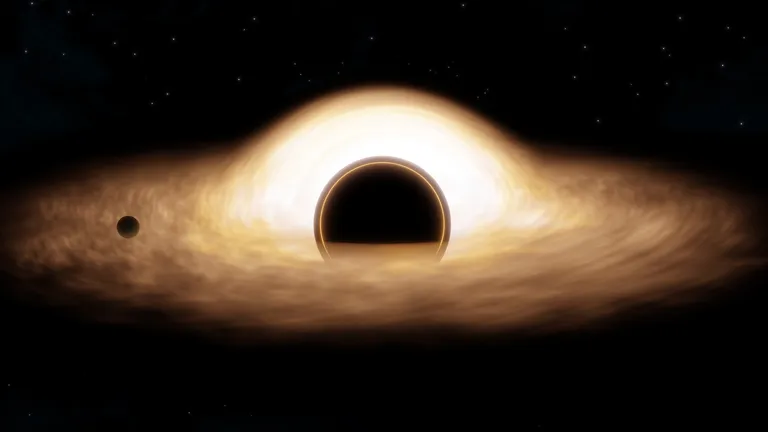
However, many of Einstein's mistakes helped advance science.
"General relativity is a good example," Norton says. "Einstein built it on the idea that he was extending the principle of relativity to apply to acceleration, as well as on what he later called Mahut's principle. Neither of these ideas turned out to be fully compatible with the final version of the theory of general relativity."
Einstein's mistakes may surprise many people, but not him.
Once, when he was writing a book with his collaborator Leopold Infeld, the latter told him to be extra careful because Einstein's name would appear in the book. Einstein laughed and replied: "Incorrect papers have been published even under my name." / Live Science
Latest news


The criminal returns to the scene of the crime!
2026-07-21 15:54:42
Emergency on London-Tirana flight, Ryanair plane makes forced landing
2026-07-21 15:42:41


Why does everyone want an Aquarius in their life?
2026-07-21 14:47:07

Albanians in the square for troubles, Gonxha in trouble for JLo
2026-07-21 14:29:00

The Supreme Court rejects Veliaj's appeal regarding pre-trial detention terms
2026-07-21 13:54:11



Assassination in Elbasan, suspected target was "Ot Kilë's" nephew
2026-07-21 13:10:57
Vokshi: MEP's statements sink Rama, SPAK to launch investigations
2026-07-21 12:59:36
Was Einstein ever wrong?
2026-07-21 12:32:36
Former Mayor of Divjaka Fredi Kokoneshi Appears in the Criminal Court
2026-07-21 12:14:35



Veliaj's lawyer fined for failing to appear at hearing
2026-07-21 11:12:41

Haxhiu seals the departures of 7 Serbian prosecutors
2026-07-21 10:53:36


Who benefits from the "strategic investor"?
2026-07-21 10:30:00


Sinaloa Cartel Boss Sentenced to Life in Prison
2026-07-21 10:00:21

Korça/ 66-year-old man found dead inside burned vehicle
2026-07-21 09:37:07


Foreign exchange, how much foreign currencies are bought and sold today
2026-07-21 08:50:57
Britain raises alarm: Albanians are running gangs from prison cells
2026-07-21 08:34:38

Horoscope, get to know the star forecast
2026-07-21 08:06:53

Why drinking alcohol during the day makes you feel more drunk
2026-07-20 22:58:31
Artan Hoxha provides details about the injury of 3 young people in Elbasan
2026-07-20 22:50:00
Cako: Our thoughts will change with waves, expect an alien "attack"
2026-07-20 22:31:39

Rrezikonte mbytjen në lumin Vjosa në Këlcyrë, shpëtohet turistja 10-vjeçare
2026-07-20 21:49:04
Shots fired at a bar in Elbasan, waiter injured
2026-07-20 21:07:42
Massive fire in an apartment in Greece, residents evacuated
2026-07-20 20:48:16
Accident in front of the Foreign Ministry in Tirana
2026-07-20 20:21:15

MEP warns Rama: EU is following the money, there will be consequences
2026-07-20 19:41:54
Fire along the Fier-Vlora highway, making vehicle traffic difficult
2026-07-20 19:27:12
Albanian arrested in Italy after 14 years for drug conviction
2026-07-20 19:02:28
Air pollution at alarming levels, the state 'turns a blind eye'
2026-07-20 18:01:57

Plenary session postponed to Thursday after tensions
2026-07-20 17:30:54

Albania is "burning" from the heat, up to 47°C, here's when the cool down comes
2026-07-20 16:46:58

Mother and son in danger of drowning on Shëngjin beach are rescued
2026-07-20 16:01:03



The 10 best national teams in World Cup history
2026-07-20 14:40:00
Andy Burnham officially appointed as new UK Prime Minister
2026-07-20 14:24:00

Two laws that do not solve the real problems of Albanian agriculture
2026-07-20 13:59:00
Berisha-Ballës: Rama ordered Maznik to act unilaterally on territorial reform
2026-07-20 13:51:25

Vokshi: 12 gangs have worked to support the SP in all regions
2026-07-20 13:25:32
"My job is done," Keir Starmer officially resigns
2026-07-20 13:11:39
Why numbers don't dampen protest
2026-07-20 13:01:26
Rama to convene parliamentary group and government on Friday
2026-07-20 12:55:00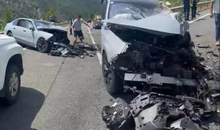
Car and truck collide on the Milot-Rrëshen road, 4 people injured
2026-07-20 12:46:16



Protesters throw eggs at Kumbaro and Çuçi's vehicles
2026-07-20 12:05:00


With whips in their hands, citizens mock socialist MPs: Rama's sheep!
2026-07-20 11:32:54

Evis Kushi and Iris Luarasi are greeted with whistles from protesters
2026-07-20 11:15:00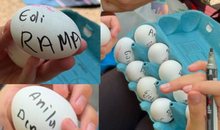



African heat wave ends, temperatures drop significantly from Wednesday
2026-07-20 10:51:08
Berisha: I found large bundles of narco-euro in the corridors of SPAK
2026-07-20 10:41:37
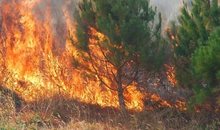
Flames engulf Iballa forests, arson suspected
2026-07-20 10:29:00

52-year-old arrested in Tirana, caught with grenades and TNT ready to explode
2026-07-20 10:01:30
Rubio: Iran is using the Strait of Hormuz as a tool of pressure
2026-07-20 09:53:00

Rodri named best player of the 2026 World Cup
2026-07-20 09:47:42