 Flash News
She lost contact with her family, the Brazilian embassy asked for help/ The story of the woman involved in prostitution in Albania is revealed
After the "Cuban Package", Rama in Theth with the "Mountain Package"
Albanian 'hawk' who terrorized England sentenced to 10 years in prison
Van collides with tractor on Rrogozhina-Lushnjë road, one injured / NAME
Storm causes injuries in Saranda, OSHEE employee dies while repairing electrical network
After the "Cuban Package", Rama in Theth with the "Mountain Package"

Politiko
2026-07-22 10:56:00
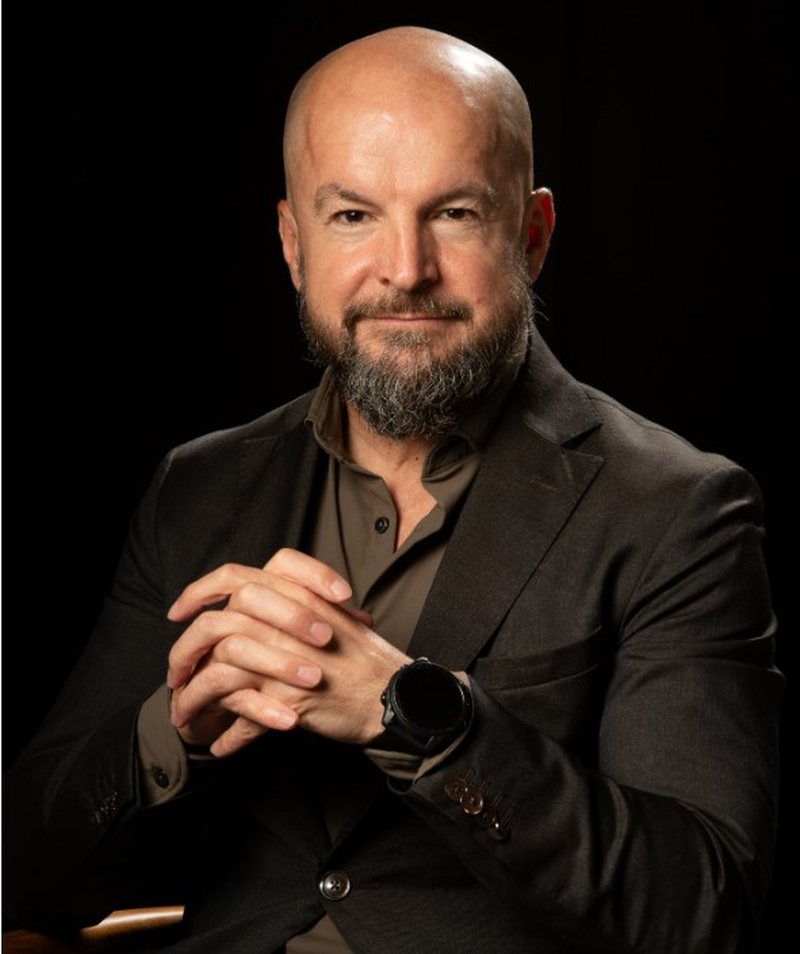
Alfred Lela
One season after he brought down both the guesthouses they had built and the promises he had made to them, Edi Rama climbed back up to Theth, the village that is still licking the wounds inflicted by the organized assault carried out by that very same prime minister. Much has changed since then, however.
Rama, who flattened the labor and livelihood of dozens of families in Theth with excavators and bulldozers, now finds his own political fortunes darkening in the face of a wave of protests that is slowly entering its second month: it seems that the flamingos of Narta are taking revenge on behalf of the eagles of Theth.
This time, Rama no longer has at his side Majlinda Koçeku, the area's MP, herself a daughter of Shala (Theth belongs to the historic bajrak of Shala). Apparently repulsed by his stance on Narta, her dissatisfaction, at least according to her own account, actually began with Theth a year ago.
Instead of the area's elected representative, Rama had surrounded himself with a sort of United Colors of Benetton: beginning with Benet of the Becaj clan and a few other wanderers who spoke as though they were from Theth simply because their wives happened to come from the village.
Anyone with even a passing knowledge of history could not help but be reminded, watching Rama's scenes in Theth yesterday, of the Communist officials who, after 1946, would travel into these mountains to register the population—or, more accurately, to place them under political surveillance. Their sense of superiority (or perhaps contempt) toward the highlanders manifested itself even in changing their ancestral Catholic surnames, replacing them with local toponyms or mocking labels improvised on the spot by the Party's emissaries.
Yesterday, Rama and Benet looked like reincarnated Communists—version 2.0 of the officials of 1946—pretending they had come to put Theth in order. Yet the more likely outcome is that they will disfigure, perhaps for the last time, that village which seems as though God Himself placed it in that valley, in the palm of His hand, so that it might reflect Him to the world—not reflect the world, and certainly not the world of Rama and Beci.
In this sense, Rama is committing one final betrayal of Northern Albania. He is throwing at its feet the so-called "Mountain Package," which, apart from being questionable in its objectives, may prove even more damaging in its consequences. The North, despite having less land than other parts of the country, has historically been the only region free from disputes over borders, land ownership, and pastures—and for reasons deeply rooted in tradition.
Every resident, every family, has preserved through generations—not on paper, but in collective memory—the boundaries of its own land and that of its neighbors. It is this shared understanding that has sustained social peace. The "Mountain Package" risks introducing an entirely unknown source of conflict into these regions. It threatens to transplant into Albania's mountains the chaos, disputes, and land grabbing that for years have plagued the Western Lowlands and the country's coastline.
This may well become Edi Rama's final gift to the North, one among many bitter gifts he has bestowed since coming to power in 2013. It could usher in the North's second criminalization. After the "Package of the Bandits"—filling Parliament with gangsters from Gegnia, from Kruja to the northern border—he is now proposing the "Mountain Package": the opening of a Pandora's box, the creation of a conflict where none has existed until now.
Anyone who has read the reports of the Jesuit missions in Albania from the late nineteenth and early twentieth centuries will recognize in Rama the same attitude displayed by Ottoman administrators toward the Catholic regions of Albania.
Of course, one cannot simply call Edi Rama a Turk, since he presents himself as many things—and, at the same time, as nothing at all.
Latest news



Hegseth: War with Iran has cost the US $37.5 billion
2026-07-22 12:10:00
Kontroll në burgun e Drenovës, Laert Haxhiut i gjendet telefon në qeli
2026-07-22 11:40:28
Could the US-Iran battle for Hormuz be a victory for Russia and China?
2026-07-22 11:26:48

Albania: a development model based on money laundering?
2026-07-22 10:56:56
After the "Cuban Package", Rama in Theth with the "Mountain Package"
2026-07-22 10:56:00

Euromoney crowns Credins bank as “Best Bank for Corporate Responsibility 2026”
2026-07-22 10:32:23
Kukës/ A police officer from Prizren is found without signs of life
2026-07-22 10:24:06

Albanian 'hawk' who terrorized England sentenced to 10 years in prison
2026-07-22 10:00:39
Strong storms sweep the country this weekend, here are the most at risk areas
2026-07-22 09:50:52
How do air conditioners affect health?
2026-07-22 09:38:00
France becomes first EU country to ban social media for children under 15
2026-07-22 09:27:11
Van collides with tractor on Rrogozhina-Lushnjë road, one injured / NAME
2026-07-22 09:19:00
The war for the algorithm: Hundreds of fake profiles target protest supporters
2026-07-22 09:05:36
Fire at waste landfill, toxic smoke invades Fushë-Krujë
2026-07-22 08:39:23

Unstable air masses and rain, this is the weather forecast for this Wednesday
2026-07-22 08:02:03
The storm also hits Albania, strong winds empty the Lungomare in Vlora
2026-07-21 22:34:30
770 kg of cocaine seized in Italy, most of the packages with Serbian flag
2026-07-21 21:46:44
Bad weather in Kosovo, one person dies, two others injured
2026-07-21 21:05:34


Protests against Rama's "algorithm", engaged voices from the square speak
2026-07-21 19:39:00
"Rama is gone", protesters gather again in Tirana after 52 days of resistance
2026-07-21 19:12:27



From Latin America to Kosovo/ How are women trafficked for sexual services?
2026-07-21 18:23:03
Nico Williams dedicates World Cup trophy to Neymar
2026-07-21 18:05:03
After three years in Tirana, Silvio Gonzato closes his mission in Albania
2026-07-21 17:41:00
Fire near apartments in Elbasan, explosions during firefighters' intervention
2026-07-21 17:22:00
Blendi Gonxhja insults protesters: A bunch of fools throwing stones
2026-07-21 16:55:46

The criminal returns to the scene of the crime!
2026-07-21 15:54:42
Emergency on London-Tirana flight, Ryanair plane makes forced landing
2026-07-21 15:42:41


Why does everyone want an Aquarius in their life?
2026-07-21 14:47:07

Albanians in the square for troubles, Gonxha in trouble for JLo
2026-07-21 14:29:00

The Supreme Court rejects Veliaj's appeal regarding pre-trial detention terms
2026-07-21 13:54:11


Assassination in Elbasan, suspected target was "Ot Kilë's" nephew
2026-07-21 13:10:57
Vokshi: MEP's statements sink Rama, SPAK to launch investigations
2026-07-21 12:59:36

Was Einstein ever wrong?
2026-07-21 12:32:36
Former Mayor of Divjaka Fredi Kokoneshi Appears in the Criminal Court
2026-07-21 12:14:35



Veliaj's lawyer fined for failing to appear at hearing
2026-07-21 11:12:41
Haxhiu seals the departures of 7 Serbian prosecutors
2026-07-21 10:53:36
Who benefits from the "strategic investor"?
2026-07-21 10:30:00


Sinaloa Cartel Boss Sentenced to Life in Prison
2026-07-21 10:00:21
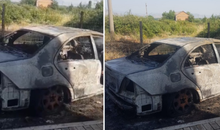
Korça/ 66-year-old man found dead inside burned vehicle
2026-07-21 09:37:07

Foreign exchange, how much foreign currencies are bought and sold today
2026-07-21 08:50:57
Britain raises alarm: Albanians are running gangs from prison cells
2026-07-21 08:34:38

Horoscope, get to know the star forecast
2026-07-21 08:06:53
Why drinking alcohol during the day makes you feel more drunk
2026-07-20 22:58:31
Artan Hoxha provides details about the injury of 3 young people in Elbasan
2026-07-20 22:50:00
Cako: Our thoughts will change with waves, expect an alien "attack"
2026-07-20 22:31:39
Rrezikonte mbytjen në lumin Vjosa në Këlcyrë, shpëtohet turistja 10-vjeçare
2026-07-20 21:49:04
Shots fired at a bar in Elbasan, waiter injured
2026-07-20 21:07:42
Massive fire in an apartment in Greece, residents evacuated
2026-07-20 20:48:16
Accident in front of the Foreign Ministry in Tirana
2026-07-20 20:21:15

MEP warns Rama: EU is following the money, there will be consequences
2026-07-20 19:41:54
Fire along the Fier-Vlora highway, making vehicle traffic difficult
2026-07-20 19:27:12
Albanian arrested in Italy after 14 years for drug conviction
2026-07-20 19:02:28