 Flash News
Albanian 'hawk' who terrorized England sentenced to 10 years in prison
Van collides with tractor on Rrogozhina-Lushnjë road, one injured / NAME
Storm causes injuries in Saranda, OSHEE employee dies while repairing electrical network
The storm also hits Albania, strong winds empty the Lungomare in Vlora
770 kg of cocaine seized in Italy, most of the packages with Serbian flag
Albania "lives to eat", food spending is 20.4% of the economy, a record in Europe

Politiko
2026-07-22 08:14:00
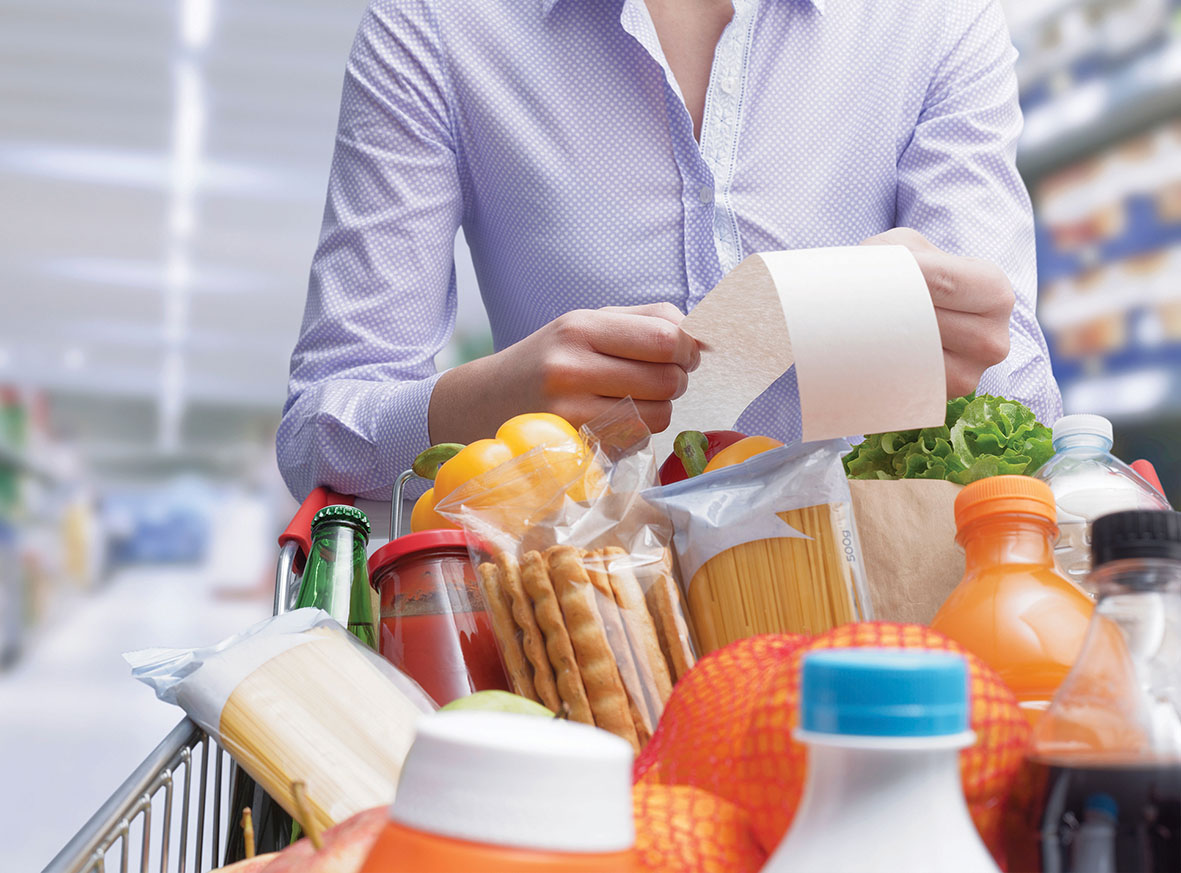
Despite economic growth and income in recent years, Albania remains an economy where a very large portion of financial resources is still used for food security.
According to Eurostat data, processed by Monitor, Albania continues to have the highest share of food expenditures in relation to the size of the economy, leaving behind not only European Union countries, but also all other economies in the region.
Statistics show that nominal food spending in Albania reached 20.4% of Gross Domestic Product (GDP) in 2025, up from 20.5% the year before. This means that a value equivalent to about one-fifth of the entire annual output of the Albanian economy is used to purchase food.
The high share of food indicates that Albanian households continue to spend a large portion of their income on basic needs. In higher-income economies, food accounts for a much smaller share of spending, as households have more money left over for housing, transportation, education, health, culture, and entertainment.
What does the indicator measure?
The data are part of Eurostat's database on purchasing power parity, price levels and expenditures by consumption categories.
The indicator used in this case is "nominal expenditure as a percentage of GDP" and measures the total value of food expenditure in a country, relative to the size of its economy.
Albania over the entire region
Albania ranked first in the region in 2025, with food spending at 20.4% of GDP.
Close behind was Montenegro, where food represented 19.9% of GDP, up from 19.3% in 2024. In Bosnia and Herzegovina, the weight increased slightly from 19% to 19.1%.
In North Macedonia, food spending accounted for 17.9% of GDP in 2025, down from 18.2% a year earlier.
The average of candidate and potential candidate countries, excluding Turkey and Kosovo, was 15.9% of GDP, about 4.5 percentage points lower than in Albania.
Serbia had a significantly lower level than the rest of the Western Balkans. Food spending accounted for 12.8% of GDP in 2025, up from 12.7% in 2024.
For Kosovo, the published table does not contain separate data.
Europe spends much less on food
The gap with the European Union is even greater. In the 27 EU countries, food spending represented an average of 6.2% of GDP in 2025.
In Albania, the share of 20.4% was over three times higher than the European average. The difference amounted to 14.2 percentage points.
Even compared to the poorest EU countries, Albania had a much higher share. In Romania, food accounted for 12.9% of GDP, in Bulgaria 11%, while in Greece 11.2%.
In Croatia, the share was 10.2%, in Portugal 11.4%, while in Poland 9%.
In Italy, food spending represented 7.9% of GDP, while in Spain it was 6.6%.
In higher-income countries, the weight of food in the economy was much lower.
In Germany, food spending accounted for 5% of GDP, in France 5.8%, in Austria 4.6% and in Switzerland 4%. In Denmark and the Netherlands, the ratio was only 4.4%, while in Norway 3.3%. The lowest levels were recorded in Luxembourg, with 2.8% of GDP, and in Ireland, with just 2.1%.
Food prices are more expensive than the EU average, according to purchasing power parity.
One of the factors that increases the family budget for food is their expensive prices, in relation to income. Other Eurostat data revealed that in 2025, food prices for the first time became about 3% more expensive than the European Union average. Prices have increased rapidly, from 85% of the EU average in 2022, to 99.6% in 2024, to 102.9% in 2025.
Simply put, a food basket that costs an average of 100 euros in the European Union costs around 103 euros in Albania, measured according to purchasing power, while the per capita income of Albanians is less than half the European average (48%, according to individual consumption per capita).
Albania is also the most expensive in the region. Serbia ranks second with an index of 96.6, although prices there have also gradually increased from 91.5 in 2022. Montenegro and Bosnia and Herzegovina have almost the same price level, 84.6 respectively, while North Macedonia remains the cheapest country in the region at 74.3% of the EU average. Data for Kosovo is missing.
5 billion euros, one fifth of the economy, for food
In nominal terms, food spending in Albania amounts to around 5 billion euros per year. Per capita, each Albanian, according to Eurostat, spent 2,349 euros in 2025, a figure that is comparable to the European Union average of 2,576 euros. Albania is surpassed in the region only by Montenegro (2,613 euros), but which has salaries that are almost 40% higher than in Albania. Macedonians (1,666), Bosnia and Herzegovina (1,620), and Serbia (1,735) spend less on food./ Monitor
Latest news
Kukës/ A police officer from Prizren is found without signs of life
2026-07-22 10:24:06

Albanian 'hawk' who terrorized England sentenced to 10 years in prison
2026-07-22 10:00:39
Strong storms sweep the country this weekend, here are the most at risk areas
2026-07-22 09:50:52
How do air conditioners affect health?
2026-07-22 09:38:00
France becomes first EU country to ban social media for children under 15
2026-07-22 09:27:11
Van collides with tractor on Rrogozhina-Lushnjë road, one injured / NAME
2026-07-22 09:19:00
The war for the algorithm: Hundreds of fake profiles target protest supporters
2026-07-22 09:05:36
Fire at waste landfill, toxic smoke invades Fushë-Krujë
2026-07-22 08:39:23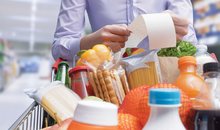

Unstable air masses and rain, this is the weather forecast for this Wednesday
2026-07-22 08:02:03
The storm also hits Albania, strong winds empty the Lungomare in Vlora
2026-07-21 22:34:30
770 kg of cocaine seized in Italy, most of the packages with Serbian flag
2026-07-21 21:46:44
Bad weather in Kosovo, one person dies, two others injured
2026-07-21 21:05:34
Protests against Rama's "algorithm", engaged voices from the square speak
2026-07-21 19:39:00
"Rama is gone", protesters gather again in Tirana after 52 days of resistance
2026-07-21 19:12:27

From Latin America to Kosovo/ How are women trafficked for sexual services?
2026-07-21 18:23:03
Nico Williams dedicates World Cup trophy to Neymar
2026-07-21 18:05:03
After three years in Tirana, Silvio Gonzato closes his mission in Albania
2026-07-21 17:41:00
Fire near apartments in Elbasan, explosions during firefighters' intervention
2026-07-21 17:22:00
Blendi Gonxhja insults protesters: A bunch of fools throwing stones
2026-07-21 16:55:46
The criminal returns to the scene of the crime!
2026-07-21 15:54:42
Emergency on London-Tirana flight, Ryanair plane makes forced landing
2026-07-21 15:42:41


Why does everyone want an Aquarius in their life?
2026-07-21 14:47:07
Albanians in the square for troubles, Gonxha in trouble for JLo
2026-07-21 14:29:00

The Supreme Court rejects Veliaj's appeal regarding pre-trial detention terms
2026-07-21 13:54:11

Assassination in Elbasan, suspected target was "Ot Kilë's" nephew
2026-07-21 13:10:57
Vokshi: MEP's statements sink Rama, SPAK to launch investigations
2026-07-21 12:59:36
Was Einstein ever wrong?
2026-07-21 12:32:36
Former Mayor of Divjaka Fredi Kokoneshi Appears in the Criminal Court
2026-07-21 12:14:35
Veliaj's lawyer fined for failing to appear at hearing
2026-07-21 11:12:41
Haxhiu seals the departures of 7 Serbian prosecutors
2026-07-21 10:53:36
Who benefits from the "strategic investor"?
2026-07-21 10:30:00


Sinaloa Cartel Boss Sentenced to Life in Prison
2026-07-21 10:00:21
Korça/ 66-year-old man found dead inside burned vehicle
2026-07-21 09:37:07
Foreign exchange, how much foreign currencies are bought and sold today
2026-07-21 08:50:57
Britain raises alarm: Albanians are running gangs from prison cells
2026-07-21 08:34:38

Horoscope, get to know the star forecast
2026-07-21 08:06:53
Why drinking alcohol during the day makes you feel more drunk
2026-07-20 22:58:31
Artan Hoxha provides details about the injury of 3 young people in Elbasan
2026-07-20 22:50:00
Cako: Our thoughts will change with waves, expect an alien "attack"
2026-07-20 22:31:39
Rrezikonte mbytjen në lumin Vjosa në Këlcyrë, shpëtohet turistja 10-vjeçare
2026-07-20 21:49:04
Shots fired at a bar in Elbasan, waiter injured
2026-07-20 21:07:42
Massive fire in an apartment in Greece, residents evacuated
2026-07-20 20:48:16
Accident in front of the Foreign Ministry in Tirana
2026-07-20 20:21:15

MEP warns Rama: EU is following the money, there will be consequences
2026-07-20 19:41:54
Fire along the Fier-Vlora highway, making vehicle traffic difficult
2026-07-20 19:27:12
Albanian arrested in Italy after 14 years for drug conviction
2026-07-20 19:02:28
Air pollution at alarming levels, the state 'turns a blind eye'
2026-07-20 18:01:57
Plenary session postponed to Thursday after tensions
2026-07-20 17:30:54
Albania is "burning" from the heat, up to 47°C, here's when the cool down comes
2026-07-20 16:46:58
Mother and son in danger of drowning on Shëngjin beach are rescued
2026-07-20 16:01:03
The 10 best national teams in World Cup history
2026-07-20 14:40:00