
 Flash News
Bad weather in Saranda, a fisherman is found dead at sea
Violation of Muçi Shaljani's employment procedures, 6 months in prison for two former AMP officials
She lost contact with her family, the Brazilian embassy asked for help/ The story of the woman involved in prostitution in Albania is revealed
After the "Cuban Package", Rama in Theth with the "Mountain Package"
Albanian 'hawk' who terrorized England sentenced to 10 years in prison
Could the US-Iran battle for Hormuz be a victory for Russia and China?

Politiko
2026-07-22 11:26:48
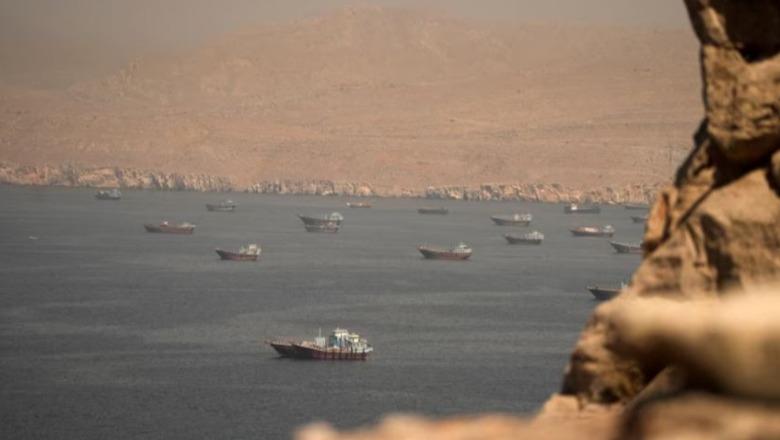
For years, policymakers in Washington have viewed Asia primarily through the prism of Taiwan, the South China Sea, and China’s growing military power. Russia’s full-scale invasion of Ukraine has only reinforced this view, consolidating Europe and East Asia as the main arenas of geopolitical competition.
But security experts in Southeast Asia are increasingly arguing that another crisis, thousands of miles away, in the Middle East, could reshape the regional balance of power, far more than Ukraine or Taiwan. The strategic importance of the Strait of Hormuz, through which about a fifth of the world's oil passes, has become impossible for governments across Southeast Asia to ignore.
As tensions involving Iran threaten one of the world's most important energy transport routes, analysts say the consequences are already changing regional calculations about security, diplomacy and alliances. "We are already seeing ASEAN [the Association of Southeast Asian Nations] moving closer to Russia, not in terms of security, but because of energy dependence," Lester Joseph Buitizon, a threat intelligence analyst at Aldebaran Threat Consultants, based in Manila. His work focuses on international security and politics in the Middle East and North Africa, told RFE/RL.
Military operations between the United States and Iran in recent days have brought attention back to the Strait of Hormuz.
Iran claims control of this strategic transit route, while the US says it has carried out airstrikes on targets in southern Iran "to further weaken Iranian military capabilities used to attack merchant ships in the Strait of Hormuz."
Despite the large US military presence, shipping companies remain hesitant to pass through the strait, highlighting a reality that goes beyond naval power: the biggest challenge may be restoring trust in commercial operators.
The transportation of oil through the Strait of Hormuz is vitally important for Southeast Asia, as the region continues to be heavily dependent on energy coming from the Middle East.
For example, the Philippines imports more than 90 percent of its oil from the Middle East, making any supply disruption an immediate economic and political concern, not just a distant foreign policy issue.
Although Manila remains one of Washington's closest allies and public opinion continues to favor the US over China, the administration of President Ferdinand Marcos Jr. has sought to increase access to Russian crude oil and has expanded discussions for long-term energy cooperation.
For Buitizon, the message is simple. If even the US's closest regional ally is forced to cooperate with Moscow to guarantee energy supplies, then countries with more neutral foreign policies, such as Indonesia and Malaysia, will likely do so even more easily.
"If Russia successfully reorients its economy towards the East," he argued, "then Western sanctions become structurally less effective."
While Russia may benefit economically, China may gain diplomatic benefits from the same situation.
According to Vincent Kyle Parada, a defense research analyst at the Philippine Navy's Office of Strategic Naval Studies and Strategy Management, there was a period when ASEAN managed to maintain a balance between East and West: China had economic growth, while the US guaranteed regional security.
Today, Parada said, that distinction is becoming increasingly blurred. He said the crisis with Iran is proof that economic security and national security have become inseparable.
"The intertwining between the economy and security has become much greater than it was 10 or 20 years ago," Parada told Radio Free Europe.
He added that recent US policy decisions, including cutting development aid to the region, trade tensions and intervention in Iran, have weakened Washington's position across Southeast Asia, while creating opportunities for China to expand its economic influence.
"China actually doesn't need to do anything but wait," he said./REL
Latest news
All vessels in Saranda are prohibited from going to sea.
2026-07-22 13:20:54
Bad weather in Saranda, a fisherman is found dead at sea
2026-07-22 13:13:00
This is the policeman from Kosovo who allegedly committed suicide in Kukës
2026-07-22 13:02:54




Hegseth: War with Iran has cost the US $37.5 billion
2026-07-22 12:10:00

Kontroll në burgun e Drenovës, Laert Haxhiut i gjendet telefon në qeli
2026-07-22 11:40:28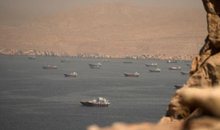
Could the US-Iran battle for Hormuz be a victory for Russia and China?
2026-07-22 11:26:48


Albania: a development model based on money laundering?
2026-07-22 10:56:56
After the "Cuban Package", Rama in Theth with the "Mountain Package"
2026-07-22 10:56:00

Euromoney crowns Credins bank as “Best Bank for Corporate Responsibility 2026”
2026-07-22 10:32:23
Kukës/ A police officer from Prizren is found without signs of life
2026-07-22 10:24:06

Albanian 'hawk' who terrorized England sentenced to 10 years in prison
2026-07-22 10:00:39
Strong storms sweep the country this weekend, here are the most at risk areas
2026-07-22 09:50:52
How do air conditioners affect health?
2026-07-22 09:38:00
France becomes first EU country to ban social media for children under 15
2026-07-22 09:27:11
Van collides with tractor on Rrogozhina-Lushnjë road, one injured / NAME
2026-07-22 09:19:00
The war for the algorithm: Hundreds of fake profiles target protest supporters
2026-07-22 09:05:36
Fire at waste landfill, toxic smoke invades Fushë-Krujë
2026-07-22 08:39:23

Unstable air masses and rain, this is the weather forecast for this Wednesday
2026-07-22 08:02:03

The storm also hits Albania, strong winds empty the Lungomare in Vlora
2026-07-21 22:34:30

770 kg of cocaine seized in Italy, most of the packages with Serbian flag
2026-07-21 21:46:44
Bad weather in Kosovo, one person dies, two others injured
2026-07-21 21:05:34


Protests against Rama's "algorithm", engaged voices from the square speak
2026-07-21 19:39:00
"Rama is gone", protesters gather again in Tirana after 52 days of resistance
2026-07-21 19:12:27



From Latin America to Kosovo/ How are women trafficked for sexual services?
2026-07-21 18:23:03
Nico Williams dedicates World Cup trophy to Neymar
2026-07-21 18:05:03
After three years in Tirana, Silvio Gonzato closes his mission in Albania
2026-07-21 17:41:00
Fire near apartments in Elbasan, explosions during firefighters' intervention
2026-07-21 17:22:00
Blendi Gonxhja insults protesters: A bunch of fools throwing stones
2026-07-21 16:55:46


The criminal returns to the scene of the crime!
2026-07-21 15:54:42
Emergency on London-Tirana flight, Ryanair plane makes forced landing
2026-07-21 15:42:41


Why does everyone want an Aquarius in their life?
2026-07-21 14:47:07

Albanians in the square for troubles, Gonxha in trouble for JLo
2026-07-21 14:29:00

The Supreme Court rejects Veliaj's appeal regarding pre-trial detention terms
2026-07-21 13:54:11


Assassination in Elbasan, suspected target was "Ot Kilë's" nephew
2026-07-21 13:10:57
Vokshi: MEP's statements sink Rama, SPAK to launch investigations
2026-07-21 12:59:36

Was Einstein ever wrong?
2026-07-21 12:32:36

Former Mayor of Divjaka Fredi Kokoneshi Appears in the Criminal Court
2026-07-21 12:14:35



Veliaj's lawyer fined for failing to appear at hearing
2026-07-21 11:12:41

Haxhiu seals the departures of 7 Serbian prosecutors
2026-07-21 10:53:36
Who benefits from the "strategic investor"?
2026-07-21 10:30:00


Sinaloa Cartel Boss Sentenced to Life in Prison
2026-07-21 10:00:21
Korça/ 66-year-old man found dead inside burned vehicle
2026-07-21 09:37:07


Foreign exchange, how much foreign currencies are bought and sold today
2026-07-21 08:50:57
Britain raises alarm: Albanians are running gangs from prison cells
2026-07-21 08:34:38

Horoscope, get to know the star forecast
2026-07-21 08:06:53

Why drinking alcohol during the day makes you feel more drunk
2026-07-20 22:58:31
Artan Hoxha provides details about the injury of 3 young people in Elbasan
2026-07-20 22:50:00
Cako: Our thoughts will change with waves, expect an alien "attack"
2026-07-20 22:31:39
Rrezikonte mbytjen në lumin Vjosa në Këlcyrë, shpëtohet turistja 10-vjeçare
2026-07-20 21:49:04
Shots fired at a bar in Elbasan, waiter injured
2026-07-20 21:07:42
Massive fire in an apartment in Greece, residents evacuated
2026-07-20 20:48:16