 Flash News
EC report "blackens" the government: PPPs, tenders, Taxes and Customs remain hotbeds of corruption
Detaje nga vrasja e Edmond Sulës/ Ekzekutori u arratis në këmbë, pistat e hetimit
Scorching weekend, temperatures up to 41 degrees on Sunday
Rv with 11 migrants stranded at sea near Vlora, rescued by Border Police
Crime officer physically assaulted in Saranda, police launch checks
Investigations against Belinda Balluku, EC report: SPAK requested her arrest, but the Parliament refused to lift her immunity!

Politiko
2026-07-17 19:35:34
The European Commission's latest report on the rule of law in Albania has focused on developments related to former Deputy Prime Minister Belinda Balluku, who is under investigation by SPAK for issues related to corruption and tender procedures.
In its document, the European Commission raises concerns about the way Albanian institutions have handled requests from judicial bodies, emphasizing respect for the principles of checks and balances, as well as equality before the law.
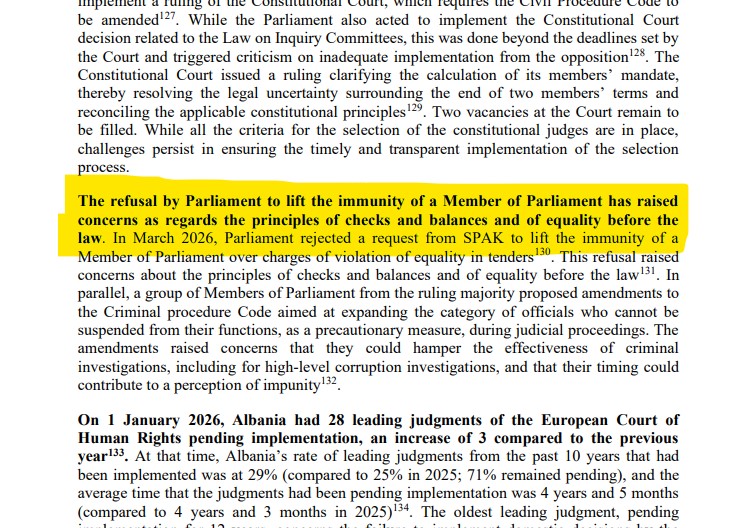
According to the report, in March 2026, the Assembly rejected SPAK's request to lift the immunity of a deputy accused of violating the principle of equality in tender procedures. This decision, according to the European Commission, raised questions about the functioning of institutional control mechanisms and the equal application of the law for all.
"The Assembly's refusal to lift the immunity of a deputy has raised concerns regarding respect for the principles of checks and balances, as well as equality before the law," the report states.
The European Commission has also noted the initiatives of a group of deputies of the parliamentary majority for amendments to the Criminal Procedure Code. These amendments aim to expand the category of public officials to whom the measure of suspension from office during criminal proceedings cannot be applied.
According to the EC, such legal intervention could negatively affect the effectiveness of criminal investigations, especially in cases related to corruption at high levels of administration and politics.
“The Assembly’s refusal to lift the immunity of a deputy has raised concerns regarding the respect of the principles of checks and balances, as well as equality before the law. In March 2026, the Assembly rejected SPAK’s request to lift the immunity of a deputy, accused of violating the principle of equality in tender procedures. This refusal raised concerns regarding the respect of the principles of institutional checks and balances, as well as equality before the law.
In parallel, a group of deputies from the parliamentary majority proposed amendments to the Criminal Procedure Code aimed at expanding the category of public officials to whom suspension from office during criminal proceedings cannot be applied, as a precautionary measure. These amendments have raised concerns that they could harm the effectiveness of criminal investigations, especially investigations into high-level corruption, and create a perception of impunity ,” the report states.
Latest news


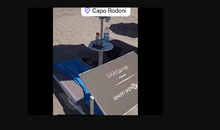
The irony of summer! 350 stolen sunbeds end up in Rodon, Italians appeal to Rama
2026-07-17 19:00:08
Leku, world champion, has anyone seen VAR?
2026-07-17 18:24:20
7.4 magnitude earthquake strikes Mexico, tsunami alert issued
2026-07-17 18:14:15
EC report/ Albania slows growth, industry and agriculture show signs of weakness
2026-07-17 17:18:36





Why did Edi Rama need Martin Can's dead body once again?
2026-07-17 15:23:24
Scorching weekend, temperatures up to 41 degrees on Sunday
2026-07-17 15:08:58
Andy Burnham clears final hurdle, begins path to British Prime Ministership
2026-07-17 14:35:19
Ronaldo: Cristiano can play in Arabia, but the World Cup is another level
2026-07-17 14:16:36
Which club has the most players in the World Cup final?
2026-07-17 13:54:23
Prices rose by 3.2% in June, the main effect coming from food and entertainment.
2026-07-17 13:32:56



EPPO (European Public Prosecutor's Office) in Tirana as a meaningful step
2026-07-17 12:09:36
Bank of Albania proposes that the Governor have immunity from arrest
2026-07-17 11:33:20
Rv with 11 migrants stranded at sea near Vlora, rescued by Border Police
2026-07-17 11:15:07
Albanian elites: From Enver's cauldron to the mastermind of neo-communism!
2026-07-17 10:51:22
The silence that smells
2026-07-17 09:53:05
Crime officer physically assaulted in Saranda, police launch checks
2026-07-17 09:33:36

Foreign exchange, the rate at which foreign currencies are sold and bought
2026-07-17 08:53:48
Protests in Ukraine after Zelensky dismisses defense minister
2026-07-17 08:20:59
Posta e mëngjesit/ Me 2 rreshta: Çfarë pati rëndësi dje në Shqipëri
2026-07-17 08:02:00
Dervishi: Patronazhistët janë qenie të pështira
2026-07-16 22:11:42

Kosova në garë për fondet e BE-së, raporti dorëzohet në afatin e fundit
2026-07-16 21:29:45

Mira Murati challenges AI giants, her company introduces the new model "Inkling"
2026-07-16 20:48:23
Seven things you should never do when eating in Italy
2026-07-16 20:24:02
"47 days, we will not retreat"/ Spicy banners from the protest
2026-07-16 20:09:50

Korrupsion gjatë detyrës, arrestohen dy efektivë të Komisariatit nr. 3 në Tiranë
2026-07-16 19:36:45
Accident on the Elbasan-Librazhd axis, 19-year-old loses his life
2026-07-16 18:45:00
Knife wound at Shkodra Polyclinic, 18-year-old and his father arrested
2026-07-16 17:52:20

Are we experiencing the worst Mercury retrograde ever?
2026-07-16 17:01:00
“Legjenda” e dy avionëve zjarrfikës në Shqipëri
2026-07-16 16:28:00


Astrit Kalasa's murder in the courtroom, investigations extended by three months
2026-07-16 14:59:56
The Euro's decline returns, touching a new historical record near 93.6 lek
2026-07-16 14:42:59
Berisha: Edi Rama does not accept any protest demands, we support all of them
2026-07-16 13:59:16


When Parliament begins to represent the prison
2026-07-16 12:35:25
For these 4 zodiac signs, a new chapter in love begins
2026-07-16 12:19:04

Tenders, IPARD and "5D"/SPAK pardons Erion Isai for the property investigation
2026-07-16 11:55:42

DP denounces funds for Kanye West's concert, demands audit from KLSH
2026-07-16 11:26:56
Business burns in the center of Elbasan, electrical spark suspected
2026-07-16 11:12:10

US launches new attacks on Iran, Tehran targets US bases in Kuwait
2026-07-16 10:56:14


Tirana/ 40-year-old woman drowns herself in Dry Lake
2026-07-16 10:08:00
How to help someone who is in danger of drowning
2026-07-16 09:37:48
Kapet me arsenal armësh në banesë, arrestohet 21-vjeçari në Shkodër
2026-07-16 09:14:36
Messi doesn't stop, sets another historic record at the World Cup
2026-07-16 08:59:40

Foreign exchange, the rate at which foreign currencies are sold and bought
2026-07-16 08:30:00
DP elects new leadership team, Flamur Noka confirmed as Secretary General
2026-07-16 08:10:33
Two vehicles collide on the Lushnje-Fier highway, one injured
2026-07-16 07:51:45
Scorching day, temperatures expected to reach 39 degrees
2026-07-16 07:33:46
Argentina knocks England out, secures final with Spain
2026-07-16 07:16:02
Morning Post/ In 2 lines: What mattered yesterday in Albania
2026-07-16 07:01:01

Gordon ignites England, the "Three Lions" take the lead against Argentina
2026-07-15 22:19:55

Berisha: DP completes reorganization of structures, renewal will continue
2026-07-15 21:39:00

Beteja e titanëve! Anglia dhe Argjentina luajnë për finalen me Spanjën
2026-07-15 21:07:22