 Flash News
Crime officer physically assaulted in Saranda, police launch checks
Foreign exchange, the rate at which foreign currencies are sold and bought
Temperatures up to 39°C, what the weather is expected to be like in the country today
"47 days, we will not retreat"/ Spicy banners from the protest
Accident on the Elbasan-Librazhd axis, 19-year-old loses his life
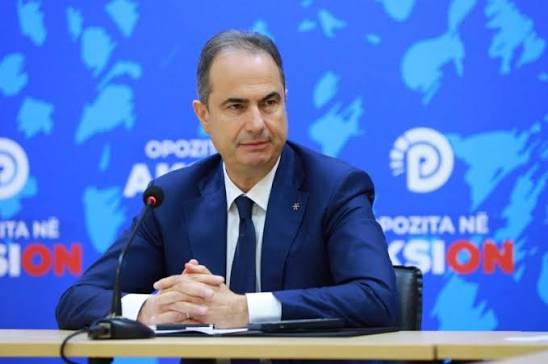
Luciano Boçi
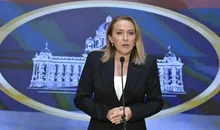
When a Serbian government minister declares that, if she were in Slobodan Milosevic's place in 1998, she would have "ethnically cleansed Kosovo", then we are not dealing with a linguistic gaffe.
We are dealing with the public rehabilitation of an idea that post-World War II Europe has sworn to never accept again.
The reactions were immediate.
Kosovo was declared persona non grata by Snezhana Paunovic.
The European Union condemned the declaration as incompatible with European values and the spirit of reconciliation.
Even prominent European figures demanded that Belgrade not pass over this scandal in silence.
In all this chorus of reaction, one voice was missing. The voice of the Prime Minister of Albania.
Albanian-Serbian history is not a history of diplomatic misunderstandings. It is a history filled with ideologies that, before producing crimes, produced words.
Before the guns came the memoranda.
The expulsions took place after the expulsion theories.
The mass graves were opened after Serbian “intellectuals” explained why Albanians were an obstacle.
Vladan Đorđević presented Albanians as primitive beings. Jovan Cvijić declared them “the most barbaric tribes in Europe”.
Vaso Đubrilović was not satisfied with theory. He drew up a plan to make the life of Albanians unbearable, until they left their lands.
Dobrica Ćosić and then Vojislav Šešelj kept the same spirit alive, until it became state policy during the Milošević regime.
So Paunović’s statement is not a coincidence or one that was born in a vacuum.
It is the last sentence of an old Serbian book with pages of ethnic hatred.
Therefore, silence on this is by no means neutral. Silence is taking sides. And Rama has taken sides with his silence.
Albania does not have the luxury of treating this statement as an incident, because it affects the historical memory of the Albanians of Kosovo and the Albanian nation.
Even more so when the European Union itself considers any rhetoric that justifies or promotes ethnic cleansing unacceptable.
One could say that the Foreign Ministry reacted. It is true.
But there are moments when the weight of words is not measured by the institution that utters them, but by the political responsibility of the one who remains silent.
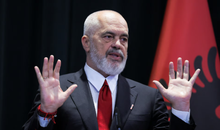
The Prime Minister of Albania is not an ordinary official in the Balkans. His word has an essential role, especially when it comes to Kosovo.
The paradox is obvious. Edi Rama reacts often and quickly on issues ranging from debates on social networks to the smallest political controversies and personal squabbles.
But when a Serbian minister publicly states that he would have ethnically cleansed Kosovo, he chooses silence.
A choice that, as the days go by, is becoming louder than any statement.
Diplomacy requires prudence. But prudence is not synonymous with silence. Especially when you are not faced with a diplomatic blunder, but an attempt to relativize one of the darkest chapters of Balkan history.
Don't forget!
History teaches us that crimes do not begin with weapons. They begin with words. And just as often, they continue thanks to silence.
And Rama, with his silence, defined his anti-national side.
Latest news
The silence that smells
2026-07-17 09:53:05
Crime officer physically assaulted in Saranda, police launch checks
2026-07-17 09:33:36
Foreign exchange, the rate at which foreign currencies are sold and bought
2026-07-17 08:53:48
Protests in Ukraine after Zelensky dismisses defense minister
2026-07-17 08:20:59
Posta e mëngjesit/ Me 2 rreshta: Çfarë pati rëndësi dje në Shqipëri
2026-07-17 08:02:00
Dervishi: Patronazhistët janë qenie të pështira
2026-07-16 22:11:42
Kosova në garë për fondet e BE-së, raporti dorëzohet në afatin e fundit
2026-07-16 21:29:45

Mira Murati challenges AI giants, her company introduces the new model "Inkling"
2026-07-16 20:48:23
Seven things you should never do when eating in Italy
2026-07-16 20:24:02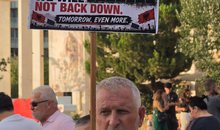
"47 days, we will not retreat"/ Spicy banners from the protest
2026-07-16 20:09:50

Korrupsion gjatë detyrës, arrestohen dy efektivë të Komisariatit nr. 3 në Tiranë
2026-07-16 19:36:45
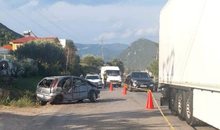
Accident on the Elbasan-Librazhd axis, 19-year-old loses his life
2026-07-16 18:45:00
Knife wound at Shkodra Polyclinic, 18-year-old and his father arrested
2026-07-16 17:52:20
Are we experiencing the worst Mercury retrograde ever?
2026-07-16 17:01:00
“Legjenda” e dy avionëve zjarrfikës në Shqipëri
2026-07-16 16:28:00


Astrit Kalasa's murder in the courtroom, investigations extended by three months
2026-07-16 14:59:56
The Euro's decline returns, touching a new historical record near 93.6 lek
2026-07-16 14:42:59
Berisha: Edi Rama does not accept any protest demands, we support all of them
2026-07-16 13:59:16
When Parliament begins to represent the prison
2026-07-16 12:35:25
For these 4 zodiac signs, a new chapter in love begins
2026-07-16 12:19:04

Tenders, IPARD and "5D"/SPAK pardons Erion Isai for the property investigation
2026-07-16 11:55:42

DP denounces funds for Kanye West's concert, demands audit from KLSH
2026-07-16 11:26:56
Business burns in the center of Elbasan, electrical spark suspected
2026-07-16 11:12:10
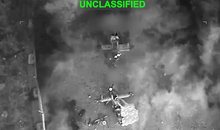
US launches new attacks on Iran, Tehran targets US bases in Kuwait
2026-07-16 10:56:14
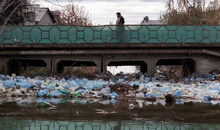

Tirana/ 40-year-old woman drowns herself in Dry Lake
2026-07-16 10:08:00
How to help someone who is in danger of drowning
2026-07-16 09:37:48
Kapet me arsenal armësh në banesë, arrestohet 21-vjeçari në Shkodër
2026-07-16 09:14:36
Messi doesn't stop, sets another historic record at the World Cup
2026-07-16 08:59:40
Foreign exchange, the rate at which foreign currencies are sold and bought
2026-07-16 08:30:00
DP elects new leadership team, Flamur Noka confirmed as Secretary General
2026-07-16 08:10:33
Two vehicles collide on the Lushnje-Fier highway, one injured
2026-07-16 07:51:45
Scorching day, temperatures expected to reach 39 degrees
2026-07-16 07:33:46
Argentina knocks England out, secures final with Spain
2026-07-16 07:16:02
Morning Post/ In 2 lines: What mattered yesterday in Albania
2026-07-16 07:01:01

Gordon ignites England, the "Three Lions" take the lead against Argentina
2026-07-15 22:19:55

Berisha: DP completes reorganization of structures, renewal will continue
2026-07-15 21:39:00
Beteja e titanëve! Anglia dhe Argjentina luajnë për finalen me Spanjën
2026-07-15 21:07:22
Bozdo on the electoral process in the DP: The renewal does not end here
2026-07-15 20:49:44
Vlorë/ Makina e Policisë Bashkiake përplas 13-vjeçarin në vijat e bardha
2026-07-15 20:14:41
Election of management structures, Berisha votes
2026-07-15 19:58:00

The "Face of Instagram" and the Plastic Surgery Nightmare
2026-07-15 18:09:09
Why doesn't Edi Rama fundamentally understand the EU's rule of law?
2026-07-15 17:32:00
"E papranueshme", RSF dënon sulmin e Erion Braçes ndaj gazetarit
2026-07-15 16:48:00
Pas bllokadës së SHBA-së ndaj Iranit, rriten sërish çmimet e naftës
2026-07-15 16:02:46
World Cup final, tickets reach staggering figures
2026-07-15 15:57:55
Devoll, 57-year-old commits suicide in apartment
2026-07-15 15:08:00
28-year-old Albanian man murdered in Britain, police identify victim
2026-07-15 14:40:00
Criminal amnesty/ Over 1,400 convicts benefit, 553 leave cells
2026-07-15 14:10:47