
 Flash News
Accident on the Elbasan-Librazhd axis, 19-year-old loses his life
Martin Can's murder: From TikTok to the algorithm, how Rama's narrative about the 'culprit' changed
When Parliament begins to represent the prison
Tirana/ 40-year-old woman drowns herself in Dry Lake
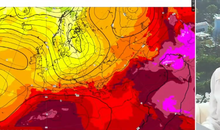
Today is the hottest day of the year, here are the areas where the thermometer will mark over 40 degrees
Martin Can's murder: From TikTok to the algorithm, how Rama's narrative about the 'culprit' changed

Politiko
2026-07-16 17:22:00
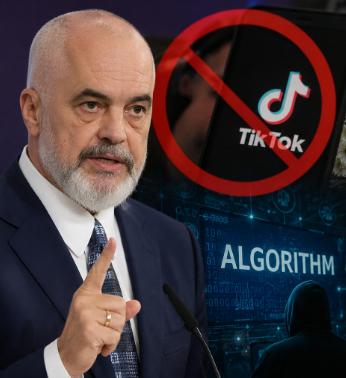
Prime Minister Edi Rama brought the tragic murder of 14-year-old Martin Cani back into focus this Thursday, as he presented the National Monitoring Center within the framework of the "Smart City" project, describing this investment as the institutional response to the event that shocked public opinion at the end of 2024.
During the inauguration, Rama stated that the new system, based on artificial intelligence and real-time monitoring, aims to prevent serious events and assist institutions in guaranteeing public safety.
"Today everyone has forgotten the tragic murder of a student at the 'Fan Noli' school, which created a convulsive situation with the extreme politicization of the event and with bloody journalism. I have not forgotten it, because I remember it every day while following this project. This is my response to that tragedy ," Rama said.
The Prime Minister said that the main threat to children is no longer the "neighborhood street urchin", but the algorithms of digital platforms.
"Today we are in the time of the enemy of children, the danger of the neighborhood bully that is the algorithm. This system will support us and will also focus on cooperation with parents," he declared.
However, today's statement comes in a different context than the stance the head of government took immediately after the murder of Martin Can.
From TikTok to the algorithm
After the November 2024 incident, Rama used the murder of the 14-year-old as the main argument to launch the debate on restricting TikTok in Albania. At the time, he stated that the social network was fueling hate speech, conflicts, and violent patterns among young people, describing the platform as a danger to children.
At the end of December 2024, the government decided to suspend TikTok for a period of one year.
"TikTok is the neighborhood hooligan. We are afraid when a child is accompanied by it when he leaves the house. We will close TikTok for a year. Hooligans, perversions, scum and dogs are not seen on China's TikTok," Rama declared at the time.
The decision was justified by the government as a measure to protect children and reduce violence among teenagers, while the opposition and technology experts considered it a disproportionate and politically motivated measure.
Martin Can's family's reaction
A few months later, in March 2025, Martin Can's family publicly reacted to the way their son's name was being used in the political debate.
The family stated that Martini did not have a TikTok account and that “Martini was not killed by TikTok,” but by a peer who stabbed him. They accused the government of using the tragedy to justify shutting down the platform.
From closure to reopening
The decision to block TikTok came just weeks before the 2025 parliamentary elections and was met with intense political debate. The opposition described it as an act of censorship and an attempt to limit communication on social media during the election campaign.
However, the ban was not sustainable. After months of controversy, users continued to access the platform through alternative means, and TikTok was later restored, rendering the government's measure virtually ineffective.
In today's statement, Rama did not return to the decision to close TikTok, but used a broader formulation, attributing responsibility to the "algorithm" and the influence that digital platforms exert on young people.
While he once identified TikTok as the "neighborhood street urchin," today the prime minister speaks of the algorithm as the new enemy of children, linking the solution no longer to the closure of a single platform, but to intelligent monitoring and the use of technology to prevent crime.
Latest news


Knife wound at Shkodra Polyclinic, 18-year-old and his father arrested
2026-07-16 17:52:20

Are we experiencing the worst Mercury retrograde ever?
2026-07-16 17:01:00

“Legjenda” e dy avionëve zjarrfikës në Shqipëri
2026-07-16 16:28:00



Astrit Kalasa's murder in the courtroom, investigations extended by three months
2026-07-16 14:59:56
The Euro's decline returns, touching a new historical record near 93.6 lek
2026-07-16 14:42:59
Berisha: Edi Rama does not accept any protest demands, we support all of them
2026-07-16 13:59:16




When Parliament begins to represent the prison
2026-07-16 12:35:25
For these 4 zodiac signs, a new chapter in love begins
2026-07-16 12:19:04

Tenders, IPARD and "5D"/SPAK pardons Erion Isai for the property investigation
2026-07-16 11:55:42

DP denounces funds for Kanye West's concert, demands audit from KLSH
2026-07-16 11:26:56
Business burns in the center of Elbasan, electrical spark suspected
2026-07-16 11:12:10

US launches new attacks on Iran, Tehran targets US bases in Kuwait
2026-07-16 10:56:14



Tirana/ 40-year-old woman drowns herself in Dry Lake
2026-07-16 10:08:00


How to help someone who is in danger of drowning
2026-07-16 09:37:48
Kapet me arsenal armësh në banesë, arrestohet 21-vjeçari në Shkodër
2026-07-16 09:14:36
Messi doesn't stop, sets another historic record at the World Cup
2026-07-16 08:59:40

Foreign exchange, the rate at which foreign currencies are sold and bought
2026-07-16 08:30:00
DP elects new leadership team, Flamur Noka confirmed as Secretary General
2026-07-16 08:10:33
Two vehicles collide on the Lushnje-Fier highway, one injured
2026-07-16 07:51:45
Scorching day, temperatures expected to reach 39 degrees
2026-07-16 07:33:46
Argentina knocks England out, secures final with Spain
2026-07-16 07:16:02
Morning Post/ In 2 lines: What mattered yesterday in Albania
2026-07-16 07:01:01

Gordon ignites England, the "Three Lions" take the lead against Argentina
2026-07-15 22:19:55

Berisha: DP completes reorganization of structures, renewal will continue
2026-07-15 21:39:00

Beteja e titanëve! Anglia dhe Argjentina luajnë për finalen me Spanjën
2026-07-15 21:07:22
Bozdo on the electoral process in the DP: The renewal does not end here
2026-07-15 20:49:44

Vlorë/ Makina e Policisë Bashkiake përplas 13-vjeçarin në vijat e bardha
2026-07-15 20:14:41
Election of management structures, Berisha votes
2026-07-15 19:58:00


The "Face of Instagram" and the Plastic Surgery Nightmare
2026-07-15 18:09:09

Why doesn't Edi Rama fundamentally understand the EU's rule of law?
2026-07-15 17:32:00

"E papranueshme", RSF dënon sulmin e Erion Braçes ndaj gazetarit
2026-07-15 16:48:00

Pas bllokadës së SHBA-së ndaj Iranit, rriten sërish çmimet e naftës
2026-07-15 16:02:46
World Cup final, tickets reach staggering figures
2026-07-15 15:57:55

Devoll, 57-year-old commits suicide in apartment
2026-07-15 15:08:00
28-year-old Albanian man murdered in Britain, police identify victim
2026-07-15 14:40:00

Criminal amnesty/ Over 1,400 convicts benefit, 553 leave cells
2026-07-15 14:10:47



"Skifters" descend on the coast, attempt to rob elderly man in Borsh, 3 arrested
2026-07-15 13:16:41



Meteorologist's warning: From tomorrow, temperatures above 40 degrees
2026-07-15 11:20:25

The u-Albania portal opens, high school graduates begin data verification
2026-07-15 11:04:48



Spain took France 'home', President Macron reacts: Painful defeat!
2026-07-15 10:06:50

Queues, chaos and water shortage, BIRN: Unhappy fans at Kanye West concert
2026-07-15 09:39:33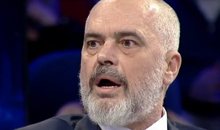
EU auditors 'blacken' Albania: Transport projects, slow and unattended
2026-07-15 09:31:26