Flash News
Berisha at the National Council: The DP, an undefeated party, internationalized denunciations of the narco-state
The DP National Council meets, Berisha presents the proposed names for the members of the Diaspora Council
The "Face of Instagram" and the Plastic Surgery Nightmare
PD mbledh sot Këshillin Kombëtar, në rend dite zgjedhja e strukturave të reja drejtuese
28-year-old Albanian man murdered in Britain, police identify victim
Why doesn't Edi Rama fundamentally understand the EU's rule of law?

Politiko
2026-07-15 17:32:00
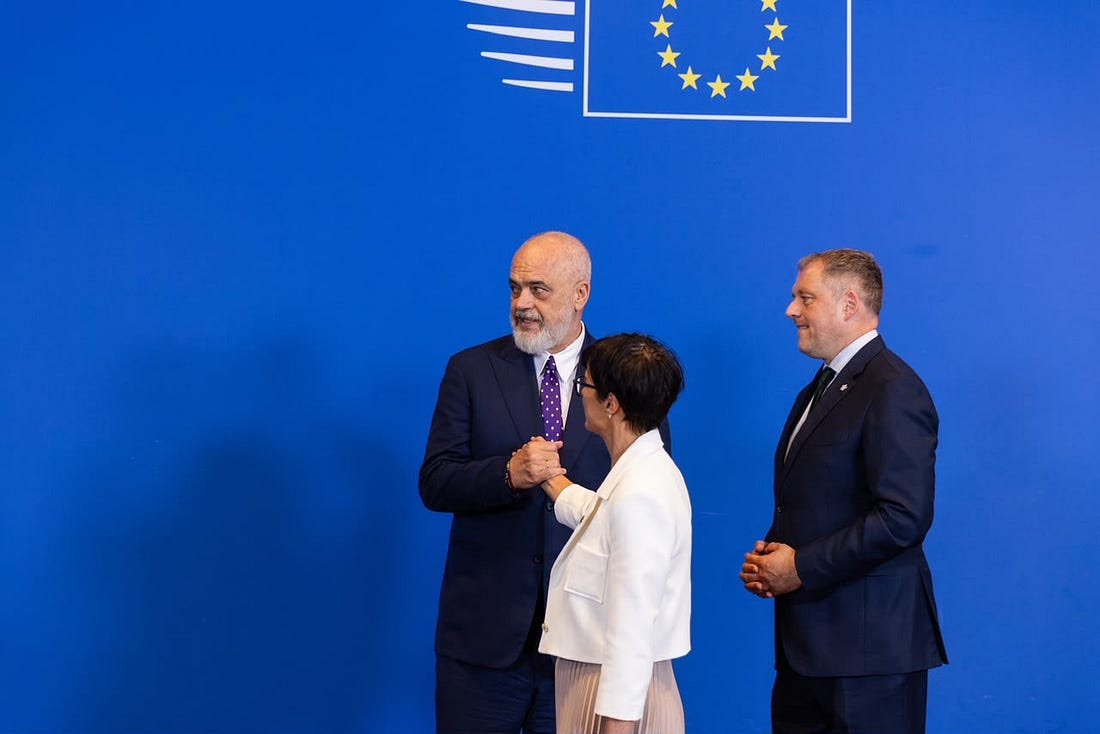
By Vincent Yusui van Gerven Oei, The Albanian Mechanism
During a press conference in Brussels on 14 July 2026, together with EU Commissioner for Enlargement, Marta Kos, following the ninth Albania-EU Intergovernmental Conference, Prime Minister Edi Rama made several comments regarding his ideas on the EU legal framework, also known as the acquis communautaire , which should raise alarm bells in EU capitals and in Albania.
Referring to the “strategic” development project in Zvërnec, which served as the initial spark of massive popular protests across the country, which have now been going on for more than forty days, he said:
“You will understand that there is nothing to worry about. The project is still a work in progress. The project is nowhere to be seen, because it is not finished. An environmental impact assessment is underway. Everything has been done according to the rules since day one. Names do not matter. Mentioning names is not something that helps us get to the truth.
And when I say 'according to the rules', there is only one book that matters to us, which is the book of membership in the European Union and the book of European standards. So, just the idea that Albania and the Albanian government would move forward with something that is not in full accordance with the holy book of religious people and atheists in Albania, which are the standards and principles of the European Union, is absurd.
So, there is nothing to worry about. Zero. We will make a project that will be an object of pride for Albania and for Europe, and this is my ambition. Albania must realize it for itself and for Europe. And of course, during this process we will be, as we have been so far, very rigorous, demanding only the highest standards, only something that will make everyone proud to have this thing in the middle of Europe. Otherwise, it will not happen.”
This statement contains several inaccuracies.
First, the project is undoubtedly “visible” through the massive environmental damage already caused in Zvërnec, as witnessed and documented by more than seventy environmental organizations, and which has raised concerns even within the European Parliament. The project is also part of the propaganda publication “The Albanian Files” , which has become a key document in highlighting the deep connections between real estate oligarchs, drug trafficking, international architects and the prime minister.
Then comes the issue of “naming names,” such as the evidence of Jared Kushner’s involvement in the development of Zvërnec or the involvement of architect Marco Casamonti and oligarch Shefqet Kastrati in the project’s feasibility study. Naming names, in fact, is essential to determining the truth, as it allows us to trace institutional and personal responsibility. Naming names is, in fact, essential for justice.
Second, and of much greater concern, is Rama’s reference to a “holy book” of “European Union standards and principles.” First of all, such a “holy book” does not exist. There is a codified EU accession procedure, led by the European Commission, and there is the EU acquis communautaire , a legal framework with which Albania is expected to harmonize its legal framework during the accession process.
Neither the accession process nor the acquis are in any way “sacred” in the sense of being unchangeable, inviolable, or immune to criticism. In fact, the history of EU enlargement shows the opposite.
However, by declaring the EU rule of law framework as “sacred,” Rama does two things:
It weakens the role of the Albanian people and the Albanian Parliament.
This is a common strategy that Rama has used for more than a decade, especially during the implementation of justice reform legislation. Through claims that “the EU wants this or that,” he has repeatedly bypassed proper parliamentary discussions on key legal provisions, which has significantly weakened the rule of law in Albania and parliamentary oversight.
It allows legal loopholes with the argument "the EU doesn't ask us to."
If the holy book tells you something is not forbidden, then you can do it. This was most recently made clear in the response of the Minister of the Environment, Sofjan Jaupaj, who “implied” to members of the European Parliament that the works at Zvërnec would continue until Albania was forced to comply with EU standards.
Albanian ministers must not only respect EU standards; they must also listen to their citizens, and they must do so more than once every four years.
Finally, by describing a set of secular legal texts as a “holy book of religious people and atheists in Albania,” the prime minister insults both religious people of every faith, who already have their own holy books, and atheists, who reject the existence of any holy book.
If there is anything his statement shows, it is the obvious ideological continuity between the communist dictatorship and the political class that currently governs.
Latest news



The "Face of Instagram" and the Plastic Surgery Nightmare
2026-07-15 18:09:09

Why doesn't Edi Rama fundamentally understand the EU's rule of law?
2026-07-15 17:32:00
"E papranueshme", RSF dënon sulmin e Erion Braçes ndaj gazetarit
2026-07-15 16:48:00

Pas bllokadës së SHBA-së ndaj Iranit, rriten sërish çmimet e naftës
2026-07-15 16:02:46
World Cup final, tickets reach staggering figures
2026-07-15 15:57:55

Devoll, 57-year-old commits suicide in apartment
2026-07-15 15:08:00

28-year-old Albanian man murdered in Britain, police identify victim
2026-07-15 14:40:00

Criminal amnesty/ Over 1,400 convicts benefit, 553 leave cells
2026-07-15 14:10:47


"Skifters" descend on the coast, attempt to rob elderly man in Borsh, 3 arrested
2026-07-15 13:16:41



Meteorologist's warning: From tomorrow, temperatures above 40 degrees
2026-07-15 11:20:25

The u-Albania portal opens, high school graduates begin data verification
2026-07-15 11:04:48


Spain took France 'home', President Macron reacts: Painful defeat!
2026-07-15 10:06:50
Queues, chaos and water shortage, BIRN: Unhappy fans at Kanye West concert
2026-07-15 09:39:33
EU auditors 'blacken' Albania: Transport projects, slow and unattended
2026-07-15 09:31:26

Mbappe admits failure: Spain was better, we didn't play as we should have
2026-07-15 09:04:45

Foreign exchange, how much lek is used to buy and sell major currencies today
2026-07-15 08:28:27
DP convenes National Council today, new leadership team elected
2026-07-15 07:47:58

What is the weather forecast for today?
2026-07-15 07:15:06
Morning Post/ In 2 lines: What mattered yesterday in Albania
2026-07-15 07:01:00
Oyarzabal hyn në histori! Barazon rekordin legjendar të Butragueños
2026-07-14 22:13:12

"La Roja" strikes first! Spain takes advantage over "The Roosters"
2026-07-14 21:40:00
Police provide details from the accident in Cërrik: Two victims and one injured
2026-07-14 21:19:27

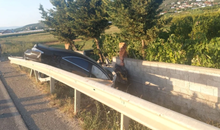
Tragic accident in Cërrik, two cars collide head-on, suspected victims
2026-07-14 19:34:00

Zhupa: Rama is defending concreting, not protected areas
2026-07-14 18:47:00
SPAK sends former mayor of Divjaka, Fredi Kokoneshi, for trial
2026-07-14 17:44:07
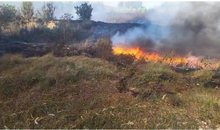
Fire near the village of Novoselë, flames approaching homes
2026-07-14 16:57:08
Dictators don't rise alone.
2026-07-14 16:20:00
The graves that Albania has not yet found
2026-07-14 15:40:44

Detoured twice, how the London-Tirana flight turned into a 12-hour nightmare
2026-07-14 14:14:18


The absolute loneliness of women who are "reborn"
2026-07-14 13:40:06
Why are healthy young non-smokers developing lung cancer?
2026-07-14 13:26:53
Why did the Bank of Albania revoke the licenses of 80 foreign exchange offices?
2026-07-14 13:14:00
Arson cases, 29 people arrested and prosecuted in June and July
2026-07-14 13:05:16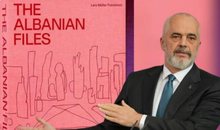

Accident at Liqeni i Thatë, young man on motorbike is hit by a vehicle
2026-07-14 12:45:43
INSTAT: Albanian women are aging faster than men, median age exceeds 45 years
2026-07-14 12:21:00

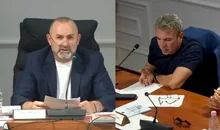
"Get out", Gjiknuri and Manja clash over the draft law on agricultural lands
2026-07-14 11:24:00

Injuring of 22-year-old in Fushë-Krujë, perpetrator arrested
2026-07-14 10:55:08

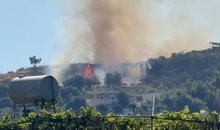
A pine forest area in Vlora is engulfed in flames, several homes are at risk
2026-07-14 10:28:04
World Cup turns into nightmare for Senegal, sexual harassment allegations raised
2026-07-14 10:20:12