 Flash News
Dictators don't rise alone.
DP condemns Serbian minister's statement: She should be declared "non grata" and indicted for inciting genocide
Koçek reveals behind-the-scenes details of his departure: Some SP colleagues secretly supported me
It is suspected that 3 million euros were stolen, the director of the Post Office in Durrës is dismissed
Why did the Bank of Albania revoke the licenses of 80 foreign exchange offices?
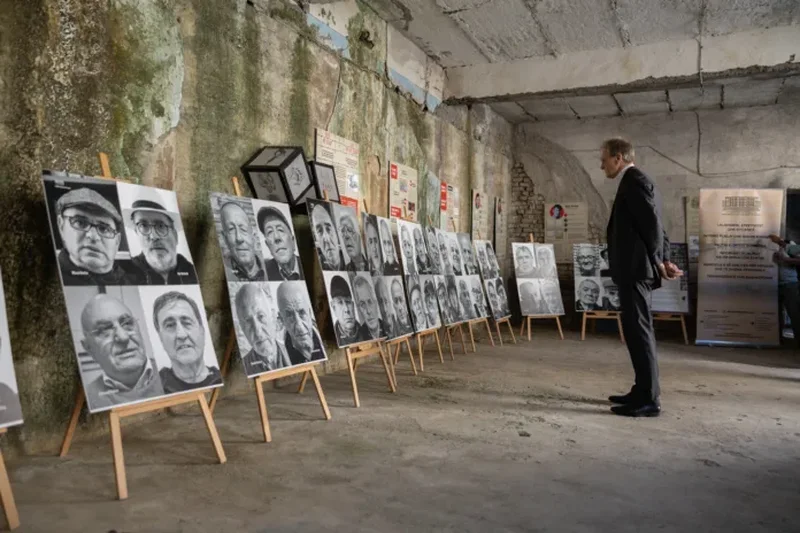
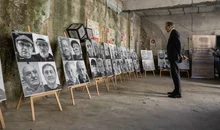
The old walls of Spaç still bear witness to a time when a regime attempted to eradicate not only people, but also their memory.
In this isolated valley of Mirdita, where thousands of political prisoners were sent to work in inhumane conditions during the communist regime, history is not just a memory written in books.
Over three decades after the fall of the dictatorship, Albania still faces one of the most difficult wounds of its past: the fate of thousands of missing people whose bodies were never returned to their families.
In an event dedicated to the memory of the dictatorship and its victims, attended by ambassadors, representatives of the diplomatic corps, former political prisoners, family members of victims, historians and researchers, Spaçi became a place of testimony and demand for historical justice.
Jorida Tabaku, chairwoman of the Human Rights and Media Committee in the Albanian Parliament, called for the establishment of a national mechanism for the search, exhumation and identification of persons missing during the communist dictatorship, arguing that historical memory cannot be built solely on monuments, while thousands of families continue to lack a place to lay flowers.
"There are places where history is read, places where history is told, but there are also places where history is still heard. History speaks through the memories of those who survived, through the names of those who did not return, and through families who have been waiting for an answer for decades," Tabaku said in Spaç.
Unpunished crimes
The communist regime in Albania, one of the harshest in Eastern Europe, left thousands of victims executed, imprisoned or disappeared. Many of their families never received the bodies of their loved ones and were unable to hold a funeral ceremony.
Tabaku said that around six thousand people went missing during the dictatorship, underlining that behind every number there is a human story.
"Behind every digit was a name, behind every number was a family, and behind every execution was a mother who waited, a wife who didn't know where to mourn, and a child who grew up not knowing where their father rested," she said.
Focusing on the Spaç revolt of May 21, 1973, Tabaku remembered the four death row inmates: Pal Zefi, Hajri Pashaj, Dervish Bejko and Skënder Daja, whose bodies continue to lie without an identified grave.
The Spaç Revolt was one of the most important acts of resistance against the communist regime. Faced with demands for more freedom and more humane conditions, the regime reacted with violence and severe punishments.
"Let us pronounce their names, because the dictatorship tried to turn them into numbers. The dictatorship denied them a grave and the duty of the democratic state is to find one for them," said Tabaku.
The International Commission on Missing Persons (ICMP) has conducted assessments and investigations in several areas where remains of victims of communism are suspected to be located. But the identification process in Albania has been slow, as family members and memory organizations have called for more institutional engagement.
Tabaku mentioned areas such as Shpali, near Spaç, and the "Wall of Blood" in Shkodra, where there are suspicions and data about the presence of human remains.
"Science has spoken, archives have spoken, witnesses have spoken, and families have not stopped speaking. Now the state must speak," she declared.
According to her, any site where there is evidence or suspicion of graves of victims should be addressed through official investigations, with the involvement of law enforcement institutions and forensic experts.
The initiative proposed by Tabaku includes the creation of a national database for missing persons, the systematic collection of DNA samples, archaeological and forensic investigations, as well as a special fund for research and identifications.
But the debate that opened in Spaç goes beyond an administrative issue. It touches on how a society decides to confront the crimes of the past.
A museum can preserve the memory of a regime. But for families still waiting for answers, the memory doesn't end at the walls.
"It's not enough to restore the walls if we don't find the people. It's not enough to put up memorial plaques if we don't give answers to the families," Tabaku said.
In Spaç, where the stones still bear the traces of one of the darkest chapters of Albanian history, the battle for memory is no longer just a matter of the past. It is a test for the present.
For families who have been waiting for decades to know where their loved ones are buried, justice is not measured by anniversaries, monuments, or memorial speeches. It begins with a concrete search: by opening a file, by investigating, by digging in the ground, and by returning a name to where once only silence was left.
The regime that disappeared these people aimed to erase not only their lives, but also their memory. The task of a democratic state is the opposite: to bring them out of oblivion, restore their identity, and give their families the opportunity to mourn with dignity.
Finding the missing, identifying them, and returning their remains to their families is not simply an administrative act or a historical duty. It is a human obligation and a sign of the functioning of a state that agrees to face its past.
Spaçi must remain a place of remembrance, but memory cannot be built only on ruins and memorial plaques. It also requires the names of those who are missing, their stories, and the right to a resting place that was denied them for decades./ Lindita Çela, Shteg.org
Latest news
Fire near the village of Novoselë, flames approaching homes
2026-07-14 16:57:08
Dictators don't rise alone.
2026-07-14 16:20:00
The graves that Albania has not yet found
2026-07-14 15:40:44

Detoured twice, how the London-Tirana flight turned into a 12-hour nightmare
2026-07-14 14:14:18


The absolute loneliness of women who are "reborn"
2026-07-14 13:40:06
Why are healthy young non-smokers developing lung cancer?
2026-07-14 13:26:53
Why did the Bank of Albania revoke the licenses of 80 foreign exchange offices?
2026-07-14 13:14:00
Arson cases, 29 people arrested and prosecuted in June and July
2026-07-14 13:05:16

Accident at Liqeni i Thatë, young man on motorbike is hit by a vehicle
2026-07-14 12:45:43
INSTAT: Albanian women are aging faster than men, median age exceeds 45 years
2026-07-14 12:21:00


"Get out", Gjiknuri and Manja clash over the draft law on agricultural lands
2026-07-14 11:24:00

Injuring of 22-year-old in Fushë-Krujë, perpetrator arrested
2026-07-14 10:55:08

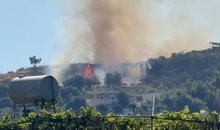
A pine forest area in Vlora is engulfed in flames, several homes are at risk
2026-07-14 10:28:04
World Cup turns into nightmare for Senegal, sexual harassment allegations raised
2026-07-14 10:20:12



Speaking multiple languages can keep your brain up to 13 years younger
2026-07-14 09:35:11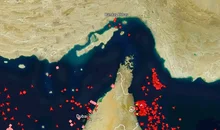
Strait of Hormuz becomes key battleground again, oil prices rise
2026-07-14 09:20:09

73.4% of Albanians' out-of-pocket health expenses go to medicines
2026-07-14 09:02:28
Over 10,000 dead from extreme heat wave in Europe, elderly most affected
2026-07-14 08:59:36

Foreign exchange, the rate at which foreign currencies are sold and bought
2026-07-14 08:24:50
The ten challenges Spain must win to eliminate France and Mbappé
2026-07-14 08:04:02


Morning Post/ In 2 lines: What mattered yesterday in Albania
2026-07-14 07:00:35
Ukraine strengthens air defense, Macron announces deal for 16 Rafale jets
2026-07-13 22:26:00
Shkullaku: Qeveria përdori koncertin e Kanye West për të eklipsuar protestën
2026-07-13 22:11:36
Conflict between young people in Fushë-Krujë, 22-year-old injured with knife
2026-07-13 21:47:26


Haaland, the phenomenon of the 2026 World Cup
2026-07-13 20:19:12
Citizens take to the streets again, protest enters 44th day
2026-07-13 20:01:25
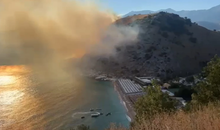
Large fire in Himara, flames engulf the hills of the Llaman area
2026-07-13 19:28:11



Dutch referee dies, weeks after being banned from 2026 World Cup
2026-07-13 18:22:39

What professions make people the happiest?
2026-07-13 17:51:54

Brazil still in crisis, fans attack Federation after motivational video
2026-07-13 16:42:07
The Special Court returns the file against former mayor Elvis Roshi to SPAK
2026-07-13 16:22:11
IDC-CDI meets in Brussels, Berisha participates as Vice President
2026-07-13 16:05:10
"Washington Examiner": Anger against Rama's enrichment has reached its peak
2026-07-13 14:28:00
Here are the years of imprisonment requested for Monika's mother
2026-07-13 14:09:46
EU appoints German diplomat as new special envoy for Kosovo
2026-07-13 13:55:29

Property alienation in Durrës/ Court confirms security measures for suspects
2026-07-13 13:25:00
70 people with poisoning symptoms in Pristina, 22 hospitalized
2026-07-13 13:16:00

Erkin Lika's lifeless body found after falling into Mat River sinkhole
2026-07-13 12:32:00
Over 500 babies named after Haaland after World Cup matches
2026-07-13 12:28:00
18 arrested in Spain, who is the Albanian known as 'Daci'?
2026-07-13 12:22:00

4.2 million euros for Kanye West, DP reports Rama and Gonxha to SPAK
2026-07-13 11:27:03


Heatwave hits Germany, over 5,400 heat-related deaths
2026-07-10 10:45:33
Land in "foreign hands"
2026-07-10 10:26:15

Mbappe the hero of France, the "Roosters" knock out Morocco in the quarterfinals
2026-07-10 09:54:33
Durrës/ 40-year-old man stabs his wife
2026-07-10 09:48:03


How much could the amount of drug money in the Albanian economy be?!
2026-07-10 09:08:34
Government reduces funds for farmers, increases ADF by 75 million euros
2026-07-10 08:55:46
Horoscope, get to know the star forecast
2026-07-10 08:32:54