 Flash News
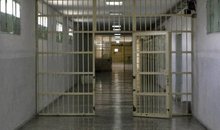
When Parliament begins to represent the prison
Tirana/ 40-year-old woman drowns herself in Dry Lake
Today is the hottest day of the year, here are the areas where the thermometer will mark over 40 degrees
Messi doesn't stop, sets another historic record at the World Cup
Foreign exchange, the rate at which foreign currencies are sold and bought

Marsel Lela
There is no case in world history, as far as we know, when a member of parliament has been elected as a representative in Parliament primarily by prison votes. The “Rama 4 Government” made this possible with the case of Sara Miles.
A case that should not be normalized under any circumstances.
In some countries where prisoners have the right to vote (such as Canada, Denmark, Norway, or some European countries), it has happened that a candidate received a disproportionate number of votes from a large prison, but the electoral literature does not know of any famous case where an MP has been publicly identified as the "prisoner's MP".
Such a case has not even occurred when candidates have had the mass support of prisoners. We recall here only two cases: Luiz Inácio Lula da Silva, during his time in prison (2018–2019), enjoyed considerable support from prisoners in Brazilian prisons, but was not elected thanks to their vote. The other case is Jacob Zuma in South Africa, who has had support in some prisons and communities linked to the penitentiary system, but there is no evidence that his support has come decisively from prisoners.
Socialist Party MP Sara Mila was elected to the Albanian Parliament after the May 11, 2025 elections, after securing a high number of votes in the Elbasan district, including massive support from detention centers and penal institutions. The 29-year-old was a completely unknown name to the public, and the way she was catapulted straight into Parliament created considerable controversy. However, even though it was fiercely contested by the opposition, it remained a mere passing touchstone in television studios, a case that, in fact, is not unprecedented even in third-world countries.
There are political events that are not measured simply and only by the number of votes, but also by the symbolism they carry. There are moments when a name, a decision, or a candidacy becomes a metaphor for the state of a country's society. In this sense, the appointment of Sara Miles as a political representative in an area where the result was significantly influenced by the votes of prisoners is not simply an electoral episode. It is a symptom of a deeper deformation of political representation. Albanian society has been shaped for four consecutive mandates of the Socialist Party, so that even a scandal of such proportions is seen as something completely normal.
In modern democracies, the MP is considered a representative of free citizens. His legitimacy stems from the will of the people who participate in public life, who pay taxes, build communities and bear responsibility for the future of the country. When, for the first time in Albanian political history, the perception is created that a parliamentary mandate is sealed by the vote of the prisons, we have entered a territory that raises serious questions about the nature of representation.
The irony is bitter. Parliament, the institution that should embody popular sovereignty, risks being perceived as a place where the voice of the ordinary citizen weighs less than the mechanisms of political control over certain groups of voters. It is not just a legal issue. It is above all a moral and political issue.
In political philosophy, representation is not just a procedure; it is a relationship of trust. Edmund Burke wrote that the deputy is not simply a delegate of the voters, but a guardian of the public interest. This role requires moral independence and social legitimacy. When the mandate is accompanied by doubts about the real source of political support, as in the case of Mila, the very idea of trust on which democracy is built is undermined.
More worrying than the case of an anonymous 29-year-old woman, who one fine day becomes a deputy in the Albanian Parliament, is its normalization. Instead of public opinion being shocked by such a situation, a large part of society reacts with indifference and helplessness, waiting for the next surprise from the “you haven’t seen anything yet” hat. And this is, perhaps, the greatest victory of a long-standing government: not control over institutions, but control over the moral threshold of citizens. When scandals cease to be scandals and no longer impress, democracy begins to dissolve under the force of this habit.
Edi Rama has built a political system where the boundaries between normal and unacceptable have been constantly shifted. What once would have caused resignation is now treated as routine. What once would have been considered a violation of public ethics is now relativized with the justification that "this is how politics works". But this very relativization is the most dangerous form of corruption of civic conscience. Before we have a "deputy of prisoners", we have a prime minister of imprisoned, absconding, investigated, and under-investigation ministers and deputy ministers. The relativization of these successive scandals has created a thick crust in civic conscience.
If today we can speak of a "prisoner's deputy", the problem is not only that of an individual or a mandate. The problem is the political model that makes such symbolism possible without producing any institutional upheaval, even when Parliament becomes the representative, not of free citizens, but of prisons. When power reaches the point where even the greatest paradoxes seem normal, then we are no longer dealing with just a political crisis, but with a crisis of democratic culture itself.
Latest news



When Parliament begins to represent the prison
2026-07-16 12:35:25
For these 4 zodiac signs, a new chapter in love begins
2026-07-16 12:19:04

Tenders, IPARD and "5D"/SPAK pardons Erion Isai for the property investigation
2026-07-16 11:55:42

DP denounces funds for Kanye West's concert, demands audit from KLSH
2026-07-16 11:26:56
Business burns in the center of Elbasan, electrical spark suspected
2026-07-16 11:12:10

US launches new attacks on Iran, Tehran targets US bases in Kuwait
2026-07-16 10:56:14

Tirana/ 40-year-old woman drowns herself in Dry Lake
2026-07-16 10:08:00

How to help someone who is in danger of drowning
2026-07-16 09:37:48
Kapet me arsenal armësh në banesë, arrestohet 21-vjeçari në Shkodër
2026-07-16 09:14:36
Messi doesn't stop, sets another historic record at the World Cup
2026-07-16 08:59:40

Foreign exchange, the rate at which foreign currencies are sold and bought
2026-07-16 08:30:00
DP elects new leadership team, Flamur Noka confirmed as Secretary General
2026-07-16 08:10:33
Two vehicles collide on the Lushnje-Fier highway, one injured
2026-07-16 07:51:45
Scorching day, temperatures expected to reach 39 degrees
2026-07-16 07:33:46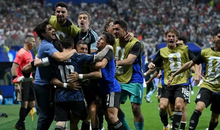
Argentina knocks England out, secures final with Spain
2026-07-16 07:16:02
Morning Post/ In 2 lines: What mattered yesterday in Albania
2026-07-16 07:01:01

Gordon ignites England, the "Three Lions" take the lead against Argentina
2026-07-15 22:19:55

Berisha: DP completes reorganization of structures, renewal will continue
2026-07-15 21:39:00

Beteja e titanëve! Anglia dhe Argjentina luajnë për finalen me Spanjën
2026-07-15 21:07:22
Bozdo on the electoral process in the DP: The renewal does not end here
2026-07-15 20:49:44

Vlorë/ Makina e Policisë Bashkiake përplas 13-vjeçarin në vijat e bardha
2026-07-15 20:14:41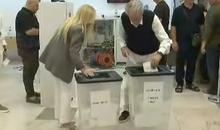
Election of management structures, Berisha votes
2026-07-15 19:58:00



The "Face of Instagram" and the Plastic Surgery Nightmare
2026-07-15 18:09:09

Why doesn't Edi Rama fundamentally understand the EU's rule of law?
2026-07-15 17:32:00
"E papranueshme", RSF dënon sulmin e Erion Braçes ndaj gazetarit
2026-07-15 16:48:00

Pas bllokadës së SHBA-së ndaj Iranit, rriten sërish çmimet e naftës
2026-07-15 16:02:46
World Cup final, tickets reach staggering figures
2026-07-15 15:57:55
Devoll, 57-year-old commits suicide in apartment
2026-07-15 15:08:00

28-year-old Albanian man murdered in Britain, police identify victim
2026-07-15 14:40:00
Criminal amnesty/ Over 1,400 convicts benefit, 553 leave cells
2026-07-15 14:10:47


"Skifters" descend on the coast, attempt to rob elderly man in Borsh, 3 arrested
2026-07-15 13:16:41



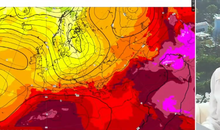
Meteorologist's warning: From tomorrow, temperatures above 40 degrees
2026-07-15 11:20:25
The u-Albania portal opens, high school graduates begin data verification
2026-07-15 11:04:48



Spain took France 'home', President Macron reacts: Painful defeat!
2026-07-15 10:06:50
Queues, chaos and water shortage, BIRN: Unhappy fans at Kanye West concert
2026-07-15 09:39:33
EU auditors 'blacken' Albania: Transport projects, slow and unattended
2026-07-15 09:31:26

Mbappe admits failure: Spain was better, we didn't play as we should have
2026-07-15 09:04:45

Foreign exchange, how much lek is used to buy and sell major currencies today
2026-07-15 08:28:27
DP convenes National Council today, new leadership team elected
2026-07-15 07:47:58

What is the weather forecast for today?
2026-07-15 07:15:06
Morning Post/ In 2 lines: What mattered yesterday in Albania
2026-07-15 07:01:00
Oyarzabal hyn në histori! Barazon rekordin legjendar të Butragueños
2026-07-14 22:13:12

"La Roja" strikes first! Spain takes advantage over "The Roosters"
2026-07-14 21:40:00
Police provide details from the accident in Cërrik: Two victims and one injured
2026-07-14 21:19:27