 Flash News
Convicted of murder, 52-year-old dies in Fier Prison
A politicians sprint in the bandit's Marathon
'Forcibly snatched' the agreement with the US, Agron Shehaj is suspended for 60 days by the Parliament
New WhatsApp scam, police appeal to citizens: Do not give out the 6-digit code
4 vehicles involved in accident at the entrance to Elbasan
Alfred Lela
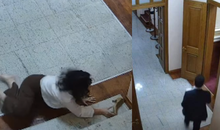
It is only proper to begin with the author of the act before turning to its commentators. Agron Shehaj made a gesture that explains not only himself, but, more importantly, the system of which he is a part. On a personal level, Shehaj behaved inside a state institution as though he were in his own company, unable to distinguish between authority and institution on the one hand, and financial power and personal wealth on the other.
At the systemic level, he simply copied Edi Rama—and all those now loudly condemning his behavior. In other words, he interpreted Albania's political and social reality according to the principle the Prime Minister himself once summarized as "KÇK": grab what you can and look back.
What makes Shehaj's action so disturbingly dangerous is that he acted exactly as Rama would—or, put differently, had he possessed the Prime Minister's power, he would have behaved in precisely the same way.
At its core, this strips his entire political narrative of the pillar on which it rests: we, the young, versus them, the old. His act was as childish as it was thuggish, though one cannot deny that it also carried the air of desperation. By grabbing the object and running off with it, Shehaj also exposed the impotence of opposition politicians inside a nest where everything operates solely according to the wishes and orders of Edi Rama.
Seen in that light, his action deserves some mitigation from the harsh "conduct grade" that the Socialist Party and several of the internet's echo chambers have been assigning him since yesterday afternoon. Equally important, however, is placing not only Shehaj's action but also the reactions to it in their proper context.
The Albanian Parliament, in most of its sessions, has become a pit stop for legal, ethical, and aesthetic transgressions. The Prime Minister treats the country's highest democratic institution as an antechamber to his personal whims, a place where he drops in for a political manicure and pedicure according to whatever mood strikes him. More than a few MPs owe their number of votes to factors inversely proportional to their command of the Albanian language—and of many other subjects taught in school. Many others sit in Parliament thanks to votes delivered through crime, prison networks, patronage systems, and similar mechanisms. The parliamentary majority views its time and function in the Assembly primarily as an opportunity to denigrate the opposition, constrain it, and reduce it to an accessory rather than treating it as an essential component of parliamentary democracy.
Against such a backdrop, Agron's sprint is little more than an unfortunate short étude in the long epic of the parliamentary majority's dog's feast—a culture of unrestrained excess and impunity. By inappropriately expressing his powerlessness, Agron Shehaj has himself become a reel—the very communication format he has so enthusiastically embraced.
As the saying goes: those who live by reels will fall by reels.
Latest news
Convicted of murder, 52-year-old dies in Fier Prison
2026-07-28 12:10:22
A politicians sprint in the bandit's Marathon
2026-07-28 11:47:00

New WhatsApp scam, police appeal to citizens: Do not give out the 6-digit code
2026-07-28 11:02:50
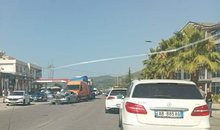
4 vehicles involved in accident at the entrance to Elbasan
2026-07-28 10:15:44
BIRN Analysis: The Digital Front of the “Flamingo Revolution”
2026-07-28 10:02:00
The $302 million agreement with the US, 3 SP figures come out against Rama
2026-07-28 09:12:00


Clear skies and few clouds, as the weather forecast for today
2026-07-28 08:12:21
Posta e mëngjesit/ Me 2 rreshta: Çfarë pati rëndësi dje në Shqipëri
2026-07-28 07:54:02
5 constitutional violations in today's session
2026-07-27 22:01:19
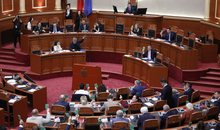
Parliament approves 302 million USD debt with the US, text kept secret
2026-07-27 21:02:31
Arben Kola: The police are chasing Balluk, just like they do with the protesters
2026-07-27 20:37:29
AGSH condemns violence against journalists during the protest at the Parliament
2026-07-27 19:10:18
'More police than protesters': Peaceful activists violently escorted
2026-07-27 18:42:24
Russia's new axis that is reshaping geopolitics
2026-07-27 17:21:46
Balla is "served" eggs as he leaves the Parliament
2026-07-27 16:59:00
The African heat returns, July ends with temperatures above 40°C
2026-07-27 15:40:44
The end of the era of 'Kavaja lodges'
2026-07-27 15:26:20

Putin: Ukrainian territories could be returned to Poland, Hungary and Romania
2026-07-27 15:00:10
REL: Opposition against accelerated procedure for agreement with the US
2026-07-27 14:52:39
Road accidents increase 6.8% in the first half of the year; Tirana leads
2026-07-27 14:29:00

What does the overvaluation of the lek indicate for the Albanian economy?
2026-07-27 13:04:00

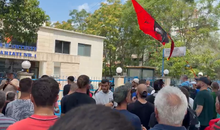



Protest in front of the Parliament, police forcibly escort some citizens
2026-07-27 10:46:22
Protesters surround Parliament outside, plenary session begins
2026-07-27 10:34:36
Protest organizer Arben Kola is escorted and dragged away by police
2026-07-27 10:19:00
Protesters march towards Elbasan Street, clash with police: Arrest Belinda!
2026-07-27 10:05:18
Greek customs officers' protest blocks Kapshtica, traffic suspended for 4 hours
2026-07-27 09:42:00
Eurostat: Albania ranks fourth in Europe for deaths from air pollution
2026-07-27 08:46:40
Rain, storms and hail, the weather worsens today in some areas of the country
2026-07-27 08:31:40
58th protest, citizens return to the Parliament in the last session
2026-07-27 08:16:00
Morning Post/ In 2 lines: What mattered yesterday in Albania
2026-07-27 07:59:52
Ekspertët zbulojnë ngjyrën ideale të dhomës së gjumit për të fjetur më mirë
2026-07-26 21:46:01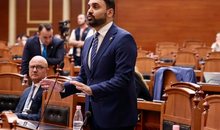
What is behind the record strengthening of the lek?
2026-07-26 21:00:00


The 4 zodiac signs that are considered the most trustworthy
2026-07-26 19:42:24
Joshua after the fight with Kristian Prengë: I just thought about keeping calm
2026-07-26 18:33:26
Fires sweep southwest France, over 220,000 people evacuated near Bordeaux
2026-07-26 18:17:06
Debate over donations brings healthcare system financing back into focus
2026-07-26 17:55:00

Rita Ora tells her family story: I am proud to be an immigrant
2026-07-26 17:20:00
Massive fire engulfs Soda Forest, pine areas at risk
2026-07-26 16:59:57
When 'Besa' doesn't even convince the left: Who came out against Rama's 'Besa'?
2026-07-26 16:45:00
Fire in Zvërnec, smoke covers Vlora
2026-07-26 16:23:13
Grevë në doganat greke, kufizime disaorëshe në 4 pikat kufitare me Shqipërinë
2026-07-26 16:07:46
Meteorology warns of scorching August, temperatures could reach up to 40°C
2026-07-26 15:54:00
The end of July could bring financial luck to these 3 zodiac signs
2026-07-26 15:36:00


Zhupa: Saranda hostage to a poorly designed terminal, wasted time, traffic
2026-07-26 14:03:54
Milot–Balldren: Si turp, si faj, si brengë, si pabesi!
2026-07-26 13:20:41
Shooting in Debar, a 38-year-old man in handcuffs, 9 people are being prosecuted
2026-07-26 13:02:44
He bought products and paid with fake euros, 24-year-old arrested in Durrës
2026-07-26 12:45:15
Mountains Package/ Bardhi: Even Diella no longer trusts Rama, resigns
2026-07-26 12:28:15

Scandal with medical student exams, Minister of Education resigns
2026-07-26 11:08:36
War crisis, the world is consuming less oil
2026-07-26 10:47:53
Triple accident on the Peqin-Elbasan axis, two people injured
2026-07-26 10:26:28