
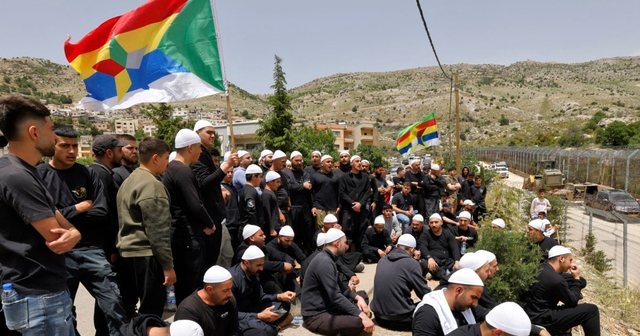
Syrian government officials and Druze community leaders announced they had reached a ceasefire after days of fighting that threatened to derail the country's political transition and prompted Israeli military intervention.
Government forces began withdrawing from the town of Suwayda, but it is uncertain whether the ceasefire will be respected. A previous ceasefire - announced on Tuesday - quickly collapsed, with a prominent Druze leader, Sheikh Hikmat Al-Hijri, rejecting the new agreement. Israeli attacks continued even after the ceasefire was announced.
The Druze are an Arabic-speaking ethno-religious minority living in Syria, Lebanon, Israel, and the occupied Golan Heights. The Druze faith is a branch of Shia Islam - with its own unique identity and rituals. About half of the followers of this faith - totaling about one million members - live in Syria, where they make up about 3% of the population.
In Israel, the community is largely considered loyal to the state, due to its members' participation in military service. According to the Israeli Central Bureau of Statistics, about 152,000 Druze live in Israel and the Israeli-occupied Golan Heights.
Historically, the Druze have had a precarious position in Syria's political order. During the nearly 14-year civil war, they operated with their own militias in the south of the country. Since the fall of Bashar al-Assad's regime in December, the Druze have resisted state attempts to establish authority in southern Syria.
Druze factions in Syria have a mixed attitude towards the new authorities - some are wary, others outright reject them. However, many of them oppose the presence of official security forces in Suwayda and refuse to join the Syrian army, relying on their local forces for protection.
Although the Syrian government condemned recent attacks on the Druze community and promised to restore order in southern Syria, its forces were also accused of attacks on the minority. The Britain-based Syrian Observatory for Human Rights documented “summary executions” of Druze by government forces.
Such reports increased the distrust of some members of the Druze community towards the authorities in Damascus.
After the sudden fall of Assad, Israel began reaching out to the Druze community near its northern border, in an attempt to create alliances with minorities in Syria.
Israel is trying to portray itself as a protector of these minorities - including Kurds, Druze and Alawites - while continuing to strike government forces and military targets inside Syria.
During sectarian clashes in May, Israel carried out strikes near the presidential palace in Damascus, saying they were a warning against attacks on the Druze community. However, some Druze figures in Syria and Lebanon accused Israel of fomenting sectarian divisions to advance its expansionist goals in the region.
Why is Israel attacking Syria now?
Israel is attacking Syria to prevent Syrian forces from exercising military control in the south of the country, near the border with Israel. It wants the area to remain demilitarised to avoid threats, especially from Islamist fighters near the border.
On July 15, Israel struck security forces in the city of Suwayda, while on July 16 the attacks expanded, hitting the army headquarters and the Ministry of Defense in Damascus.
Syria condemned these attacks.
They were the heaviest since late 2024, when Israel struck Syrian military bases and seized control of a border area. Israel wants to weaken the Syrian army to avoid being exposed, and has warned that the attacks will continue.
Israeli Defense Minister Israel Katz, after the first airstrike on Damascus, wrote on X that “the painful blows have begun.” He said the Israeli military “will continue to attack regime forces until they withdraw from the area and will soon increase the level of responses to the regime if the message is not understood.”
What were the reactions in the world?
US Secretary of State Marco Rubio said the US is "very concerned" about the violence.
"We have agreed on specific steps that will put an end to this disturbing and horrific situation," he said on July 16, without giving further details.
Several Arab states, including Lebanon, Iraq, Qatar, Jordan, Egypt and Kuwait, condemned Israel's attacks on Syria. Iran described the attacks as "highly predictable."
Turkey said they were “an act of sabotage against Syria’s efforts to ensure peace and stability.” UN Secretary-General Antonio Guterres also condemned Israel’s attacks on Suwayda and Damascus./REL
Latest news

"Dad Brain", How Fatherhood Changes the Male Mind
2026-06-05 21:44:40
50 thousand undeclared euros seized at Durres customs
2026-06-05 21:25:48
A citizen married for 30 years in Tirana, institutions declare her single!
2026-06-05 21:19:51
Rama blames Trump's enemies for Zvërnec's echo: The man didn't shave...
2026-06-05 20:56:29
Guard rapes protester during Rama's meeting /VIDEO
2026-06-05 20:39:18

Protest against Rama also in Berlin
2026-06-05 20:14:09
Meta's lawyer: If Rama does not testify, the process is not complete
2026-06-05 20:01:14
How the US naval blockade has cost Iran $6 billion in oil revenue
2026-06-05 19:44:17

Even after the crisis, expensive oil still a challenge for Albania
2026-06-05 19:09:39
Kosovo Police Arrest Serbian List Activist
2026-06-05 18:50:39
Accident at Kombinat, car hits minor
2026-06-05 18:33:56
Rama clashes with Zvërnec resident: Who are you talking to?
2026-06-05 18:27:35
Von der Leyen: Albania should quickly follow Montenegro
2026-06-05 18:13:32
These zodiac signs will find love in June!
2026-06-05 18:01:33
Increased security for Rama's visit to Vlora
2026-06-05 17:46:32
The Rossoneri lose one place in the FIFA rankings
2026-06-05 17:32:56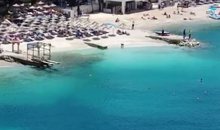
Police remove 14 sea piers in Ksamil
2026-06-05 17:16:07
Urban accident near Tirana Court, several injured
2026-06-05 16:56:32
Belgium considers selling royal jewels to fill budget gaps
2026-06-05 16:45:02


Socialist MP Klevis Jahaj appears in SPAK
2026-06-05 16:01:00
Photo/ Hundreds of citizens bid farewell to Enea Mekolli
2026-06-05 15:39:58

Citizen puts knife to the neck of a street police officer
2026-06-05 15:03:38


A comparison of problematic projects in Belgrade and Zvërnec
2026-06-05 14:19:49
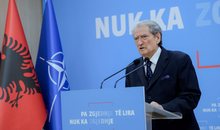
Berisha: We support the citizen protest for Zvërnec, but the DP is not involved
2026-06-05 13:29:19
Beautiful ugly protest
2026-06-05 13:10:56


Berisha: Enea Mekolli is a hero twice, his killer was financed with state funds
2026-06-05 12:25:45


Transparency Board sets new fuel prices
2026-06-05 11:38:15

The Director of the Albanian Railways, Ergys Verdho, appears again at SPAK
2026-06-05 11:02:56


Foreign exchange/ How much foreign currencies are bought and sold today
2026-06-05 09:49:44
From Rama's hands to the ministries, 16 institutions change their dependence
2026-06-05 09:37:06


Two cars collide on the Kardhiq-Delvinë axis, one dead and 3 injured
2026-06-05 08:35:38
With alternating clouds, what is the weather forecast for today?
2026-06-05 08:20:50

Morning Post/ In 2 lines: What mattered yesterday in Albania
2026-06-05 07:57:11
Hasimja: Albania is losing a historic chance for EU integration
2026-06-04 22:57:39
US Senate confirms Eric Wendt as US ambassador to Albania
2026-06-04 22:30:33



Andoni Iraola is officially Liverpool manager
2026-06-04 20:52:27
Killed in the line of duty, family refuses to bury officer in Martyrs' Cemetery
2026-06-04 20:26:26


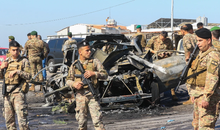
EU to provide $116 million in aid to Lebanese army
2026-06-04 18:12:12



Plane crashes in Croatia, at least 4 dead
2026-06-04 16:31:32
Berisha: Lands in Zvërnec were seized by Pjerini from Lezha and Agaç from Berat
2026-06-04 16:26:52
Minatorët e Bulqizës vijojnë bojkotin e punës, kërkojnë rritje pagash
2026-06-04 16:17:31

Former Montenegrin police chief banned from entering Serbia
2026-06-04 16:05:34


The moment when Gjesti enters the record company's offices armed
2026-06-04 15:03:29

The Euro-Lek exchange rate falls again, heading towards the threshold of 95 Lek
2026-06-04 14:33:00

Balluk's wealth "collapses", SPAK seizes his villa in Dhërmi
2026-06-04 14:00:13
Watermelon, the heart's ally in summer
2026-06-04 13:56:33
The board continues to "ping pong" with fuel prices, oil increases again
2026-06-04 13:39:24

Bardhi asks Rama to the Assembly: The interpellation is not delegated!
2026-06-04 13:21:54
House of Representatives approves measure to end Iran war
2026-06-04 13:14:35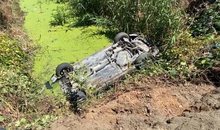
Car ends up in canal, residents save father and son
2026-06-04 12:55:58
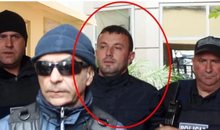
SPAK requests 98 years in prison for Durim Bami, Aldo Avdyli and 5 others
2026-06-04 12:39:43



Video/View from the scene where the policeman was killed in Maliq
2026-06-04 11:52:46

SPAK knocks on Igli Tare, former footballer included in Balluku file
2026-06-04 11:16:36