
 Flash News
Berisha: In the EPP I asked for international support for the civic protests, the DP fully supports them
"Mandi said he would bring out a refrigerator", the disappearance of Eglant Koç, the testimony of the author's supporter is revealed
"Protect the land", amid protests, EU reminds Rama of the condition for integration
Who are the 4 members of the criminal group arrested in Tirana?
Parents, be careful with the air conditioner! The doctor shows the first signs of laryngeal edema
Survey: History and nationalism hold the region's economic integration hostage

Politiko
2026-06-10 14:27:33
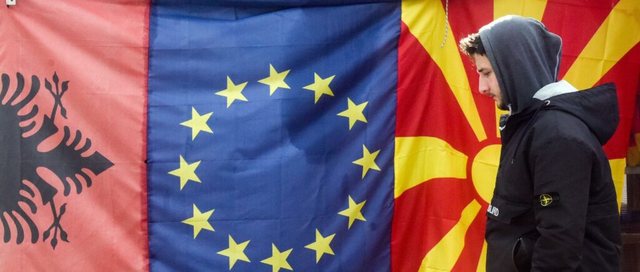
The lack of trust inherited from history and nationalist policies remain the two main obstacles holding back regional cooperation among the Western Balkan economies.
The Regional Cooperation Council's survey of citizens of the 6 countries of the Region in 2025 proved that the psychological and political burdens of the past have a greater impact than technical or infrastructural barriers, creating a continuous impasse in the integration processes of the Region.
Citizens share almost the same opinions on the fact that without an improvement in the climate of mutual trust, joint economic initiatives will always encounter difficulties in implementation.
The survey results showed that 38% of citizens in the 6 Western Balkan countries believe that historical conflicts hinder regional cooperation. This indicator is followed by nationalist politics, as 37% of citizens in the region believe that daily political rhetoric often undermines efforts for rapprochement.
Mutual prejudices are seen as a real problem by 26% of the region's citizens, which is affecting the maintenance of distance between countries.
Ethnic divisions and external global influences each concern 18% of citizens in the Region, reflecting fears of geopolitical interference. Notably, logistical issues such as poor connectivity and physical infrastructure are seen as obstacles by only 14% of respondents, while religious differences are seen as an obstacle by only 13%. This suggests that the region’s problem is not so much a lack of roads or capital investment, but a lack of political will and mutual trust.
At the national level, Albania and Kosovo display the highest sensitivity in the entire region regarding historical heritage and its long-term consequences. For Kosovo citizens, lack of trust due to history is the biggest concern at 51%, which is also the highest figure in the Region. This high percentage reflects the recent history of conflict and the unresolved political tensions that still dominate its foreign relations.
Meanwhile, in Albania this indicator is 43%, showing that here too historical memory is seen as a major barrier to moving forward. On the other hand, nationalist policies are considered the main threat to integration processes in Bosnia and Herzegovina with 44%, in North Macedonia with 40%, and in Montenegro with 39%. These countries, which are characterized by a multi-ethnic composition or by strong identity debates, see internal and neighboring nationalism as the greatest risk to regional stability.
Serbia exhibits a completely different dynamic from its Western Balkan neighbors, reversing the ranking of concerns. In this economy, external global influences lead the list of hindering factors with 22%, indicating a greater focus on geopolitics than on internal regional problems. This factor is closely followed by religious differences, which reach 21%, while the weight of nationalist policies there drops to only 29%.
This level is the lowest in the entire region for this category, suggesting that citizens in Serbia do not see nationalism as the main obstacle to trade cooperation. This particular approach positions Serbia as a country where the perception of risks is more related to external or cultural factors than to regional political rhetoric, thus creating an asymmetry in how the parties see the source of friction in the Balkans.
Ethnic divisions weigh most heavily in North Macedonia, where 32% of respondents see them as a serious obstacle to cooperation, reflecting the country's internal dynamics. This figure stands in stark contrast to Bosnia and Herzegovina, where only 10% of citizens selected this option, despite the fact that the country is known for its deep administrative divisions.
Meanwhile, religious differences are perceived as an obstacle mainly in Serbia (21%) and Bosnia (20%), while they register completely minimal and negligible values in Kosovo (3%) and Albania (4%), where religious coexistence is traditionally not seen as a problem.
Regarding the deficit in physical infrastructure and poor connectivity, the concern remains almost uniform across the Western Balkans, moving at similar levels between 14% and 16%, with the exception of Serbia where this indicator drops to 11%.
Referring to the survey results where half of the population in key countries sees history as a threat, economic reforms to increase regional cooperation will remain difficult. Successful integration requires not only investments in roads and corridors, but above all joint projects that increase trust and reduce the influence of nationalist rhetoric./ Monitor
Latest news



Survey: History and nationalism hold the region's economic integration hostage
2026-06-10 14:27:33
Why endless job applications can hurt you more than you think
2026-06-10 14:20:35


The 'parallel reality' of Rama's rallies in front of thousands of protesters
2026-06-10 13:41:46
The 2026 World Cup starts with new rules, VAR gets more powers
2026-06-10 13:34:27


Faces against the protest/ After Taulant Balla, Karlo Bolino appears
2026-06-10 12:51:23
Who are the 4 members of the criminal group arrested in Tirana?
2026-06-10 12:39:29
The highest-paid professions in the first quarter are led by bankers and IT
2026-06-10 12:31:34
U shkarkua nga puna, punonjësi dhunon drejtorin e ministrisë së Mjedisit
2026-06-10 12:20:49
The board moves oil and gasoline prices again
2026-06-10 12:09:16
Çuçi criticizes the Prime Minister: O Rama, where are your institutions?
2026-06-10 11:54:49

Eraldo Nevruzi was killed in Dhërmi, Greece refuses to extradite Gerald Shehu
2026-06-10 11:30:43
TNT explosion near the Nikulaj family in Lezha
2026-06-10 11:23:03
Këlliçi explodes against Rama: The truth is out in the open
2026-06-10 11:08:45
When the Ayatollah of Albania clashes with the Ayatollahs of Iran
2026-06-10 10:56:57

Gjirokastër/ A minor lost his life after going into the pool to bathe
2026-06-10 10:33:07

Balluku seeks reinstatement, Supreme Court draws lots for recourse
2026-06-10 09:51:13

Elez Biberaj: Protests are not against Trump, but against kleptocracy
2026-06-10 09:30:57


Accused of attempted murder in Spain, 22-year-old arrested in Shëngjin
2026-06-10 08:46:20

Horoscope, what do the stars have in store for you today?
2026-06-10 08:17:52
Temperatures above 30 degrees, weather forecast for today
2026-06-10 08:00:52
Morning Post/ In 2 lines: What mattered yesterday in Albania
2026-06-10 07:47:57







Actor known for protests: I fled Albania because I didn't want to sell my soul
2026-06-09 20:32:34

Meçollari accuses protest: The environment has been altered in Palasa and Dhërmi
2026-06-09 19:38:17



Judge this protest by its opponents
2026-06-09 18:20:57
After four sessions, Ilir Beqaj concludes preliminary requests
2026-06-09 18:11:25
UN message to Iran, Lebanon and Gaza: Respect ceasefires
2026-06-09 17:06:22
10 days that shook the "system"
2026-06-09 16:53:28
Anti-drug operation in five cities in Kosovo, 5 arrested
2026-06-09 16:44:03

Accident in Greece, 16-year-old Albanian dies
2026-06-09 16:25:19
Rama 'clash' with Romanian journalist: They've blocked her brain!
2026-06-09 16:13:59
“Revolucioni i Flamingove” përplas Ramën me Iranin
2026-06-09 15:56:07




Vlora Prosecution seizes 5 million euros of assets
2026-06-09 14:29:19

Vučić's Kopjac is also in crisis
2026-06-09 14:11:14



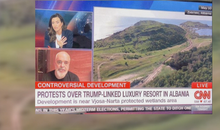
The protest clashes Rama with the world media, the risk of an image crisis!
2026-06-09 13:01:41


Security expert raises the alarm: Criminal groups are sheltering in Kamza areas!
2026-06-09 12:36:03

Who is in command of Edi Rama today?!
2026-06-09 12:14:10
Rama's 'bluff'/ How foreign tourists are embracing the protests in Albania
2026-06-09 12:00:57


How Rama convinced the West that Albania's fate is linked to his name
2026-06-09 11:20:31



Berisha at the EPP conference: Albania is in the emergency room
2026-06-09 10:27:53
From towers to rivers: the invisible cost of the building boom
2026-06-09 10:04:25