For the first time, the budget is spending more on the salaries of the "chancellor" than on public investments

Politiko
2026-06-02 08:43:48
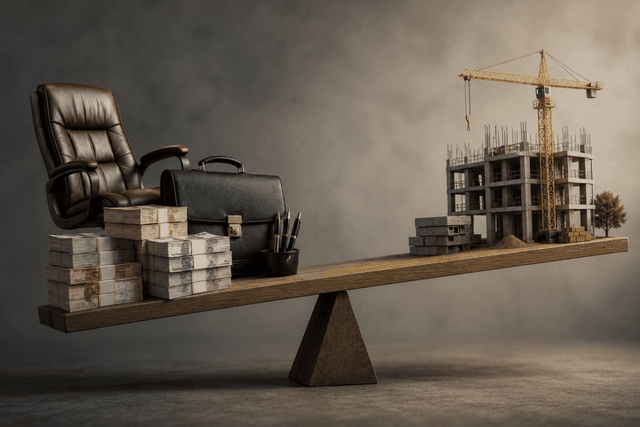
Albania has great needs for new investments, especially in transport infrastructure, but in recent years there has been a tendency for operating and maintenance costs to be higher than investment costs in the first 4 months of the year.
The latest official data from the Ministry of Finance on budget performance for the 4-month period of 2026 show an unusual reversal of the ratios between the two main items of public expenditure.
Operating and maintenance expenses reached 17.7 billion lek during the first 4 months of this year. On the other hand, capital expenditures, which represent public investments in roads, schools, hospitals and strategic infrastructure, are 14.8 billion lek or 16.5 percent lower than operating and maintenance expenses.
This performance deepens the trend started in 2025, proving that taxpayers' money is going more to keep the state apparatus and existing structures running rather than developing new projects that generate long-term economic growth.
In developing countries like Albania with great needs for physical infrastructure, this ratio is not considered normal. Capital expenditures are the main engine of development, as every lek invested in infrastructure has a multiplier effect on the economy, creating jobs and increasing productivity. As maintenance and operational expenses dominate over capital, it is showing that new investments have been neglected.
Capital investments have a clearer monitoring, due to the nature of the work, operational and maintenance costs have a higher degree of abuse, said an expert at the Albanian Road Authority. The country's road infrastructure, including the recently built axes (Arbri road) are in a deplorable state.
The bridge on Kombit Road is closed on one side as it poses a risk due to faulty construction, while large cracks have started in the retaining wall of the road in the Kukës-Morinë segment. The axes for which the government finances maintenance from the budget do not have any workers on the road. The most obvious example is the highway from the Rinas overpass to Durrës, which is completely ruined.
The budget item "Operating and Maintenance Expenditures" does not only include roads, but all the costs of operating the state machinery. This item includes electricity and water bills for institutions, fuel for administration vehicles, purchases of office paper and equipment, rents for government buildings, as well as consulting or IT services.
In recent years, with the digitalization of services, the costs of maintaining software systems and government servers, including their large maintenance contracts, have taken an increasingly large share and are now under investigation by SPAK.
Also, a significant portion of the money that appears as maintenance or current expenses goes to pay the annual invoices of Concession and PPP contracts. Regular payments made to the private sector every year, especially for health contracts, are often classified as transfers or current operating expenses.
Instead of having a national and long-term strategy for the maintenance of road axes, money is often divided into dozens of small and fragmented tenders for emergency interventions, greenery or signaling. This form of fragmentation increases administrative costs and reduces control over quality. Such is the case of the Tirana-Durrës Highway, which in the span of ten years is spending millions of euros for the third time on greenery, where initially palm trees were planted, then pine trees and now after the expansion there will be a new configuration for greenery. / Monitor
Latest news
"Dad Brain", How Fatherhood Changes the Male Mind
2026-06-05 21:44:40
50 thousand undeclared euros seized at Durres customs
2026-06-05 21:25:48
A citizen married for 30 years in Tirana, institutions declare her single!
2026-06-05 21:19:51
Rama blames Trump's enemies for Zvërnec's echo: The man didn't shave...
2026-06-05 20:56:29
Guard rapes protester during Rama's meeting /VIDEO
2026-06-05 20:39:18
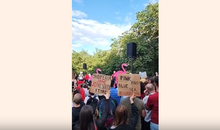
Protest against Rama also in Berlin
2026-06-05 20:14:09
Meta's lawyer: If Rama does not testify, the process is not complete
2026-06-05 20:01:14
How the US naval blockade has cost Iran $6 billion in oil revenue
2026-06-05 19:44:17
Even after the crisis, expensive oil still a challenge for Albania
2026-06-05 19:09:39
Kosovo Police Arrest Serbian List Activist
2026-06-05 18:50:39
Accident at Kombinat, car hits minor
2026-06-05 18:33:56
Rama clashes with Zvërnec resident: Who are you talking to?
2026-06-05 18:27:35
Von der Leyen: Albania should quickly follow Montenegro
2026-06-05 18:13:32
These zodiac signs will find love in June!
2026-06-05 18:01:33
Increased security for Rama's visit to Vlora
2026-06-05 17:46:32
The Rossoneri lose one place in the FIFA rankings
2026-06-05 17:32:56
Police remove 14 sea piers in Ksamil
2026-06-05 17:16:07
Urban accident near Tirana Court, several injured
2026-06-05 16:56:32
Belgium considers selling royal jewels to fill budget gaps
2026-06-05 16:45:02
Socialist MP Klevis Jahaj appears in SPAK
2026-06-05 16:01:00
Photo/ Hundreds of citizens bid farewell to Enea Mekolli
2026-06-05 15:39:58

Citizen puts knife to the neck of a street police officer
2026-06-05 15:03:38
A comparison of problematic projects in Belgrade and Zvërnec
2026-06-05 14:19:49
Berisha: We support the citizen protest for Zvërnec, but the DP is not involved
2026-06-05 13:29:19
Beautiful ugly protest
2026-06-05 13:10:56
Berisha: Enea Mekolli is a hero twice, his killer was financed with state funds
2026-06-05 12:25:45
Transparency Board sets new fuel prices
2026-06-05 11:38:15
The Director of the Albanian Railways, Ergys Verdho, appears again at SPAK
2026-06-05 11:02:56
Foreign exchange/ How much foreign currencies are bought and sold today
2026-06-05 09:49:44
From Rama's hands to the ministries, 16 institutions change their dependence
2026-06-05 09:37:06

Two cars collide on the Kardhiq-Delvinë axis, one dead and 3 injured
2026-06-05 08:35:38
With alternating clouds, what is the weather forecast for today?
2026-06-05 08:20:50

Morning Post/ In 2 lines: What mattered yesterday in Albania
2026-06-05 07:57:11
Hasimja: Albania is losing a historic chance for EU integration
2026-06-04 22:57:39
US Senate confirms Eric Wendt as US ambassador to Albania
2026-06-04 22:30:33
Andoni Iraola is officially Liverpool manager
2026-06-04 20:52:27
Killed in the line of duty, family refuses to bury officer in Martyrs' Cemetery
2026-06-04 20:26:26
EU to provide $116 million in aid to Lebanese army
2026-06-04 18:12:12
Plane crashes in Croatia, at least 4 dead
2026-06-04 16:31:32
Berisha: Lands in Zvërnec were seized by Pjerini from Lezha and Agaç from Berat
2026-06-04 16:26:52
Minatorët e Bulqizës vijojnë bojkotin e punës, kërkojnë rritje pagash
2026-06-04 16:17:31
Former Montenegrin police chief banned from entering Serbia
2026-06-04 16:05:34
The moment when Gjesti enters the record company's offices armed
2026-06-04 15:03:29
The Euro-Lek exchange rate falls again, heading towards the threshold of 95 Lek
2026-06-04 14:33:00
Balluk's wealth "collapses", SPAK seizes his villa in Dhërmi
2026-06-04 14:00:13
Watermelon, the heart's ally in summer
2026-06-04 13:56:33
The board continues to "ping pong" with fuel prices, oil increases again
2026-06-04 13:39:24
Bardhi asks Rama to the Assembly: The interpellation is not delegated!
2026-06-04 13:21:54
House of Representatives approves measure to end Iran war
2026-06-04 13:14:35
Car ends up in canal, residents save father and son
2026-06-04 12:55:58
SPAK requests 98 years in prison for Durim Bami, Aldo Avdyli and 5 others
2026-06-04 12:39:43


Video/View from the scene where the policeman was killed in Maliq
2026-06-04 11:52:46
SPAK knocks on Igli Tare, former footballer included in Balluku file
2026-06-04 11:16:36