
 Flash News
Peter Lucas in the Boston Herald: "Rama Government", the best that money can buy
Berisha: I was never non grata! It was an entry ban in the US
Official/ US lifts sanctions against Sali Berisha
Call center raided in Tirana, 4 organizers arrested, 49 employees prosecuted
New details from the disappearance of the 34-year-old, police move the search for the body to Pëllumbas and Qafëmolë
The government's draft law on Albanian diplomacy is met with criticism

Politiko
2024-08-16 09:57:39
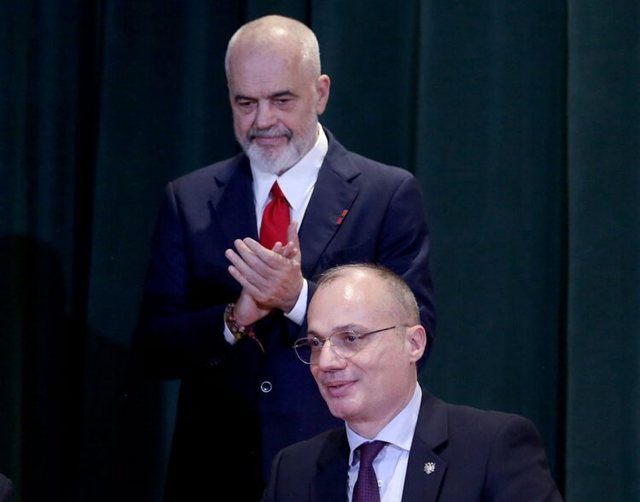
In August, when most public officials or representatives of the diplomatic corps are on vacation, the Ministry for Europe and Foreign Affairs submitted for public consultation a draft law on the "Foreign Service of the Republic of Albania", almost nine years after the last changes legal issues caused a political debate.
Through the draft submitted for consultation, the Foreign Ministry intends to extend the mandate of ambassadors from three to four years and give them the right to a second consecutive mandate in the host country.
The Ministry also proposes to change the appointment procedures for heads of diplomatic missions, bypassing the role of the Assembly so far. Historically, candidates for ambassadors are presented to the Foreign Policy Committee in the Parliament for a hearing before the decree by the President of the Republic, but with the new draft law, this hearing is postponed to take place after the decree.
The Foreign Service of the Republic of Albania consists of the Ministry, diplomatic missions and consular posts, which, according to the law, implement the country's foreign policy in accordance with national interests.
Currently, Albania has 46 representative offices and diplomatic missions around the world as well as eight consulates.
The legal proposals for the foreign service come nine years after the government of Prime Minister Edi Rama decided to abolish the limit of 20% of candidates that could be recruited outside the diplomatic career system, from the ranks of prominent personalities in fields such as international relations or economy, culture or science.
In practice, the removal of this limit paved the way for diplomatic careers for some Socialist Party functionaries – a move that foreign policy experts say has damaged diplomacy.
Albert Rakipi, president of the Institute of International Studies, is critical of the latest legal proposals, which according to him not only do not correct the 2015 law, but deepen it. According to Rakip, the removal of the 20% threshold has brought cronyism to diplomacy and put career diplomats in an unfavorable position.
"Clientelist appointments in the foreign service based primarily on clan, be it political, provincial, blood clan or even a clan based on transactional relationship, money and favors, which is already perhaps dominant, unfortunately end up creating a pattern I once called 'the tyranny of the cousins'. And cousins, as I explained, are not cousins only by blood," says Rakipi.
Even Afrim Krasniqi from the Institute of Political Studies told BIRN that the project does not address the concern created in 2015 about the politicization of diplomacy, while according to him, the draft law does not even formally explain what problems the law has in force and how it has worked.
Krasniqi also criticizes the removal of career criteria.
"In the new law, qualifying and disqualifying career criteria have been removed, opening the possibility that anyone can be appointed as a diplomat," he said.
The extension of the mandate of diplomats from 3 to 4 years, as well as the possibility of having a second consecutive mandate, is evaluated by experts as a change that legitimizes the current situation in the foreign service. They also estimate that the draft submitted for consultation has logical nonsense.
Krasniqi from the Institute of Political Studies told BIRN that most of the heads of diplomatic missions are outside their 3-year mandate provided by law.
"...an equally large part are political figures, who have been delegated by the foreign minister and the prime minister", he added.
Krasniqi also stressed that the proposed appointment procedure takes parliament out of the game.
"I think it's nonsense, there should be an evaluation of whether the procedures in the parliamentary committee have been effective, but there is no sense (hearing) as long as the President's decree has been received," says Krasniqi, while emphasizing that the proposed variant can bring impasses with the host countries as well.
The same opinion is shared by Albert Rakipi, according to whom the hearing in the Parliament is a moment that helps a fairer process.
"Parliament is not a government department. Despite the fact that the Parliamentary Committee on Foreign Affairs does not have the authority to decide whether the candidate proposed by the government should follow the procedure or not, the hearing in the committee was a barrier to help a fair process based on professional criteria, especially when these hearings are made public," Rakipi said.
He also emphasized that the postponement of the mandates of the ambassadors is a demonstration that the law, no matter how good it is, has no value.
"Regardless of what was written in the law, we reached an unprecedented record, when in most capitals of Europe, ambassadors remained immobilized for a decade or more," he concluded./ BIRN
Latest news

From Germany on the protest in Tirana: We will not stop until there is change
2026-06-11 18:38:52

Serbia risks EU security by granting Russians citizenship
2026-06-11 18:07:47
"The Guardian" chooses the protest in Tirana as "Photo of the Day"
2026-06-11 17:17:01

10 myths about cleaning that you should stop believing
2026-06-11 16:19:47
Peter Lucas in the Boston Herald: "Rama Government", the best that money can buy
2026-06-11 16:14:17


The Democratic Party releases the 'dossier' of Rama's 13 years of government
2026-06-11 15:37:52
Directors of Serbian institutions in Kosovo released from detention
2026-06-11 15:17:18
Correcting an injustice...
2026-06-11 14:59:47
Non grata from Tirana, the chronology of a history of manipulation
2026-06-11 14:50:22

TNT explosion near Nikulaj family, one of the suspected perpetrators arrested
2026-06-11 14:19:52
GJKKO convicts 12 defendants for terrorism and participation in the war in Syria
2026-06-11 14:09:30
e-Albania in healthcare: The challenges faced by citizens
2026-06-11 13:58:21
Heroin from the Republic of Macedonia to Albania, 2 people arrested
2026-06-11 13:49:17
The World Cup starts tonight, 48 teams competing for a trophy
2026-06-11 13:37:05


Knife attack in Lushnje, 19-year-old arrested
2026-06-11 12:36:35
Serbia grants citizenship to Russians sanctioned by US and Ukraine
2026-06-11 12:24:53
DP MPs block Manja, sing the protesters' 'chorus': Rama resigns
2026-06-11 12:15:04
Berisha: I was never non grata! It was an entry ban in the US
2026-06-11 12:07:05
US lifts 'non-grata' for Berisha, Balla seeks 'official seal'
2026-06-11 11:54:57

Eglant Koç's disappearance/ Escape plan collapses, police alert hospitals
2026-06-11 11:16:09

Berisha is welcomed with applause in the Parliament: I came, it was done
2026-06-11 10:55:05
Official/ US lifts sanctions against Sali Berisha
2026-06-11 10:52:20

27-year-old woman dies after falling from 6th floor of apartment in Vlora
2026-06-11 10:28:48

"I'm packing my books," Vučić announces his departure from the Presidency
2026-06-11 09:59:24
Call center raided in Tirana, 4 organizers arrested, 49 employees prosecuted
2026-06-11 09:43:12

Déjà vu may not be a brain error, but a...
2026-06-11 09:32:45

US and Iran exchange airstrikes for second day in a row
2026-06-11 08:59:44
Rama called them 'meme-mania': How banners became the main weapon of the protest
2026-06-11 08:49:16
Të rinjtë largohen, tregut të punës i shtohen 17.7 mijë pensionistë
2026-06-11 08:32:27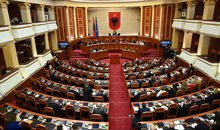
The Assembly meets in plenary session today, 6 interpellations on the agenda
2026-06-11 08:14:45
High temperatures, weather forecast for this Thursday
2026-06-11 08:01:29
Morning Post/ In 2 lines: What mattered yesterday in Albania
2026-06-11 07:48:06

Fatal accident in Tirana, 48-year-old man dies
2026-06-10 22:32:03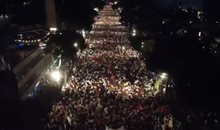
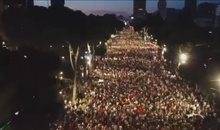
Citizens ironic with the Prime Minister: Let's clean up Rama, but also the trash
2026-06-10 21:48:06
SP MP 'in trouble' over Albanian revolt: They are ruining our tourism business
2026-06-10 21:24:35



Lack of lawyers causes trial against Erion Veliaj to be postponed
2026-06-10 19:55:19


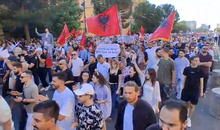
11th day of protest, united citizens demand Rama's resignation
2026-06-10 18:27:08
From Ancona to Albania, cocaine and diamonds are seized at the Port of Durres
2026-06-10 18:10:49




10 footballers who could grab attention at the 2026 World Cup
2026-06-10 16:41:46
Euro falls again, closer than ever to the 95 lek threshold
2026-06-10 16:34:40
Road accidents/ Leading cause of trauma, peak during lunchtime
2026-06-10 16:22:18


Firearms and drugs, three arrested in Durrës
2026-06-10 15:38:43



Survey: History and nationalism hold the region's economic integration hostage
2026-06-10 14:27:33
Why endless job applications can hurt you more than you think
2026-06-10 14:20:35



The 'parallel reality' of Rama's rallies in front of thousands of protesters
2026-06-10 13:41:46
The 2026 World Cup starts with new rules, VAR gets more powers
2026-06-10 13:34:27


Faces against the protest/ After Taulant Balla, Karlo Bolino appears
2026-06-10 12:51:23
Who are the 4 members of the criminal group arrested in Tirana?
2026-06-10 12:39:29
The highest-paid professions in the first quarter are led by bankers and IT
2026-06-10 12:31:34
U shkarkua nga puna, punonjësi dhunon drejtorin e ministrisë së Mjedisit
2026-06-10 12:20:49