 Flash News
Call center raided in Tirana, 4 organizers arrested, 49 employees prosecuted
New details from the disappearance of the 34-year-old, police move the search for the body to Pëllumbas and Qafëmolë
Rama called them 'meme-mania': How banners became the main weapon of the protest
The Assembly meets in plenary session today, 6 interpellations on the agenda
Morning Post/ In 2 lines: What mattered yesterday in Albania
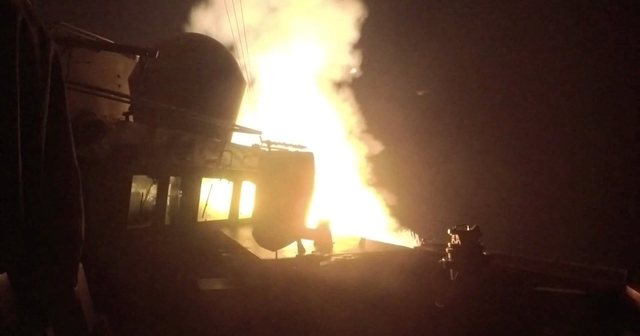
The United States carried out a new round of airstrikes on military targets in Iran on June 10, prompting Tehran to carry out retaliatory attacks against American military targets in Bahrain and Kuwait.
US Central Command, CENTCOM, said its forces carried out additional "self-defensive" strikes, striking Iranian military surveillance capabilities, communications systems and air defense positions across Iran.
The operation involved US Marine Corps, Air Force and Navy assets, which used high-precision munitions against targets that Washington said posed a threat to US forces and international commercial shipping in the region's waters.
"The strikes are in response to Iran's unprovoked and ongoing aggression," CENTCOM said in a statement in the early hours of June 11, adding that US forces are "aware, robust and ready."
Shortly thereafter, Iran's Islamic Revolutionary Guard Corps (IRGC) announced that it had struck US military targets in Bahrain and Kuwait in retaliation for the US attacks.
In a statement, the IRGC said it had struck 18 targets linked to the US military in two waves of operations against the Ali Al Salem and Ahmed Al Jaber air bases in Kuwait. It said Iranian forces also struck the Sheikh Isa air base in Bahrain.
US officials have not announced the extent of possible damage, while the impact of the attacks remained unclear.
Bahrain's Interior Ministry said air raid sirens sounded across the Gulf kingdom for the second time and urged citizens and residents to remain calm and move to the nearest safe place.
Meanwhile, Kuwait's civil aviation authority announced on June 11 that the country's airspace has reopened and that commercial traffic has "returned to normal," after a series of Iranian attacks caused their temporary closure.
The latest clash constitutes a significant escalation of the confrontation between Washington and Tehran, raising concerns about broader instability in the Gulf region and threats to energy infrastructure and maritime trade routes.
UN Secretary-General Antonio Guterres called for an immediate cessation of hostilities, warning that the Middle East is plunging "deeper into crisis" and that the consequences extend far beyond the region.
A day earlier, US airstrikes hit several targets in Iran in response to Iran shooting down a US military helicopter in the Strait of Hormuz. Iran then launched attacks on US bases in the region in retaliation.
The June 10 attacks occurred just hours after US President Donald Trump told reporters that "we hit them hard yesterday and we're going to hit them hard again today."
Before the airstrikes, Iranian President Masoud Pezeshkian said on X that his country would withstand any pressure and that Trump's threats were a sign of Washington's desperation.
Speaking to reporters, Trump also claimed that the United States has been taking oil from Iran.
"I'm making it public today for the first time, but we've been pumping out millions of barrels of oil, millions of barrels every night," Trump said, adding that Iran "is just now realizing this."
Regarding negotiations with Iran, Trump added: "We want a deal that makes sense, we want a deal that works. We were very close to a deal, but they keep dragging us along, keep playing us like we're fools."
Trump said Iran has already agreed not to develop nuclear weapons - one of Washington's main demands - but the deal has not yet been signed.
Earlier on Wednesday, the 35-member board of governors of the UN nuclear watchdog approved a US-backed resolution demanding that Iran disclose its remaining stockpiles of enriched uranium and allow inspectors into the country.
The Iranian ambassador to Austria, Reza Najafi, told AFP that the resolution is "counterproductive" and an obstacle to talks with Washington.
Earlier, Trump declared that the Iranian military has been "totally defeated," warning Tehran that it will "pay the price" for "taking too long to negotiate a deal" with Washington.
Tehran and Washington have been engaged in negotiations since April 8, when a ceasefire ended the US-Israeli bombing campaign against Iran.
However, several complex issues have prevented a deal from being reached, including the fate of Iran's enriched uranium reserves, Israel's ongoing war against Hezbollah in Lebanon and Tehran's demand that Washington release Iranian funds frozen abroad.
Latest news

"I'm packing my books," Vučić announces his departure from the Presidency
2026-06-11 09:59:24
Call center raided in Tirana, 4 organizers arrested, 49 employees prosecuted
2026-06-11 09:43:12

Déjà vu may not be a brain error, but a...
2026-06-11 09:32:45
US and Iran exchange airstrikes for second day in a row
2026-06-11 08:59:44
Rama called them 'meme-mania': How banners became the main weapon of the protest
2026-06-11 08:49:16
Të rinjtë largohen, tregut të punës i shtohen 17.7 mijë pensionistë
2026-06-11 08:32:27
The Assembly meets in plenary session today, 6 interpellations on the agenda
2026-06-11 08:14:45
High temperatures, weather forecast for this Thursday
2026-06-11 08:01:29
Morning Post/ In 2 lines: What mattered yesterday in Albania
2026-06-11 07:48:06
Fatal accident in Tirana, 48-year-old man dies
2026-06-10 22:32:03

Citizens ironic with the Prime Minister: Let's clean up Rama, but also the trash
2026-06-10 21:48:06
SP MP 'in trouble' over Albanian revolt: They are ruining our tourism business
2026-06-10 21:24:35
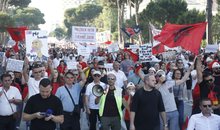
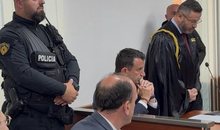
Lack of lawyers causes trial against Erion Veliaj to be postponed
2026-06-10 19:55:19


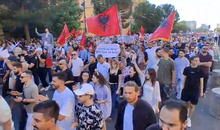
11th day of protest, united citizens demand Rama's resignation
2026-06-10 18:27:08
From Ancona to Albania, cocaine and diamonds are seized at the Port of Durres
2026-06-10 18:10:49



10 footballers who could grab attention at the 2026 World Cup
2026-06-10 16:41:46
Euro falls again, closer than ever to the 95 lek threshold
2026-06-10 16:34:40
Road accidents/ Leading cause of trauma, peak during lunchtime
2026-06-10 16:22:18
Firearms and drugs, three arrested in Durrës
2026-06-10 15:38:43

Survey: History and nationalism hold the region's economic integration hostage
2026-06-10 14:27:33
Why endless job applications can hurt you more than you think
2026-06-10 14:20:35

The 'parallel reality' of Rama's rallies in front of thousands of protesters
2026-06-10 13:41:46
The 2026 World Cup starts with new rules, VAR gets more powers
2026-06-10 13:34:27


Faces against the protest/ After Taulant Balla, Karlo Bolino appears
2026-06-10 12:51:23
Who are the 4 members of the criminal group arrested in Tirana?
2026-06-10 12:39:29
The highest-paid professions in the first quarter are led by bankers and IT
2026-06-10 12:31:34
U shkarkua nga puna, punonjësi dhunon drejtorin e ministrisë së Mjedisit
2026-06-10 12:20:49
The board moves oil and gasoline prices again
2026-06-10 12:09:16
Çuçi criticizes the Prime Minister: O Rama, where are your institutions?
2026-06-10 11:54:49

Eraldo Nevruzi was killed in Dhërmi, Greece refuses to extradite Gerald Shehu
2026-06-10 11:30:43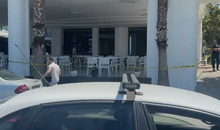
TNT explosion near the Nikulaj family in Lezha
2026-06-10 11:23:03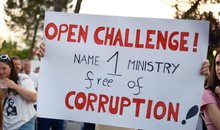
Këlliçi explodes against Rama: The truth is out in the open
2026-06-10 11:08:45
When the Ayatollah of Albania clashes with the Ayatollahs of Iran
2026-06-10 10:56:57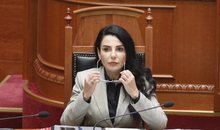

Gjirokastër/ A minor lost his life after going into the pool to bathe
2026-06-10 10:33:07

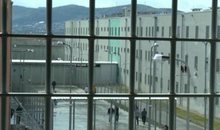
Balluku seeks reinstatement, Supreme Court draws lots for recourse
2026-06-10 09:51:13
Elez Biberaj: Protests are not against Trump, but against kleptocracy
2026-06-10 09:30:57

Accused of attempted murder in Spain, 22-year-old arrested in Shëngjin
2026-06-10 08:46:20

Horoscope, what do the stars have in store for you today?
2026-06-10 08:17:52
Temperatures above 30 degrees, weather forecast for today
2026-06-10 08:00:52
Morning Post/ In 2 lines: What mattered yesterday in Albania
2026-06-10 07:47:57



Actor known for protests: I fled Albania because I didn't want to sell my soul
2026-06-09 20:32:34

Meçollari accuses protest: The environment has been altered in Palasa and Dhërmi
2026-06-09 19:38:17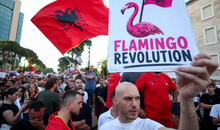


Judge this protest by its opponents
2026-06-09 18:20:57
After four sessions, Ilir Beqaj concludes preliminary requests
2026-06-09 18:11:25
UN message to Iran, Lebanon and Gaza: Respect ceasefires
2026-06-09 17:06:22
10 days that shook the "system"
2026-06-09 16:53:28
Anti-drug operation in five cities in Kosovo, 5 arrested
2026-06-09 16:44:03