 Flash News
Call center raided in Tirana, 4 organizers arrested, 49 employees prosecuted
New details from the disappearance of the 34-year-old, police move the search for the body to Pëllumbas and Qafëmolë
Rama called them 'meme-mania': How banners became the main weapon of the protest
The Assembly meets in plenary session today, 6 interpellations on the agenda
Morning Post/ In 2 lines: What mattered yesterday in Albania
Rama called them 'meme-mania': How banners became the main weapon of the protest

Politiko
2026-06-11 08:49:16
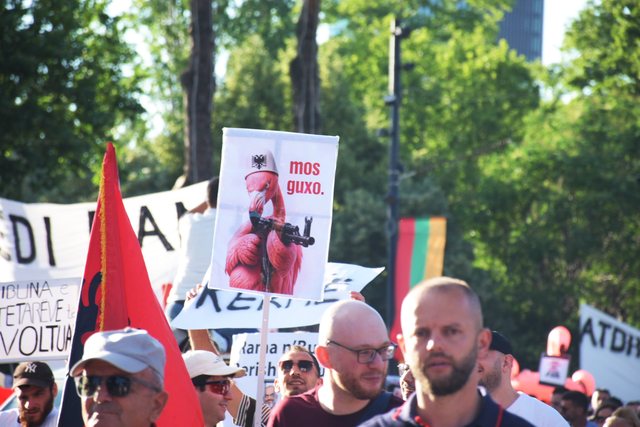
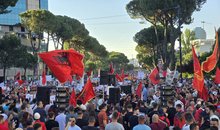
Throughout the ten days of mass protests in Tirana, demanding the halt to the controversial project in Zvërnec and the resignation of Rama, what has stood out have been the banners with satirical messages.
Using the main slogan "Flamingo Revolution", the messages on these banners mock the old politics, including the main leaders Rama and Berisha, while conveying clear messages of criticism, dissatisfaction and also the need for change.
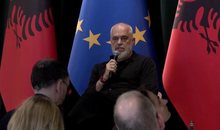
Prime Minister Rama referred to these banners as "meme-mania", but for communication experts, the protest banners are performing the function of political caricatures, which serve to expose the absurd and demand accountability from the government.
Blerjana Bino, executive director of the SCiDEV center in Albania and an activist for media freedom, sees these memes as part of the tradition of political satire, adapted to the digital language of the new generation.
“Essentially, a protest meme does what political caricatures have historically done: it takes a serious situation, reduces it to a recognizable image, joke or sign, and through irony exposes the contradiction, arrogance or absurdity that protesters see in power,” Bino told BIRN.
She explained that satire has a very important democratic function, as a way to criticize power, without resorting to the language of violence.
Even Ervin Goci, activist and Communication professor, sees the satirical messages of the banners as cultural and political artifacts, which contain complex codes in themselves.
“These things you call 'memes', I call message cells, communication in a world that no longer accepts shouting in chorus,” said Goci.
According to Goci, if these messages were not there in the square, the protest would simply become a rally centered on voices.
“In fact, the real protest is on the periphery of protest, where decentralized, thematized, aestheticized, but deeply critical and political politics is produced,” he added.
From one banner to another in the protest there is a combination of messages, which makes this protest unique. The creativity of the memes is considered essential to make the political message they convey understandable and shareable.
“A meme banner can communicate faster than a long political statement, because it uses cultural codes that people immediately recognize,” emphasizes Blerjana Bino.
Although satirical messages are not new, what is new is precisely the digital logic of their use. In this case, the banner is not only for the square, but is also intended for photography, social networks or the public circulation of the message.
"The meme becomes simultaneously a banner, a caricature, a political commentary, and a tool for mobilization," Bino continued.
Communication professor Ervin Goci shares the same opinion. According to him, the isolated circulation of these online messages would not make sense without contextualization in the public square.
"Despite the fact that they circulate online, the online circulation serves more as a roundabout to bring people to the square, to a digital-physical community," said Goci.
"But let's not forget that without physical contextualization on the boulevard, online circulation simply strips them of meaning," he concluded./ BIRN
Latest news

Déjà vu may not be a brain error, but a...
2026-06-11 09:32:45
US and Iran exchange airstrikes for second day in a row
2026-06-11 08:59:44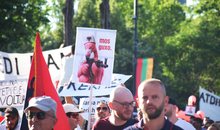
Rama called them 'meme-mania': How banners became the main weapon of the protest
2026-06-11 08:49:16
Të rinjtë largohen, tregut të punës i shtohen 17.7 mijë pensionistë
2026-06-11 08:32:27
The Assembly meets in plenary session today, 6 interpellations on the agenda
2026-06-11 08:14:45
High temperatures, weather forecast for this Thursday
2026-06-11 08:01:29
Morning Post/ In 2 lines: What mattered yesterday in Albania
2026-06-11 07:48:06
Fatal accident in Tirana, 48-year-old man dies
2026-06-10 22:32:03
Citizens ironic with the Prime Minister: Let's clean up Rama, but also the trash
2026-06-10 21:48:06
SP MP 'in trouble' over Albanian revolt: They are ruining our tourism business
2026-06-10 21:24:35

Lack of lawyers causes trial against Erion Veliaj to be postponed
2026-06-10 19:55:19
11th day of protest, united citizens demand Rama's resignation
2026-06-10 18:27:08
From Ancona to Albania, cocaine and diamonds are seized at the Port of Durres
2026-06-10 18:10:49



10 footballers who could grab attention at the 2026 World Cup
2026-06-10 16:41:46
Euro falls again, closer than ever to the 95 lek threshold
2026-06-10 16:34:40
Road accidents/ Leading cause of trauma, peak during lunchtime
2026-06-10 16:22:18
Firearms and drugs, three arrested in Durrës
2026-06-10 15:38:43


Survey: History and nationalism hold the region's economic integration hostage
2026-06-10 14:27:33
Why endless job applications can hurt you more than you think
2026-06-10 14:20:35


The 'parallel reality' of Rama's rallies in front of thousands of protesters
2026-06-10 13:41:46
The 2026 World Cup starts with new rules, VAR gets more powers
2026-06-10 13:34:27


Faces against the protest/ After Taulant Balla, Karlo Bolino appears
2026-06-10 12:51:23
Who are the 4 members of the criminal group arrested in Tirana?
2026-06-10 12:39:29
The highest-paid professions in the first quarter are led by bankers and IT
2026-06-10 12:31:34
U shkarkua nga puna, punonjësi dhunon drejtorin e ministrisë së Mjedisit
2026-06-10 12:20:49
The board moves oil and gasoline prices again
2026-06-10 12:09:16
Çuçi criticizes the Prime Minister: O Rama, where are your institutions?
2026-06-10 11:54:49
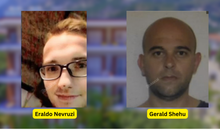
Eraldo Nevruzi was killed in Dhërmi, Greece refuses to extradite Gerald Shehu
2026-06-10 11:30:43
TNT explosion near the Nikulaj family in Lezha
2026-06-10 11:23:03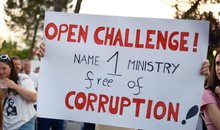
Këlliçi explodes against Rama: The truth is out in the open
2026-06-10 11:08:45
When the Ayatollah of Albania clashes with the Ayatollahs of Iran
2026-06-10 10:56:57
Gjirokastër/ A minor lost his life after going into the pool to bathe
2026-06-10 10:33:07

Balluku seeks reinstatement, Supreme Court draws lots for recourse
2026-06-10 09:51:13
Elez Biberaj: Protests are not against Trump, but against kleptocracy
2026-06-10 09:30:57

Accused of attempted murder in Spain, 22-year-old arrested in Shëngjin
2026-06-10 08:46:20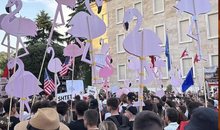

Horoscope, what do the stars have in store for you today?
2026-06-10 08:17:52
Temperatures above 30 degrees, weather forecast for today
2026-06-10 08:00:52
Morning Post/ In 2 lines: What mattered yesterday in Albania
2026-06-10 07:47:57


Actor known for protests: I fled Albania because I didn't want to sell my soul
2026-06-09 20:32:34
Meçollari accuses protest: The environment has been altered in Palasa and Dhërmi
2026-06-09 19:38:17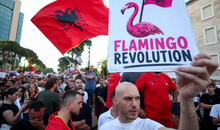


Judge this protest by its opponents
2026-06-09 18:20:57
After four sessions, Ilir Beqaj concludes preliminary requests
2026-06-09 18:11:25
UN message to Iran, Lebanon and Gaza: Respect ceasefires
2026-06-09 17:06:22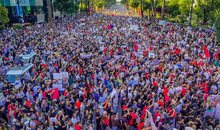
10 days that shook the "system"
2026-06-09 16:53:28
Anti-drug operation in five cities in Kosovo, 5 arrested
2026-06-09 16:44:03
Accident in Greece, 16-year-old Albanian dies
2026-06-09 16:25:19
Rama 'clash' with Romanian journalist: They've blocked her brain!
2026-06-09 16:13:59