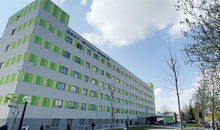
'The Guardian': Italian migration centers open in Albania amid fears it will create a dangerous precedent

Politiko
2024-10-11 16:52:51

Italy has officially opened two centers in Albania, where it plans to hold men caught in international waters trying to cross from Africa to Europe.
The Italian ambassador to Albania, Fabrizio Bucci, said the centers were ready to accommodate people while their asylum requests were processed, but could not say when the first would arrive.
"As of today, both centers are ready and functional," Bucci told reporters at the port of Shengjin on Albania's Adriatic coast, where the captured people will disembark.
Under the terms of a controversial deal that has been criticized by human rights groups but quietly approved by the EU, up to 3,000 men a month will be sent to centers while their asylum claims are processed in Italy. Children, women and vulnerable groups will be sent to Italy.
The Guardian writes that the agreement was signed last November by the Italian Prime Minister, Giorgia Meloni, and her Albanian counterpart, Edi Rama. Meloni said at the time that in exchange for support for the centers, she would do everything in her power to support Albania's EU membership.
The two centers in Albania have cost Italy 670 million euros (564 million pounds). They are run by Italy and are under Italian jurisdiction. Albanian guards will provide external security.
A center has been established in Shengjin, about 45 miles (75 km) north of the capital, Tirana. The other is about 15 miles south of Shengjin near a former military airport in Gjadër.
Meloni has said officials will try to process asylum applications within 28 days, much faster than the months it currently takes in Italy.
Albania will only process applications from people from countries designated as safe by Italy, a list that was recently expanded from 15 countries to 21. The updated list includes Bangladesh, Egypt, Ivory Coast and Tunisia among others. A year ago, 56,588 people from these countries made their way to Italy.
The vast majority of applications are expected to be rejected because the countries the applicants come from are considered safe, which automatically limits the scope for granting asylum. Those whose applications are rejected will be detained before their eventual repatriation.
Anyone whose request is accepted will be taken to Italy.
Meloni and her right-wing allies have long called for European countries to share more of the burden of migration.
Aid workers have sharply criticized the deal, saying they fear the centers will quickly fill up with people waiting to return home.
Médecins Sans Frontières has said the agreement goes "a step beyond" previous agreements between EU countries and non-member states such as Turkey, Libya and Tunisia. " The goal is no longer just to discourage departures, but to actively prevent people from fleeing and those rescued at sea from gaining safe and rapid access to European territory," MSF said in a statement.
Riccardo Magi, president of the left-wing 'More Europe' party, said: " They are creating a kind of Italian Guantanamo, outside any international standards, outside the EU, without the possibility of monitoring the detention status of the people locked up in these centers . Italy cannot transport people rescued at sea to a country outside the EU as if they were packages or goods".
On August 14, the UN refugee agency, which has expressed serious concerns about the deal, agreed to monitor the first three months of the agreement's operation.
UNHCR said it was not a party to the agreement and held reservations about it, seeking clarification on how the agreement would be implemented. However, the agency said it had agreed to be a monitor to help "protect the rights and dignity of those subject to it".
Some Albanians have said the deal is a way of thanking Italy for taking in thousands of people fleeing poverty in Albania after the fall of communism in 1991.
The Council of Europe's human rights commissioner said the deal could set a dangerous precedent. "The shifting of responsibility across borders by some states also encourages others to do the same, which risks creating a domino effect that could undermine the European and global system of international protection, " he said.
Latest news

"Dad Brain", How Fatherhood Changes the Male Mind
2026-06-05 21:44:40
50 thousand undeclared euros seized at Durres customs
2026-06-05 21:25:48
A citizen married for 30 years in Tirana, institutions declare her single!
2026-06-05 21:19:51
Rama blames Trump's enemies for Zvërnec's echo: The man didn't shave...
2026-06-05 20:56:29
Guard rapes protester during Rama's meeting /VIDEO
2026-06-05 20:39:18
Protest against Rama also in Berlin
2026-06-05 20:14:09
Meta's lawyer: If Rama does not testify, the process is not complete
2026-06-05 20:01:14
How the US naval blockade has cost Iran $6 billion in oil revenue
2026-06-05 19:44:17

Even after the crisis, expensive oil still a challenge for Albania
2026-06-05 19:09:39
Kosovo Police Arrest Serbian List Activist
2026-06-05 18:50:39
Accident at Kombinat, car hits minor
2026-06-05 18:33:56
Rama clashes with Zvërnec resident: Who are you talking to?
2026-06-05 18:27:35
Von der Leyen: Albania should quickly follow Montenegro
2026-06-05 18:13:32
These zodiac signs will find love in June!
2026-06-05 18:01:33
Increased security for Rama's visit to Vlora
2026-06-05 17:46:32
The Rossoneri lose one place in the FIFA rankings
2026-06-05 17:32:56
Police remove 14 sea piers in Ksamil
2026-06-05 17:16:07
Urban accident near Tirana Court, several injured
2026-06-05 16:56:32
Belgium considers selling royal jewels to fill budget gaps
2026-06-05 16:45:02

Socialist MP Klevis Jahaj appears in SPAK
2026-06-05 16:01:00
Photo/ Hundreds of citizens bid farewell to Enea Mekolli
2026-06-05 15:39:58

Citizen puts knife to the neck of a street police officer
2026-06-05 15:03:38

A comparison of problematic projects in Belgrade and Zvërnec
2026-06-05 14:19:49
Berisha: We support the citizen protest for Zvërnec, but the DP is not involved
2026-06-05 13:29:19
Beautiful ugly protest
2026-06-05 13:10:56
Berisha: Enea Mekolli is a hero twice, his killer was financed with state funds
2026-06-05 12:25:45


Transparency Board sets new fuel prices
2026-06-05 11:38:15

The Director of the Albanian Railways, Ergys Verdho, appears again at SPAK
2026-06-05 11:02:56

Foreign exchange/ How much foreign currencies are bought and sold today
2026-06-05 09:49:44
From Rama's hands to the ministries, 16 institutions change their dependence
2026-06-05 09:37:06

Two cars collide on the Kardhiq-Delvinë axis, one dead and 3 injured
2026-06-05 08:35:38
With alternating clouds, what is the weather forecast for today?
2026-06-05 08:20:50

Morning Post/ In 2 lines: What mattered yesterday in Albania
2026-06-05 07:57:11
Hasimja: Albania is losing a historic chance for EU integration
2026-06-04 22:57:39
US Senate confirms Eric Wendt as US ambassador to Albania
2026-06-04 22:30:33


Andoni Iraola is officially Liverpool manager
2026-06-04 20:52:27
Killed in the line of duty, family refuses to bury officer in Martyrs' Cemetery
2026-06-04 20:26:26

EU to provide $116 million in aid to Lebanese army
2026-06-04 18:12:12

Plane crashes in Croatia, at least 4 dead
2026-06-04 16:31:32
Berisha: Lands in Zvërnec were seized by Pjerini from Lezha and Agaç from Berat
2026-06-04 16:26:52
Minatorët e Bulqizës vijojnë bojkotin e punës, kërkojnë rritje pagash
2026-06-04 16:17:31

Former Montenegrin police chief banned from entering Serbia
2026-06-04 16:05:34

The moment when Gjesti enters the record company's offices armed
2026-06-04 15:03:29

The Euro-Lek exchange rate falls again, heading towards the threshold of 95 Lek
2026-06-04 14:33:00

Balluk's wealth "collapses", SPAK seizes his villa in Dhërmi
2026-06-04 14:00:13
Watermelon, the heart's ally in summer
2026-06-04 13:56:33
The board continues to "ping pong" with fuel prices, oil increases again
2026-06-04 13:39:24
Bardhi asks Rama to the Assembly: The interpellation is not delegated!
2026-06-04 13:21:54
House of Representatives approves measure to end Iran war
2026-06-04 13:14:35
Car ends up in canal, residents save father and son
2026-06-04 12:55:58
SPAK requests 98 years in prison for Durim Bami, Aldo Avdyli and 5 others
2026-06-04 12:39:43



Video/View from the scene where the policeman was killed in Maliq
2026-06-04 11:52:46


SPAK knocks on Igli Tare, former footballer included in Balluku file
2026-06-04 11:16:36