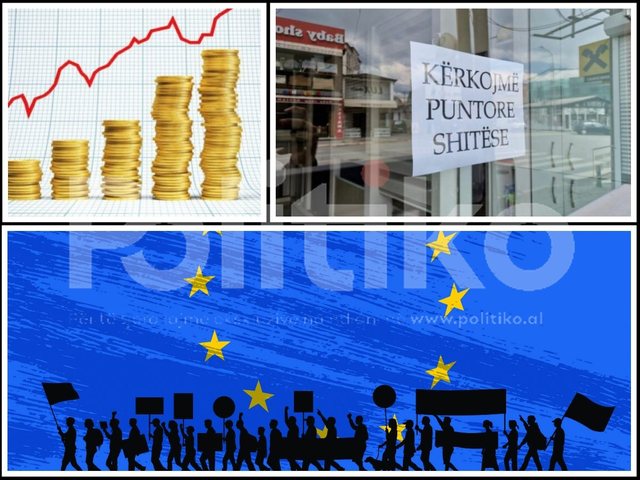
The year 2025 is closing in on two realities that do not fully align with each other. On the one hand, official reports and international institutions speak of economic growth, macroeconomic stability, and reduced unemployment.
On the other hand, a large portion of Albanians continue to face high living costs, insufficient salaries, and uncertainty about the future every day. In this contrast, the question arises: are Albanians poorer, or simply more patient?
According to International Monetary Fund projections , the Albanian economy will close 2025 with a real growth in Gross Domestic Product of around 3.5 percent.
A steady growth, supported mainly by private consumption, construction and tourism. On paper, these figures place Albania in a relatively positive position compared to some countries in the region.
Inflation and prices

However, this growth does not necessarily translate into a significant improvement in life for citizens. Average inflation for 2025 is projected to be around 2.2–2.8 percent, a level considered low and within the Bank of Albania's target.
But for Albanian families, the prices of basic food, energy, rent and services have remained high and are often perceived as more expensive than official statistics reflect, INSTAT reports .
Unemployment and the labor market
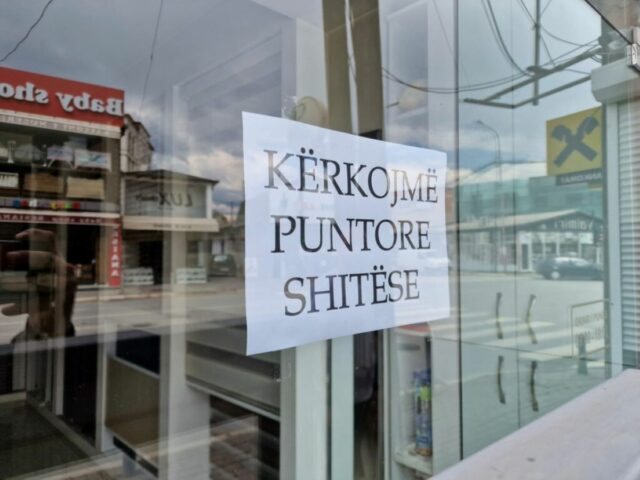
In the labor market, the unemployment rate has fallen to around 8.7 percent, according to the latest data. This is also a positive indicator, but the reality behind the figure is more complex. Many jobs are low-paid, have insecure contracts, or are in sectors where informality continues to be a problem. For thousands of families, having a job does not necessarily mean having a dignified life.
One of the most worrying indicators remains poverty.
According to the World Bank , around 20 percent of the Albanian population is projected to still be below the poverty line in 2025.
This means that one in five Albanians lives with an income that does not fully cover basic needs. A figure that clearly shows that economic growth is not distributed evenly and that inequalities remain deep.
Wages have increased nominally in recent years, particularly in the public sector and in some branches of the private sector. But this increase has not always kept pace with the real cost of living. As a result, the purchasing power of many families remains limited, while the middle class continues to shrink.
In this economic reality, what is most striking is the reaction of society. Protests are few, dissatisfaction is often expressed only on social networks, while a large part of citizens seems to have chosen patience as a way of survival.
This patience is not a sign of well-being, but of fatigue and a lack of faith that things can change.
Departure
For many Albanians, the solution has not been confrontation, but departure.

Emigration continues to be one of the strongest social phenomena, especially among young people and professionals. It is a "silent vote" against economic conditions and the lack of prospects within the country.
At the end of 2025, the answer seems clear: Albanians are both poorer in sentiment and more patient in behavior. Macroeconomic figures speak of stability, but the daily lives of citizens show that this stability is not enough. The question that remains for next year is whether this patience will continue, or whether economic reality will turn silence into reaction.
Latest news
"Dad Brain", How Fatherhood Changes the Male Mind
2026-06-05 21:44:40
50 thousand undeclared euros seized at Durres customs
2026-06-05 21:25:48
A citizen married for 30 years in Tirana, institutions declare her single!
2026-06-05 21:19:51
Rama blames Trump's enemies for Zvërnec's echo: The man didn't shave...
2026-06-05 20:56:29
Guard rapes protester during Rama's meeting /VIDEO
2026-06-05 20:39:18
Protest against Rama also in Berlin
2026-06-05 20:14:09
Meta's lawyer: If Rama does not testify, the process is not complete
2026-06-05 20:01:14
How the US naval blockade has cost Iran $6 billion in oil revenue
2026-06-05 19:44:17
Even after the crisis, expensive oil still a challenge for Albania
2026-06-05 19:09:39
Kosovo Police Arrest Serbian List Activist
2026-06-05 18:50:39
Accident at Kombinat, car hits minor
2026-06-05 18:33:56
Rama clashes with Zvërnec resident: Who are you talking to?
2026-06-05 18:27:35
Von der Leyen: Albania should quickly follow Montenegro
2026-06-05 18:13:32
These zodiac signs will find love in June!
2026-06-05 18:01:33
Increased security for Rama's visit to Vlora
2026-06-05 17:46:32
The Rossoneri lose one place in the FIFA rankings
2026-06-05 17:32:56
Police remove 14 sea piers in Ksamil
2026-06-05 17:16:07
Urban accident near Tirana Court, several injured
2026-06-05 16:56:32
Belgium considers selling royal jewels to fill budget gaps
2026-06-05 16:45:02

Socialist MP Klevis Jahaj appears in SPAK
2026-06-05 16:01:00
Photo/ Hundreds of citizens bid farewell to Enea Mekolli
2026-06-05 15:39:58

Citizen puts knife to the neck of a street police officer
2026-06-05 15:03:38
A comparison of problematic projects in Belgrade and Zvërnec
2026-06-05 14:19:49
Berisha: We support the citizen protest for Zvërnec, but the DP is not involved
2026-06-05 13:29:19
Beautiful ugly protest
2026-06-05 13:10:56
Berisha: Enea Mekolli is a hero twice, his killer was financed with state funds
2026-06-05 12:25:45
Transparency Board sets new fuel prices
2026-06-05 11:38:15

The Director of the Albanian Railways, Ergys Verdho, appears again at SPAK
2026-06-05 11:02:56

Foreign exchange/ How much foreign currencies are bought and sold today
2026-06-05 09:49:44
From Rama's hands to the ministries, 16 institutions change their dependence
2026-06-05 09:37:06

Two cars collide on the Kardhiq-Delvinë axis, one dead and 3 injured
2026-06-05 08:35:38
With alternating clouds, what is the weather forecast for today?
2026-06-05 08:20:50

Morning Post/ In 2 lines: What mattered yesterday in Albania
2026-06-05 07:57:11
Hasimja: Albania is losing a historic chance for EU integration
2026-06-04 22:57:39
US Senate confirms Eric Wendt as US ambassador to Albania
2026-06-04 22:30:33
Andoni Iraola is officially Liverpool manager
2026-06-04 20:52:27
Killed in the line of duty, family refuses to bury officer in Martyrs' Cemetery
2026-06-04 20:26:26

EU to provide $116 million in aid to Lebanese army
2026-06-04 18:12:12
Plane crashes in Croatia, at least 4 dead
2026-06-04 16:31:32
Berisha: Lands in Zvërnec were seized by Pjerini from Lezha and Agaç from Berat
2026-06-04 16:26:52
Minatorët e Bulqizës vijojnë bojkotin e punës, kërkojnë rritje pagash
2026-06-04 16:17:31

Former Montenegrin police chief banned from entering Serbia
2026-06-04 16:05:34

The moment when Gjesti enters the record company's offices armed
2026-06-04 15:03:29

The Euro-Lek exchange rate falls again, heading towards the threshold of 95 Lek
2026-06-04 14:33:00
Balluk's wealth "collapses", SPAK seizes his villa in Dhërmi
2026-06-04 14:00:13
Watermelon, the heart's ally in summer
2026-06-04 13:56:33
The board continues to "ping pong" with fuel prices, oil increases again
2026-06-04 13:39:24
Bardhi asks Rama to the Assembly: The interpellation is not delegated!
2026-06-04 13:21:54
House of Representatives approves measure to end Iran war
2026-06-04 13:14:35
Car ends up in canal, residents save father and son
2026-06-04 12:55:58
SPAK requests 98 years in prison for Durim Bami, Aldo Avdyli and 5 others
2026-06-04 12:39:43


Video/View from the scene where the policeman was killed in Maliq
2026-06-04 11:52:46

SPAK knocks on Igli Tare, former footballer included in Balluku file
2026-06-04 11:16:36