 Flash News
Road accidents increase 6.8% in the first half of the year; Tirana leads
"No to the accelerated procedure", Bardhi: We will not vote on the agreement with the US without familiarizing ourselves with the text
Balluk's investigations are not closed, SPAK extends the deadline by another 3 months
Protest organizer Arben Kola is escorted and dragged away by police
Tomatoes, eggs and peppers, the "arsenal" of protesters for MPs in front of the Parliament
From Gëllçi to Peza/ How RTSH collapsed under the shadow of politics and the debts of former SP directors

Politiko
2026-01-16 21:06:06
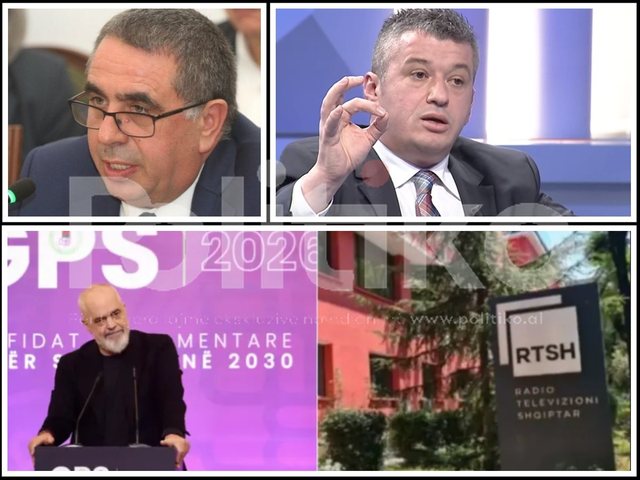
Prime Minister Edi Rama's warning about the closure of Albanian Radio Television has brought back into focus the deep crisis that has been accompanying the public broadcaster for years.
It is a fact that RTSH has been facing deep structural problems for years and today appears as an institution with a diminished role in the public space.
However, the failure with which the prime minister "blessed" him today, he forgot that cannot be blamed solely on the institution.
This is due to the fact that for years, RTSH has operated under the shadow of political interference and appointments and a lack of transparency.
As a result, financial problems and abuses by political appointees have taken a heavy toll on RTSH.
In this context, the idea of closure risks serving more as an avoidance of responsibility than as a real solution to the public media crisis.
More specifically, the case of former director general Thoma Gëllçi, elected by majority vote and then arrested for abuse of office in tender procedures, remains one of the most significant examples of this problematic model.
Another case often cited as an illustration of political interference is that of Alfred Peza, a former Socialist Party MP.
During his tenure, RTSH was involved in a wave of dismissals, which were followed by lawsuits won by the dismissed employees.
As a result of these decisions, the institution faced financial obligations and debts to the state, including significant VAT liabilities, further worsening the financial situation of the public broadcaster.
In July 2025, the head of the RTSH Steering Council, Fatjon Hoxhalli, told media organizations that court cases over unfair dismissals have so far cost the state budget around 118 million lek, or 1.8 million euros. This is after around 150 people left RTSH after Alfred Peza was appointed as Director General in 2023.
Likewise, the composition of the RTSH Steering Council has been constantly the subject of controversy, with accusations that members were selected on political rather than professional grounds.
Important editorial and administrative decisions are often perceived as dictated by vested interests, turning RTSH into an institution dependent on politics.
In this context, the announcement of the closure of RTSH is seen as an attempt to blame the failures of an institution that for years has been politically managed and controlled by the government itself/ S.Gj

Latest news
AGSH condemns violence against journalists during the protest at the Parliament
2026-07-27 19:10:18
'More police than protesters': Peaceful activists violently escorted
2026-07-27 18:42:24
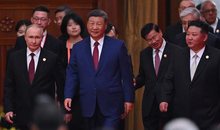
Russia's new axis that is reshaping geopolitics
2026-07-27 17:21:46
Balla is "served" eggs as he leaves the Parliament
2026-07-27 16:59:00
The African heat returns, July ends with temperatures above 40°C
2026-07-27 15:40:44
The end of the era of 'Kavaja lodges'
2026-07-27 15:26:20

Putin: Ukrainian territories could be returned to Poland, Hungary and Romania
2026-07-27 15:00:10
REL: Opposition against accelerated procedure for agreement with the US
2026-07-27 14:52:39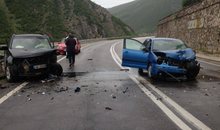
Road accidents increase 6.8% in the first half of the year; Tirana leads
2026-07-27 14:29:00

What does the overvaluation of the lek indicate for the Albanian economy?
2026-07-27 13:04:00


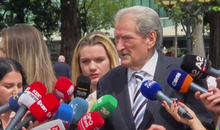
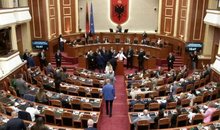
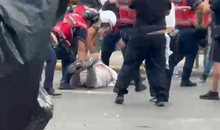
Protest in front of the Parliament, police forcibly escort some citizens
2026-07-27 10:46:22
Protesters surround Parliament outside, plenary session begins
2026-07-27 10:34:36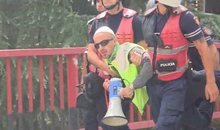
Protest organizer Arben Kola is escorted and dragged away by police
2026-07-27 10:19:00
Protesters march towards Elbasan Street, clash with police: Arrest Belinda!
2026-07-27 10:05:18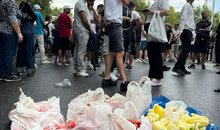
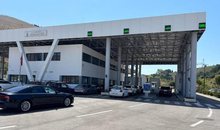
Greek customs officers' protest blocks Kapshtica, traffic suspended for 4 hours
2026-07-27 09:42:00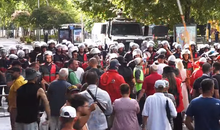
Eurostat: Albania ranks fourth in Europe for deaths from air pollution
2026-07-27 08:46:40
Rain, storms and hail, the weather worsens today in some areas of the country
2026-07-27 08:31:40
58th protest, citizens return to the Parliament in the last session
2026-07-27 08:16:00
Morning Post/ In 2 lines: What mattered yesterday in Albania
2026-07-27 07:59:52
Ekspertët zbulojnë ngjyrën ideale të dhomës së gjumit për të fjetur më mirë
2026-07-26 21:46:01
What is behind the record strengthening of the lek?
2026-07-26 21:00:00

The 4 zodiac signs that are considered the most trustworthy
2026-07-26 19:42:24
Joshua after the fight with Kristian Prengë: I just thought about keeping calm
2026-07-26 18:33:26
Fires sweep southwest France, over 220,000 people evacuated near Bordeaux
2026-07-26 18:17:06
Debate over donations brings healthcare system financing back into focus
2026-07-26 17:55:00

Rita Ora tells her family story: I am proud to be an immigrant
2026-07-26 17:20:00
Massive fire engulfs Soda Forest, pine areas at risk
2026-07-26 16:59:57
When 'Besa' doesn't even convince the left: Who came out against Rama's 'Besa'?
2026-07-26 16:45:00
Fire in Zvërnec, smoke covers Vlora
2026-07-26 16:23:13
Grevë në doganat greke, kufizime disaorëshe në 4 pikat kufitare me Shqipërinë
2026-07-26 16:07:46
Meteorology warns of scorching August, temperatures could reach up to 40°C
2026-07-26 15:54:00
The end of July could bring financial luck to these 3 zodiac signs
2026-07-26 15:36:00


Zhupa: Saranda hostage to a poorly designed terminal, wasted time, traffic
2026-07-26 14:03:54
Milot–Balldren: Si turp, si faj, si brengë, si pabesi!
2026-07-26 13:20:41
Shooting in Debar, a 38-year-old man in handcuffs, 9 people are being prosecuted
2026-07-26 13:02:44
He bought products and paid with fake euros, 24-year-old arrested in Durrës
2026-07-26 12:45:15
Mountains Package/ Bardhi: Even Diella no longer trusts Rama, resigns
2026-07-26 12:28:15


Scandal with medical student exams, Minister of Education resigns
2026-07-26 11:08:36
War crisis, the world is consuming less oil
2026-07-26 10:47:53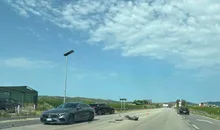
Triple accident on the Peqin-Elbasan axis, two people injured
2026-07-26 10:26:28

Car bursts into flames after accident on Tirana-Durres highway
2026-07-26 09:23:47
Clear skies across the country, weather forecast for today
2026-07-26 09:01:36
Accident in Vlora/ 52-year-old dies, five others injured (Names)
2026-07-26 08:42:00
Horoscope July 26, 2026, discover the star predictions
2026-07-26 08:23:48
Morning Post/ In 2 lines: What mattered yesterday in Albania
2026-07-26 07:56:03

22-year-old man injured by gunfire in Laç
2026-07-25 20:13:01
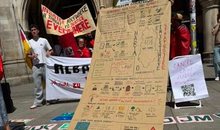
Red and black flags and calls for change, Albanians protest in Munich
2026-07-25 19:38:39
Former socialist minister announces candidacy for Vlora Municipality
2026-07-25 18:54:12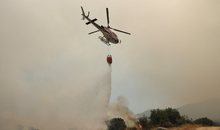
Fires engulf France and Spain, around 270,000 people evacuated
2026-07-25 18:32:36
The master of loloisms or the lolo of the workers?!
2026-07-25 18:10:38

Musk predicts the end of money: You won't need it in 2036
2026-07-25 17:26:57
REL Analysis: Who is lobbying the United States from Serbia and why?
2026-07-25 17:03:59
Two-faced, cynical and bankrupt!
2026-07-25 16:44:00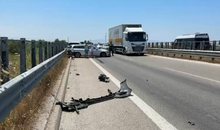
Accident on the Tirana-Durrës highway, two vehicles collide near Maminas
2026-07-25 16:28:27
Lee Kang-in leaves PSG, transfer to Atletico Madrid is official
2026-07-25 16:12:00