 Flash News
Berisha: In the EPP I asked for international support for the civic protests, the DP fully supports them
"Mandi said he would bring out a refrigerator", the disappearance of Eglant Koç, the testimony of the author's supporter is revealed
"Protect the land", amid protests, EU reminds Rama of the condition for integration
Who are the 4 members of the criminal group arrested in Tirana?
Parents, be careful with the air conditioner! The doctor shows the first signs of laryngeal edema
Accusations of plagiarism in university elections fall on deaf ears

Politiko
2024-06-08 20:11:51
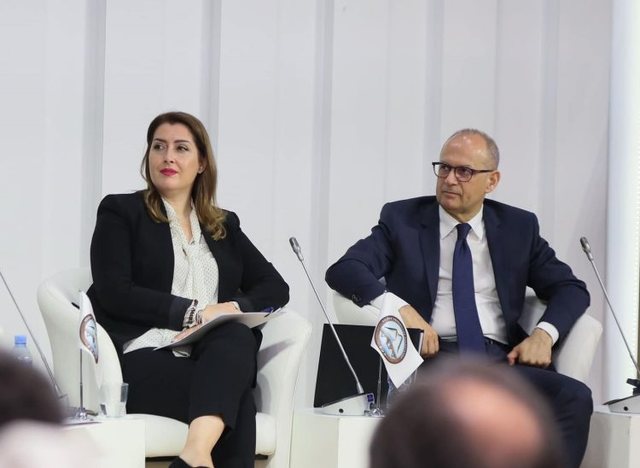
On the eve of the university elections, researcher Taulant Muka published two reports on Friday against the rector of the University of Tirana, Artan Hoxha and the dean of the Faculty of Law, Dorina Hoxha, whom he accuses of plagiarism with their doctoral theses.
According to Muka's reports, which have been sent to a number of institutions, including the President of the Republic, the rector and the dean have copied their doctoral theses, the first by a Romanian researcher and the second by Italian researchers.
"Mr. Hoxha, according to the findings of Annex no. 1, copied verbatim the idea, structure, thoughts and bibliography of Dr. Stănilă, treating it as an authentic/original work of his, without citing it, thus consuming a multitude of violations," says Muka in the report, adding that the doctoral thesis of the rector Artan Hoxha was copied by the Romanian researcher, Laura Maria Stanila.
Regarding the dean of the Faculty of Law, Muka claims that Hoxha copied about 4,000 words from two Italian researchers in her thesis, including, according to him, the idea, structure and bibliography.
Rector Artan Hoxha and Dean Dorina Hoxha are competing alone for another term in the university elections expected to be held on June 21.
In his reports, Muka says that "the two heads of the universities should have been excluded from the race" and requests that measures be taken to remove their titles. But his report was accompanied by silence from the University of Tirana and the Ministry of Education, while the rector Artan Hoxha denied the accusations in a communication with BIRN.
While emphasizing that the accusations were repeated, Hoxha insisted that he had not plagiarized, even though he admitted that the part about foreign legislation was not his study. Hoxha emphasized, however, that his study of over 200 pages was original in terms of Albanian legislation.
"I don't enter into debate about things that are there... Mistakes and plagiarism are two things," Hoxha told BIRN.
"There may be problems with references on foreign legislation, but they are not my scientific research," he added, while mentioning that he had "hands on 50 percent of Albanian legislation."
The Ministry of Education did not respond to BIRN's questions for comment until the publication of this article, while members of the Academic Senate of the University of Tirana, to which the report was sent, were unavailable for comment. Dean Dorina Hoxha did not respond to BIRN's questions.
The chairman of the Council of Ethics at the University of Tirana, Mihallaq Qirjo, told BIRN that the council was not set in motion by the Senate or other complainants, while adding that the Council of Ethics did not perform actions mainly.
Although denunciations of plagiarism in the Albanian academic circle have been frequent, they have been overlooked and have not been accompanied by penalties or removal of scientific titles.
Rigels Xhemollari from "Civic Attitude", an organization focused on monitoring the work of universities, says that the title verification procedure has not been completed and that the universities refuse to make public the candidates' self-declarations.
Xhemollari also added that the only initiative to verify scientific titles, undertaken after pressure from the student protest in 2018, has failed.
"We are no longer dealing with an isolated case, but with a phenomenon, which does not harm the individual or the university, but harms the image of Albania in the European Union and requires emergency treatment by the competent structures. We cannot ask for funds with leaders who steal texts", said Xhemollari for BIRN.
The verification of the scientific works of the academic staff at the University of Tirana was one of the main demands of the students in the mass protests of 2018. The government promised them that this verification would be carried out. Then the Ministry of Education concluded an agreement with an electronic platform that would enable this verification, but the process was not followed and did not produce results. In 2020, the ministry transferred the verification obligations to the university itself, but since the year when this initiative was taken, there has been no case of plagiarism caught by the institutions.
Rigels Xhemollari from "Civic Attitude" told BIRN that plagiarism was a criminal offense, despite the fact that the legislation requires a report from the researcher or the author of the copied text. He also emphasized that higher education in Albania needs an academic vetting.
"To clean oneself and to open the race and competition within oneself", concluded Xhemollari./Reporter.al
Latest news
Fatal accident in Tirana, 48-year-old man dies
2026-06-10 22:32:03
Citizens ironic with the Prime Minister: Let's clean up Rama, but also the trash
2026-06-10 21:48:06
SP MP 'in trouble' over Albanian revolt: They are ruining our tourism business
2026-06-10 21:24:35
Lack of lawyers causes trial against Erion Veliaj to be postponed
2026-06-10 19:55:19
11th day of protest, united citizens demand Rama's resignation
2026-06-10 18:27:08
From Ancona to Albania, cocaine and diamonds are seized at the Port of Durres
2026-06-10 18:10:49

10 footballers who could grab attention at the 2026 World Cup
2026-06-10 16:41:46
Euro falls again, closer than ever to the 95 lek threshold
2026-06-10 16:34:40
Road accidents/ Leading cause of trauma, peak during lunchtime
2026-06-10 16:22:18
Firearms and drugs, three arrested in Durrës
2026-06-10 15:38:43
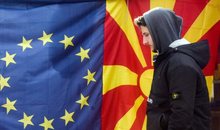
Survey: History and nationalism hold the region's economic integration hostage
2026-06-10 14:27:33
Why endless job applications can hurt you more than you think
2026-06-10 14:20:35
The 'parallel reality' of Rama's rallies in front of thousands of protesters
2026-06-10 13:41:46
The 2026 World Cup starts with new rules, VAR gets more powers
2026-06-10 13:34:27
Faces against the protest/ After Taulant Balla, Karlo Bolino appears
2026-06-10 12:51:23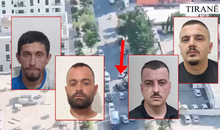
Who are the 4 members of the criminal group arrested in Tirana?
2026-06-10 12:39:29
The highest-paid professions in the first quarter are led by bankers and IT
2026-06-10 12:31:34
U shkarkua nga puna, punonjësi dhunon drejtorin e ministrisë së Mjedisit
2026-06-10 12:20:49
The board moves oil and gasoline prices again
2026-06-10 12:09:16
Çuçi criticizes the Prime Minister: O Rama, where are your institutions?
2026-06-10 11:54:49
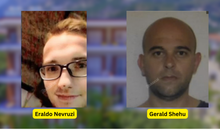
Eraldo Nevruzi was killed in Dhërmi, Greece refuses to extradite Gerald Shehu
2026-06-10 11:30:43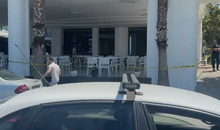
TNT explosion near the Nikulaj family in Lezha
2026-06-10 11:23:03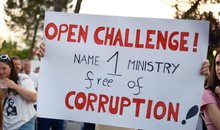
Këlliçi explodes against Rama: The truth is out in the open
2026-06-10 11:08:45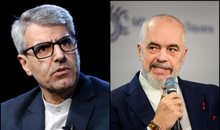
When the Ayatollah of Albania clashes with the Ayatollahs of Iran
2026-06-10 10:56:57

Gjirokastër/ A minor lost his life after going into the pool to bathe
2026-06-10 10:33:07

Balluku seeks reinstatement, Supreme Court draws lots for recourse
2026-06-10 09:51:13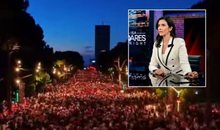
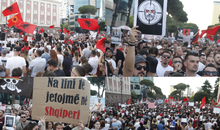
Elez Biberaj: Protests are not against Trump, but against kleptocracy
2026-06-10 09:30:57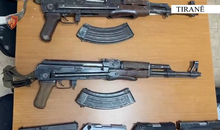
Accused of attempted murder in Spain, 22-year-old arrested in Shëngjin
2026-06-10 08:46:20

Horoscope, what do the stars have in store for you today?
2026-06-10 08:17:52
Temperatures above 30 degrees, weather forecast for today
2026-06-10 08:00:52
Morning Post/ In 2 lines: What mattered yesterday in Albania
2026-06-10 07:47:57
Actor known for protests: I fled Albania because I didn't want to sell my soul
2026-06-09 20:32:34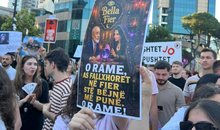
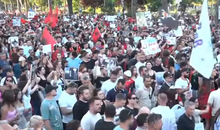
Meçollari accuses protest: The environment has been altered in Palasa and Dhërmi
2026-06-09 19:38:17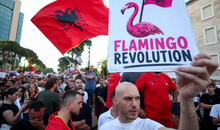
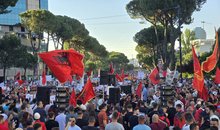

Judge this protest by its opponents
2026-06-09 18:20:57
After four sessions, Ilir Beqaj concludes preliminary requests
2026-06-09 18:11:25
UN message to Iran, Lebanon and Gaza: Respect ceasefires
2026-06-09 17:06:22
10 days that shook the "system"
2026-06-09 16:53:28
Anti-drug operation in five cities in Kosovo, 5 arrested
2026-06-09 16:44:03
Accident in Greece, 16-year-old Albanian dies
2026-06-09 16:25:19
Rama 'clash' with Romanian journalist: They've blocked her brain!
2026-06-09 16:13:59
“Revolucioni i Flamingove” përplas Ramën me Iranin
2026-06-09 15:56:07


Vlora Prosecution seizes 5 million euros of assets
2026-06-09 14:29:19
Vučić's Kopjac is also in crisis
2026-06-09 14:11:14