 Flash News
Berisha: In the EPP I asked for international support for the civic protests, the DP fully supports them
"Mandi said he would bring out a refrigerator", the disappearance of Eglant Koç, the testimony of the author's supporter is revealed
"Protect the land", amid protests, EU reminds Rama of the condition for integration
Who are the 4 members of the criminal group arrested in Tirana?
Parents, be careful with the air conditioner! The doctor shows the first signs of laryngeal edema
Security Barometer 2025: Corruption and crime, the main threats for Albanians

Politiko
2025-11-01 18:01:07
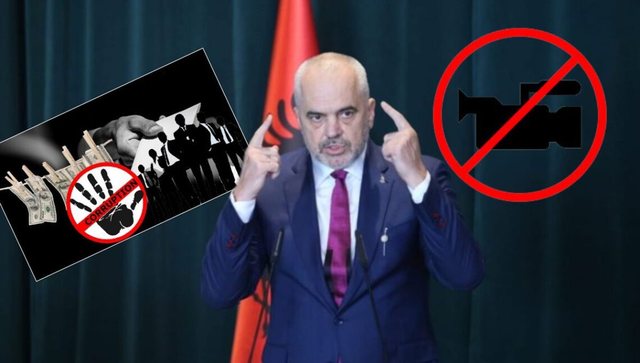
In 2025, Albanian citizens feel more insecure due to corruption and organized crime than they do in the face of any military danger or external threat. This is one of the main findings of the 2025 Security Barometer, the national survey that the Center for the Study of Democracy and Governance (CSDG) conducts annually to measure public perceptions of security.
Since its launch in 2019, the Barometer has become a rare reflection of how citizens view the state, institutions, and the risks that surround them. This year's study, conducted in a turbulent global and regional context, clearly shows that for the perception of the Albanian public, the greatest risk does not come from abroad, but from within.
“Since the beginning of measurements in 2019, the sense of security among Albanian citizens has been generally stable, but accompanied by an increase in sensitivity to internal threats. Around 60–70% of citizens continue to feel personally safe, while the perception of institutional security remains more fragile,” says Arjan Dyrmishi, author of the study and Executive Director of CSDG.
Corruption ranks as the biggest national threat, far ahead of any other risk. Next comes organized crime, which is perceived as closely linked to corruption, creating a chain that undermines trust in governance and justice. When the assessments of the main and secondary threats are combined, these two risks far outstrip any other threat, be it military, cyber or environmental. For the public, the risk is not in the borders, but in the system, in the lack of transparency, in weak punishment and in the perception of links between politics and crime.
"Since the first edition, Albanian citizens have perceived internal risks as more important than external ones. So in Albania the enemy is seen within the system: corruption, organized crime, lack of justice," Dyrmishi continues.
Organized crime remains a deep-seated problem that is widely perceived as a permanent threat to security and the economy. The majority of respondents consider it a very serious problem at the national level, although less visible in their local area.
The north and center of the country, especially Shkodra, Elbasan and Lezha, are cited as the most problematic hotbeds of crime. Drug trafficking ranks as the main activity of criminal networks, followed by money laundering and violent crimes. Most citizens believe that cannabis cultivation directly feeds organized crime, although they are divided on whether its legalization would weaken the influence of criminal groups.
Përveç faktorëve ekonomikë si varfëria dhe papunësia, qytetarët identifikojnë tre arsye institucionale që ushqejnë krimin: dënimet e buta, korrupsionin dhe lidhjet e fshehta mes politikës dhe krimit. Këto krijojnë, sipas tyre, një kulturë pandëshkueshmërie që e bën të vështirë ndarjen e pastër mes pushtetit dhe krimit. Krimi i organizuar perceptohet se ndikon negativisht në tregun e lirë, duke shtrembëruar konkurrencën përmes evazionit fiskal, zhvatjes dhe frikësimit.
Një ndër gjetjet më të forta të Barometrit 2025 lidhet me perceptimin e ndërhyrjes së krimit të organizuar në zgjedhjet e 11 majit. Shumica e qytetarëve besojnë se grupet kriminale kanë ndikuar në fushatat e të dyja partive të mëdha, përmes blerjes së votave, financimeve të paligjshme dhe, më rrallë, kërcënimeve direkte. Për rreth një në pesë të anketuar, dikush në rrethin e tyre është kontaktuar për të ndikuar votën, ndërsa një në katër thotë se njeh dikë që e ka shkëmbyer votën për para apo favore.
Burimi kryesor i informacionit për këto ndërhyrje mbeten mediat tradicionale, por rrëfimet personale janë po aq të përhapura, duke treguar se fenomeni nuk perceptohet më si abstrakt, por si realitet i prekshëm. Ndër institucionet, SPAK gëzon besimin më të lartë për rolin e tij në parandalimin e ndërhyrjeve elektorale, ndjekur nga Policia e Shtetit dhe Komisioni Qendror i Zgjedhjeve, ndërsa partitë politike konsiderohen si dueshtimet më të mëdha në këtë drejtim.
Në krahasim me vitet e fundit, shumica e qytetarëve ndihen se prania e krimit të organizuar ka mbetur e pandryshuar ose është rritur. Ligji për Dekriminalizimin shihet si pjesërisht efektiv, por me kufizime të dukshme në zbatimin e tij, sidomos në nivelet lokale dhe qendrore të pushtetit.
“Korrupsioni dhe krimi i organizuar vazhdojnë të perceptohen si kërcënimet më të mëdha. Shkaqet e vazhdueshmërisë së këtij perceptimi janë normalizimi i korrupsionit dhe përhapja strukturore e tij, lidhja midis politikës dhe krimit të organizuar, impakti real që këto kanë në jetën e përditshme, perceptimi i pandëshkueshmërisë dhe shtimi i ndjeshmërisë së publikut pas reformës në drejtësi dhe refromat antikorrupsion në kuadër të antarësimit në BE,” shprehet Dyrmishi.
Ndërkohë, pritshmëritë për reduktimin e ndikimit të krimit janë të ndara mes optimizmit dhe skepticizmit. Krahas SPAK-ut, qytetarët njohin edhe rolin e rëndësishëm të Bashkimit Evropian dhe Shteteve të Bashkuara në mbështetjen e reformave kundër korrupsionit dhe krimit të organizuar.
Një temë që përshkon gjithë raportin është ajo e besimit të ulët në drejtësi dhe nën-raportimit të krimeve. Shumë qytetarë hezitojnë të raportojnë krimet për shkak të frikës nga hakmarrja, mosbesimit te autoritetet dhe mungesës së informacionit ligjor. Dhuna në familje, abuzimet nga zyrtarët dhe krimet e lidhura me pushtetin janë ato që besohet se mbeten më shpesh pa u raportuar.
At the same time, the findings show that Albanians strongly believe in the need for regional cooperation in the face of common threats. Over 80% of respondents agree that the lack of cooperation between Balkan countries harms regional stability. However, optimism remains cautious.
A significant portion of citizens are skeptical that the region can improve the security situation in the near future. The main reason cited is the role of politicians, who are perceived as actors who often incite division and use tensions for domestic political gains. Serbia remains identified as the main threat to Albania's security, while other neighboring countries are generally assessed in a neutral manner.
On the global stage, the West is seen as a security guarantor. The United States and the European Union enjoy almost unanimous support as positive and reliable partners. Russia, by contrast, is largely perceived as a negative actor, while China is viewed with ambivalence, neither a direct threat nor a trusted partner.
The majority of respondents believe that in the coming years the US will remain the most influential power in the world, followed by the EU, China and Russia. At the bilateral level, Italy is mentioned as the country with the closest relations and as a partner that should be prioritized in the future, alongside the US.
“The Security Barometer conveys a clear message to institutions that national security cannot be understood as a purely military concept, but as a direct result of good governance, the functioning of justice and the implementation of the rule of law. Citizens link their sense of security to the quality of institutions and their ability to be honest, transparent and effective,” concludes Dyrmishi, adding that the public demands tangible results and independent institutions in the fight against corruption, as trust is built by real actions and not by political rhetoric, while support for European integration is seen as a guarantee for real reforms. / acqj.al
Latest news
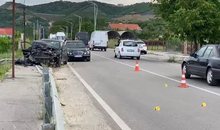
Fatal accident in Tirana, 48-year-old man dies
2026-06-10 22:32:03

Citizens ironic with the Prime Minister: Let's clean up Rama, but also the trash
2026-06-10 21:48:06
SP MP 'in trouble' over Albanian revolt: They are ruining our tourism business
2026-06-10 21:24:35

Lack of lawyers causes trial against Erion Veliaj to be postponed
2026-06-10 19:55:19

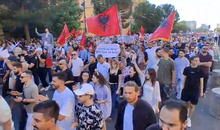
11th day of protest, united citizens demand Rama's resignation
2026-06-10 18:27:08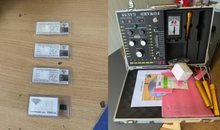
From Ancona to Albania, cocaine and diamonds are seized at the Port of Durres
2026-06-10 18:10:49


10 footballers who could grab attention at the 2026 World Cup
2026-06-10 16:41:46
Euro falls again, closer than ever to the 95 lek threshold
2026-06-10 16:34:40
Road accidents/ Leading cause of trauma, peak during lunchtime
2026-06-10 16:22:18
Firearms and drugs, three arrested in Durrës
2026-06-10 15:38:43
Survey: History and nationalism hold the region's economic integration hostage
2026-06-10 14:27:33
Why endless job applications can hurt you more than you think
2026-06-10 14:20:35


The 'parallel reality' of Rama's rallies in front of thousands of protesters
2026-06-10 13:41:46
The 2026 World Cup starts with new rules, VAR gets more powers
2026-06-10 13:34:27
Faces against the protest/ After Taulant Balla, Karlo Bolino appears
2026-06-10 12:51:23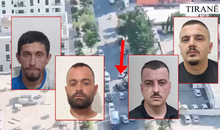
Who are the 4 members of the criminal group arrested in Tirana?
2026-06-10 12:39:29
The highest-paid professions in the first quarter are led by bankers and IT
2026-06-10 12:31:34
U shkarkua nga puna, punonjësi dhunon drejtorin e ministrisë së Mjedisit
2026-06-10 12:20:49
The board moves oil and gasoline prices again
2026-06-10 12:09:16
Çuçi criticizes the Prime Minister: O Rama, where are your institutions?
2026-06-10 11:54:49
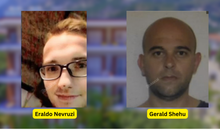
Eraldo Nevruzi was killed in Dhërmi, Greece refuses to extradite Gerald Shehu
2026-06-10 11:30:43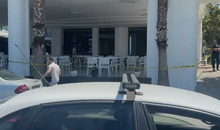
TNT explosion near the Nikulaj family in Lezha
2026-06-10 11:23:03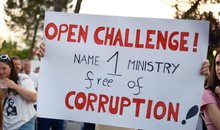
Këlliçi explodes against Rama: The truth is out in the open
2026-06-10 11:08:45
When the Ayatollah of Albania clashes with the Ayatollahs of Iran
2026-06-10 10:56:57

Gjirokastër/ A minor lost his life after going into the pool to bathe
2026-06-10 10:33:07

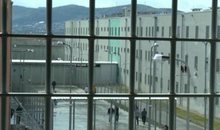
Balluku seeks reinstatement, Supreme Court draws lots for recourse
2026-06-10 09:51:13
Elez Biberaj: Protests are not against Trump, but against kleptocracy
2026-06-10 09:30:57
Accused of attempted murder in Spain, 22-year-old arrested in Shëngjin
2026-06-10 08:46:20

Horoscope, what do the stars have in store for you today?
2026-06-10 08:17:52
Temperatures above 30 degrees, weather forecast for today
2026-06-10 08:00:52
Morning Post/ In 2 lines: What mattered yesterday in Albania
2026-06-10 07:47:57




Actor known for protests: I fled Albania because I didn't want to sell my soul
2026-06-09 20:32:34

Meçollari accuses protest: The environment has been altered in Palasa and Dhërmi
2026-06-09 19:38:17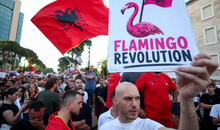

Judge this protest by its opponents
2026-06-09 18:20:57
After four sessions, Ilir Beqaj concludes preliminary requests
2026-06-09 18:11:25
UN message to Iran, Lebanon and Gaza: Respect ceasefires
2026-06-09 17:06:22
10 days that shook the "system"
2026-06-09 16:53:28
Anti-drug operation in five cities in Kosovo, 5 arrested
2026-06-09 16:44:03
Accident in Greece, 16-year-old Albanian dies
2026-06-09 16:25:19
Rama 'clash' with Romanian journalist: They've blocked her brain!
2026-06-09 16:13:59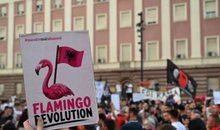
“Revolucioni i Flamingove” përplas Ramën me Iranin
2026-06-09 15:56:07


Vlora Prosecution seizes 5 million euros of assets
2026-06-09 14:29:19

Vučić's Kopjac is also in crisis
2026-06-09 14:11:14