 Flash News
Rama called them 'meme-mania': How banners became the main weapon of the protest
The Assembly meets in plenary session today, 6 interpellations on the agenda
Morning Post/ In 2 lines: What mattered yesterday in Albania
Berisha: In the EPP I asked for international support for the civic protests, the DP fully supports them
"Mandi said he would bring out a refrigerator", the disappearance of Eglant Koç, the testimony of the author's supporter is revealed
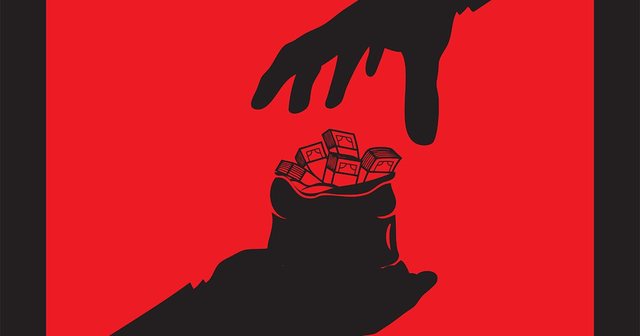
A survey conducted by "Monitor", with 503 respondents, showed that corruption remains a major concern for the Albanian public and the tendency of this phenomenon is estimated to increase further.
More than 90% of respondents think that corruption is a very alarming issue in Albania. 8.7% of respondents think that corruption is an important issue, but not alarming. Only a negligible part of the respondents, about 0.4%, think that corruption is not a very important issue, or it is almost non-existent.
76.7% of respondents think that corruption has increased a lot in the last five years, 15.9% of them think that the level of corruption has remained the same, while only 5.2% of them think that corruption has been reduced.
In the perception of the surveyed citizens, the most corrupt institution in the country is the government/central administration. 52.9% perceive the central government as the most corrupt part of the system.
18.3% of the respondents think that the most corrupt institutions are those of the local government, followed by the institutions of judicial power, with 7.2% and those of health, with 6.8%. 2.2% of respondents perceive the media as the most corrupt sector in the country.
Among the other answers, the dominant alternative is that all central and local government institutions are corrupt, while the Police, the State Cadastre Agency, etc., are also mentioned with lower percentages.
The most widespread form of corruption in Albania, according to respondents, is "theft, embezzlement and misuse of public money", with 42.5% of responses, followed by "bribery, accepting money in exchange for a favor", with 29.4% theirs.
Other forms of manifestation of corruption selected by the pollsters are clientelism, giving favors to public property in exchange for personal favors; delaying responses to official requests in order to receive a "reward"; money laundering, facilitating the legalization of illegal funds; misuse of natural resources/public property; nepotism, relative or politically oriented employments, etc.
"Due to the general corrupt environment in the administration and especially the clientelistic form of providing services, support, participation in projects, etc., the system does not allow you to expand and you are discouraged to be part of everything related to public funds and state institutions, because you are destined not to win any project, you are just a number for a facade.
Another form of corruption, even if you won, is not making payments on time, after you have done the service; you have to go back and forth to offices that waste time and energy (thus, costs) with no guarantee that you will receive them; add here the impossibility of seeking justice in court due to the additional costs that this process has and that also does not guarantee a fair trial.
The influence and clientelism has spread so much, where the militants of the party are involved with clientelism, that the market and the spaces have been closed even by the international institutions in calling for the projects they do", says a self-employed woman in Tirana.
66% of respondents have paid bribes
Almost 66% of the respondents in the "Monitor" survey say that they have given a bribe at least once. In 95.5% of cases, the bribe was given in the form of cash, while in the remaining part, the bribe was given in the form of favors/other services or in the form of material goods.
"My perception of corruption in Albania is this: it seems that corruption is in every individual, in public services, but also in private ones (eg hospitals, laboratories, banks, schools). I am sorry to say that we are generally a corrupt society. We are looking for unnecessary benefits, simply because it has become a "habit", says the head of a small service business in Tirana.
The most corrupt sector, according to the answers of the respondents, is the health service. 62% of people who paid a bribe gave it for medical services. The service with the second highest level of corruption, according to the survey, is the Cadastre. 14.6% of the respondents answered that they paid a bribe for obtaining a property document in a mortgage.
"The biggest, most tangible, screaming corruption is in the Directorate of the State Cadastre Agency, Vlora. They know neither laws, nor courts, nor prosecutors, nothing. Try to refresh the card of a land and you will see it", - says a subject surveyed in the services sector. Following is the receipt of documents in the public administration, where they state that they gave bribes to 8.2% of the respondents.
Judicial processes follow, with 5%, and police or investigative proceedings, with 2.7% of responses, and obtaining building permits, with 1.8% of responses. Other cases with fewer cases of bribery include tax services, customs, the National Business Center, recruitment, tenders, etc.
"I am a freelancer, certified accountant. The work I do requires me to be in constant contact and relationship with the state and local tax administration and the CKB, in which corruption is currently endemic and you cannot perform work or receive services unless you submit to the corrupt acts practiced by employees of these institutions.
This way of working often penalizes us in relations with our clients, as many of them do not understand this type of behavior of the administration and raise doubts about our daily work. This harms free competition and favors informality, which the state administration itself nurtures and keeps alive", says an accountant from Tirana.
The reform in Justice has begun to yield results
69% of respondents think that in recent years there has been no progress in the fight against corruption, while 19.9% think that there has been some progress. Only 3.8% of respondents think that there has been significant progress in the fight against corruption. However, specifically for the justice reform, most of the respondents think that it has started to give its effects in the fight against corruption, at least partially.
To the question "Do you think that the Justice Reform is fighting corruption (or has started to give results against corruption)?" 11.1% of respondents answered "Yes", while 44.3% of them chose the alternative "Yes, but not much". Meanwhile, 38.4% of respondents think that the Justice Reform is not fighting or has not started to give results against corruption.
"I am a lawyer and I feel the corruption in the judicial system. In my estimation, it is very rare to realize the rights of clients, even though they are right, without undue influence and corruption.
Since I have not yet become a part of this scum, it is difficult for me to survive the market, because service or professionalism or even the right are not valued, but in 90% of cases, how much you pay and who pays", says a lawyer from Durrës.
72% of businesses have been asked for a bribe in the last 12 months
33.6% of survey participants (169 subjects) were businesses or self-employed.
Most of the surveyed businesses had activity in the service sector, with 60.9% of the total, followed by trade, with 14.2%, the hotel and bar-restaurant sector, with 7.7%, transport, information and communication with 6.5% , processing industry, with 5.3%, construction, with 3.6%, etc. 71.6% of businesses responded that they were asked to pay bribes at least once in the last 12 months, while only 28.4% of businesses stated that they were not asked to do so.
"Corruption destroys entire industries. In the food industry, entire sectors operate illegally and lack fiscal due to the corruption of directors and specialists of state institutions", says the head of a processing industry company.
In 43% of cases, the bribe had a value in the range of 10-20% of the service or contract received, in 19.8% of cases in the range of 20-30%, in 18.2% of cases, over 30% of the value of the service or contract and in 17.4% of cases, less than 10%.
"In some of the commitments for the services provided in state entities, 40-60% of the value of the service was requested as a bribe to include me in the service (signed the service contract).
This was done by a senior management official in the joint stock company sh.a. big. The strategy of taking jobs from the state, in terms of services, has significant bribery costs", - says an entrepreneur in the survey.
"In order to register as a business, I not only endured a three-month delay from the online systems of the CKB, but I had to pay money in order not to miss the legal deadlines for documentation, where I would have to notarize and once and get the apostille stamps again and all the documentation from the Chamber of Commerce.
Now I have been waiting for 3 months to get the license, even though the documentation is correct. Until now, I've been paying quite a bit of rent and insurance and taxes for 6 months without being able to exercise even a single day of activity. It's definitely a terrible situation!” - says a service professional from Durrës.
In 38.7% of cases where a bribe was given, it was given for tax services, followed by public procurement entities (tender services) with 22.2%, for construction permits, with 18% of cases and for customs services, with 14.7%.
"Employees in the administration refer citizens for the necessary services in their private offices, or where they receive remuneration", says the manager of a small business in Durrës. Other services or institutions where businesses declare that they have paid bribes include inspectorates, licensing bodies, property registration offices, municipalities, etc.
"The most flagrant case is in the distribution of grants for startups, which are won by 100 people who enter the same projects", - says a young entrepreneur in the transport, information and communication sector from Tirana.
"Corruption is killing free initiative"
According to businesses, the main reason that pushes them towards corruption is the need to speed up bureaucratic procedures, in 39.1% of cases, avoiding punishments, fines, taxes, with 35.5% of responses, access to special services in 8.3% of cases, access in public property at prices lower than those of the market, in 5.3% of cases, etc. Other answers include the need to receive the service that the subject is entitled to by law, ensuring survival or continuity in business, etc.
"Inspectors either pretend they don't know the laws, or they interpret them even when they are not lawyers. The laws are also old, with many VKMs conflicting with each other. The spaces they leave are large.
These inspectors, when they go to big businesses, turn a blind eye and to the small ones, the checks become so frequent that you are forced to pay bribes in order not to lose the working day and to avoid the threat of a fine and the interpretation of the law. Increased fines and campaigns do this", says an entrepreneur in the accommodation and food service sector in Tirana.
"Corruption disrupts the rules of the game and, therefore, the business climate. Equal opportunities are just propaganda, while in practice, the inequality in the opportunities to do business is obvious", says a self-employed person in the service sector in Elbasan.
Almost 80% of businesses answered that corruption is an obstacle to their investments, while less than 12% of them think that corruption is not an obstacle to invest.
"As a result of corruption in the Albanian Development Fund (ADF), all private initiatives have been closed, as well as mine. I am a construction designer and construction supervisor.
The closed system that ADF has created, where it provides funds, projects itself, tenders itself, implements itself and closes all the work with supervisors, has turned into a mechanism where no one from the private market can enter.
Corruption has done this: it has created monopolies everywhere and killed free initiative in every sector", says a professional in the professional services sector from Tirana.
"The corrupt must pay for the damage done"
One of the questions asked in the survey was what is the most effective measure to make the public administration accountable to the phenomenon of corruption.
39.3% of respondents think that the scenario that would enable a faster reduction of corruption in Albania would be political rotation, followed by the improvement of the administration in terms of performance against corruption without a change in the head of the Government and the governing majority , with 22% of responses and "a change of persons at the highest level of the Government, without a change in the governing majority", with 11.9% of responses.
The majority of the respondents, 56.9% of them, think that the most effective measure to make the public administration responsible for corruption would be to impose in the decision the obligation to compensate the public for the damage done. 25.4% of the respondents think that the most effective measure would be to toughen the punishments for these criminal offenses.
Some of the voters think that the application of both of the above measures would be efficient, while other suggested measures are the widest possible privatization of services, increasing the quality of education, meritocracy, greater transparency, stronger will government policy, etc. The survey was conducted on the "Monitor" website and its social media channels during the month of May. The survey survey was completed by a total of 503 respondents.
66.4% of respondents were individuals, without engagement in business, while 33.6% were business entities or self-employed. 66.6% of respondents were male, while 33.4% were female. 77.5% of respondents declared that they live in Tirana, 6.4% in Durrës, 3.2% in Shkodër, 3% in Korçë and Elbasan, etc. The main age group of participants in the survey was 40-49 years old, with 34.1% of participants, followed by 30-39 years old, with 32.3%, 50-59 years old, with 15.6% and 20-29 years old, with 13.4%./Monitor
Latest news
Rama called them 'meme-mania': How banners became the main weapon of the protest
2026-06-11 08:49:16
Të rinjtë largohen, tregut të punës i shtohen 17.7 mijë pensionistë
2026-06-11 08:32:27
The Assembly meets in plenary session today, 6 interpellations on the agenda
2026-06-11 08:14:45
High temperatures, weather forecast for this Thursday
2026-06-11 08:01:29
Morning Post/ In 2 lines: What mattered yesterday in Albania
2026-06-11 07:48:06

Fatal accident in Tirana, 48-year-old man dies
2026-06-10 22:32:03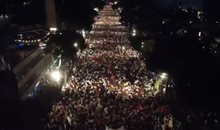
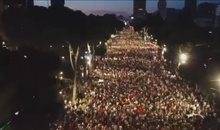
Citizens ironic with the Prime Minister: Let's clean up Rama, but also the trash
2026-06-10 21:48:06
SP MP 'in trouble' over Albanian revolt: They are ruining our tourism business
2026-06-10 21:24:35
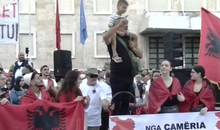
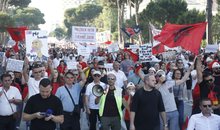

Lack of lawyers causes trial against Erion Veliaj to be postponed
2026-06-10 19:55:19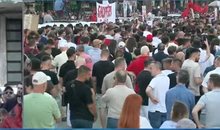

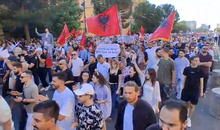
11th day of protest, united citizens demand Rama's resignation
2026-06-10 18:27:08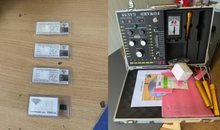
From Ancona to Albania, cocaine and diamonds are seized at the Port of Durres
2026-06-10 18:10:49

10 footballers who could grab attention at the 2026 World Cup
2026-06-10 16:41:46
Euro falls again, closer than ever to the 95 lek threshold
2026-06-10 16:34:40
Road accidents/ Leading cause of trauma, peak during lunchtime
2026-06-10 16:22:18

Firearms and drugs, three arrested in Durrës
2026-06-10 15:38:43
Survey: History and nationalism hold the region's economic integration hostage
2026-06-10 14:27:33
Why endless job applications can hurt you more than you think
2026-06-10 14:20:35

The 'parallel reality' of Rama's rallies in front of thousands of protesters
2026-06-10 13:41:46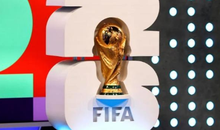
The 2026 World Cup starts with new rules, VAR gets more powers
2026-06-10 13:34:27
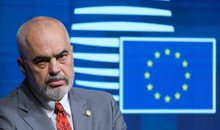
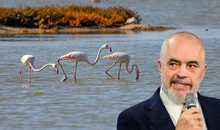

Faces against the protest/ After Taulant Balla, Karlo Bolino appears
2026-06-10 12:51:23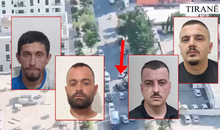
Who are the 4 members of the criminal group arrested in Tirana?
2026-06-10 12:39:29
The highest-paid professions in the first quarter are led by bankers and IT
2026-06-10 12:31:34
U shkarkua nga puna, punonjësi dhunon drejtorin e ministrisë së Mjedisit
2026-06-10 12:20:49
The board moves oil and gasoline prices again
2026-06-10 12:09:16
Çuçi criticizes the Prime Minister: O Rama, where are your institutions?
2026-06-10 11:54:49
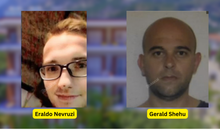
Eraldo Nevruzi was killed in Dhërmi, Greece refuses to extradite Gerald Shehu
2026-06-10 11:30:43
TNT explosion near the Nikulaj family in Lezha
2026-06-10 11:23:03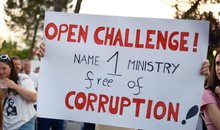
Këlliçi explodes against Rama: The truth is out in the open
2026-06-10 11:08:45
When the Ayatollah of Albania clashes with the Ayatollahs of Iran
2026-06-10 10:56:57

Gjirokastër/ A minor lost his life after going into the pool to bathe
2026-06-10 10:33:07

Balluku seeks reinstatement, Supreme Court draws lots for recourse
2026-06-10 09:51:13
Elez Biberaj: Protests are not against Trump, but against kleptocracy
2026-06-10 09:30:57
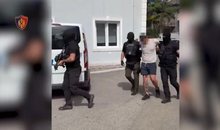
Accused of attempted murder in Spain, 22-year-old arrested in Shëngjin
2026-06-10 08:46:20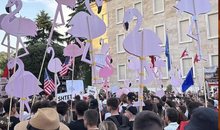

Horoscope, what do the stars have in store for you today?
2026-06-10 08:17:52
Temperatures above 30 degrees, weather forecast for today
2026-06-10 08:00:52
Morning Post/ In 2 lines: What mattered yesterday in Albania
2026-06-10 07:47:57


Actor known for protests: I fled Albania because I didn't want to sell my soul
2026-06-09 20:32:34
Meçollari accuses protest: The environment has been altered in Palasa and Dhërmi
2026-06-09 19:38:17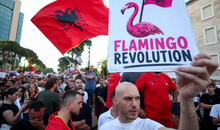
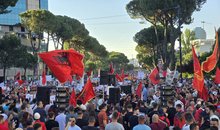

Judge this protest by its opponents
2026-06-09 18:20:57
After four sessions, Ilir Beqaj concludes preliminary requests
2026-06-09 18:11:25
UN message to Iran, Lebanon and Gaza: Respect ceasefires
2026-06-09 17:06:22
10 days that shook the "system"
2026-06-09 16:53:28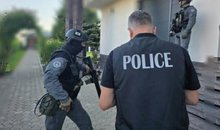
Anti-drug operation in five cities in Kosovo, 5 arrested
2026-06-09 16:44:03
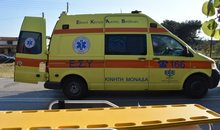
Accident in Greece, 16-year-old Albanian dies
2026-06-09 16:25:19
Rama 'clash' with Romanian journalist: They've blocked her brain!
2026-06-09 16:13:59
“Revolucioni i Flamingove” përplas Ramën me Iranin
2026-06-09 15:56:07