 Flash News
VIDEO-scandal in Saranda/ Director of AMP Vlora and officials sexually harass tourists
"The New York Times" about Ye's concert: How Rama justifies the $4.5 million in funding
The suspected perpetrator of the murder in Laç is identified, he shot the 40-year-old 7 times near the palace
7 bullets on the doorstep, who is the 40-year-old with 4 surnames who was killed in Laç
Morning Post/ In 2 lines: What mattered yesterday in Albania

That Gentian Gaba
Instead of apologizing for the blockade of almost a third of the country and for the roads built with the care of children building sandcastles by the sea, Edi Rama chose today to mock the citizens, telling them that the roads are also falling apart in Portugal. So, instead of taking responsibility for the economic damage that the blockade of the axes causes to people and businesses, and explaining to Albanians why corruption has swept his government like a tide, swallowing up the billions that should have gone to roads that today lead nowhere, Rama makes it impossible for them to even respond in his imaginary world, after he blocked comments on his social network X.
The lesson from Rama is clear: the best defense is offense. Attack the opposition, even though he himself, when he was in opposition, was laughing at the roads being built with standards many times higher than those of the Renaissance; attack the critical media, despite SPAK showing us that those who are keeping quiet are the same as those who are taking money from his government that should have gone to asphalt; and, finally, relativize the drama of corruption that is leaving the roads to the roads, as a student of Elisa Spiropali, reminding us, as his minister used to do, that “these things happen in the world too.”
This great mockery of the citizens of this country is an indicator of the degradation of its power, now incapable of justifying the barbarity of corruption, proving that every second it remains in power is a second taken away from the life of a country that has lost all connection with the standards of good governance, accountability, and transparency.
For years, Edi Rama tried to build, through a million-dollar propaganda, the image of a modern and European leader. Today, in the eyes of Albanians and the whole world, he appears as an autocrat kept afloat by the dirty tricks of power: by parallel structures like those of organized crime (as the “Agasi” case proves); by the capture of the administration, overblown with patronages who serve the government and not the state; by dubious and corrupt lobbying and attacks through them on his opponents in Albania, as the McGonigal dossier proves.
Surrounded by files, cornered by the European Union, targeted by the Americans, he is letting out his last words from the only world where he still feels like a prime minister, the virtual one. But, annoyed by the "fly under the hat" and the civil revolt, he locks online comments with the naive hope that he can make non-existent a reality that has put him with his shoulders against the wall, as a result of his misdeeds, from which he cannot escape.
After a long "honeymoon" in the country's affairs, when with tricks, deceit, money, propaganda and lobbying he managed to overcome scandals that anywhere in the world would lead at least to the resignation of the prime minister, it seems as if he has been hit by Murphy's law, according to which "anything that can go wrong, will go wrong". This is how Edi Rama's affairs are going, because of the evil he has sown with his own hands and which he is reaping today, not as a student of Konica and Noli, as he likes to portray himself, but as a student of Elisa Spiropali.
Latest news
Heatwave hits Germany, over 5,400 heat-related deaths
2026-07-10 10:45:33
Land in "foreign hands"
2026-07-10 10:26:15
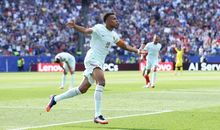
Mbappe the hero of France, the "Roosters" knock out Morocco in the quarterfinals
2026-07-10 09:54:33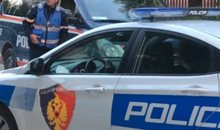
Durrës/ 40-year-old man stabs his wife
2026-07-10 09:48:03

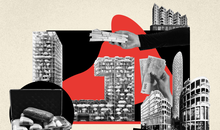
How much could the amount of drug money in the Albanian economy be?!
2026-07-10 09:08:34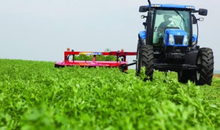
Government reduces funds for farmers, increases ADF by 75 million euros
2026-07-10 08:55:46
Horoscope, get to know the star forecast
2026-07-10 08:32:54

Morning Post/ In 2 lines: What mattered yesterday in Albania
2026-07-10 07:52:04
A person was shot dead in Kurbin, first details
2026-07-09 22:54:48

Will the Police also stop those who criticize Rama online?
2026-07-09 21:57:02


FIFA decision shocks England, Quansah ruled out for two matches
2026-07-09 20:51:00
Protest/Pedagogue: 4 million euros for Kanye West is "the next concession"
2026-07-09 19:45:53
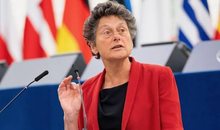
French MEP joins protests in Albania: Support for the "Pink Flamingo Revolution"
2026-07-09 19:28:07


Has the lek strengthened or overvalued?
2026-07-09 17:58:05
The trial on the merits for Ilir Meta and Monika Kryemadhi is postponed
2026-07-09 16:47:58
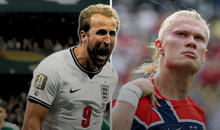
The match between England and Norway risks being postponed, this is the reason
2026-07-09 16:12:46
Murder in Shkodra/ Relatives: Peaceful family, no problems
2026-07-09 16:10:02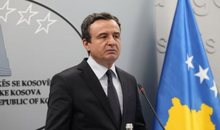
Kurti invites opposition leaders to a meeting to create new institutions
2026-07-09 15:43:05
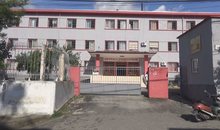
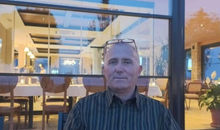
This is the 62-year-old man who killed his wife in Shkodra
2026-07-09 15:01:43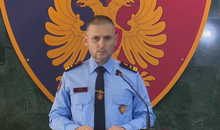

Domestic crime/ Wife killed with shotgun, perpetrator and victim identified
2026-07-09 14:05:18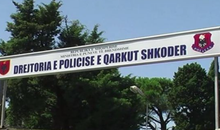
Gunfire in Shkodra, one victim suspected
2026-07-09 13:49:41
Weapons cache discovered in Fier, Prosecution sends 38-year-old to trial
2026-07-09 13:35:48

Bota e muzikës në zi, ndahet nga jeta në moshën 75-vjeçare ikona Bonnie Tyler
2026-07-09 12:56:29
Monika Kryemadhi in the Criminal Court: The cell phone was seized illegally
2026-07-09 12:45:54
VALEN MP reacts after border detention: Albania is no one's property
2026-07-09 12:15:44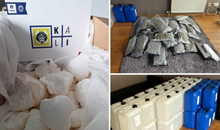
Albanian gang in Belgium sentenced for trafficking 7 tons of cocaine
2026-07-09 12:01:14
Justin Bieber, Shakira and Madonna to perform at 2026 World Cup final
2026-07-09 11:52:54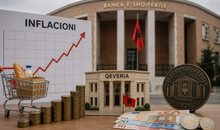
Euro falls, inflation rises and domestic production loses ground
2026-07-09 11:39:36
Trial at the GJKKO, Meta's new lawyer appears in the session
2026-07-09 11:29:47
Nighttime accident in Gramsh, man and woman injured
2026-07-09 11:20:25
Meta seeks 134 witnesses, GJKKO delivers decision today
2026-07-09 10:56:54

At the peak of the production season, vegetable prices 'fly'
2026-07-09 10:21:14
The African heat returns, the thermometer reaches 40 degrees this weekend
2026-07-09 10:08:08
Opinions from 'anonymous' authors target Flamingo protests
2026-07-09 10:07:15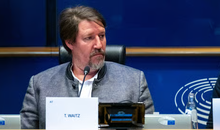
MEP Waitz: The law on protected areas endangers Albania's path to the EU
2026-07-09 09:52:55
"Le Courrier des Balkans": Edi Rama and the megalomania of power
2026-07-09 09:40:26
The economics of concerts, the prime minister's imaginary 100 million euros
2026-07-09 09:28:19
Erdogan's strange gift to NATO leaders
2026-07-09 09:11:15
Foreign exchange, the rate at which foreign currencies are sold and bought
2026-07-09 08:30:41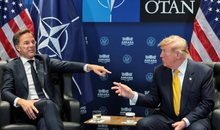
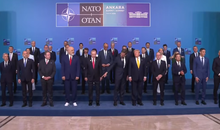
“Uniteti i jashtëzakonshëm” i NATO-s dhe mesazhet kryesore nga samiti në Turqi
2026-07-09 08:11:17

Horoskopi, njihuni me parashikim e yjeve
2026-07-09 07:46:15
Alternime kthjellimesh e vranësirash, parashikimi i motit
2026-07-09 07:25:59
Posta e mëngjesit/ Me 2 rreshta: Çfarë pati rëndësi dje në Shqipëri
2026-07-09 07:02:12



Rama brings West in Tirana, using Eastern premises
2026-07-08 20:41:42

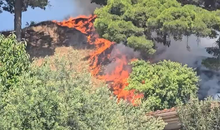
Fire on Kuzum Baba hill in Vlora, flames endanger homes and Tekke
2026-07-08 18:09:45

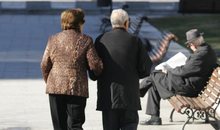
Shqipëria po plaket, qeveria pa plan
2026-07-08 15:57:26