
 Flash News
VIDEO-scandal in Saranda/ Director of AMP Vlora and officials sexually harass tourists
"The New York Times" about Ye's concert: How Rama justifies the $4.5 million in funding
The suspected perpetrator of the murder in Laç is identified, he shot the 40-year-old 7 times near the palace
7 bullets on the doorstep, who is the 40-year-old with 4 surnames who was killed in Laç
Morning Post/ In 2 lines: What mattered yesterday in Albania
What I learned about Islam during Lent
Nga të krishterët te Ramazani: rrugë të përbashkëta drejt Zotit

Politiko
2026-03-20 11:25:05

Stephen Adubato / Wall Street Journal
Ramadan ends this week with the sighting of the new crescent moon, and the occasion is an opportunity to think about Islam, its relation to other religions, and the place Muslims are coming to occupy in the U.S.
Lent, the Christian season of penance, and Ramadan, a Muslim time of fasting, coincide every few decades (the last time was in 1993), and this year Ramadan began the evening before Ash Wednesday.
Islam is broadly misunderstood in the West, with the political realm often reducing it to simplistic platitudes. Although I am a Christian and strongly believe Jesus is the son of God, I’ve always esteemed my Muslim friends. What I’ve learned from them during this shared season of penitence has strengthened my conviction that non-Muslims need to learn about Islam and get beyond the stereotypes and misconceptions of both the left and right.
Roman Catholics typically abstain from meat on Fridays during Lent, eat only one meal and two small snacks on Ash Wednesday and Good Friday, and give up the indulgence of their choice during the 40-day season, while Eastern Catholics and Orthodox give up meat, dairy and wine for all 40 days. When I explained this to a Muslim friend, he replied that it “kinda sounds like diet Ramadan”—which demands that Muslims go without food or drink from sunup to sundown.
There’s something valuable in the Christian practice of letting people determine their Lenten sacrifices. Turning down the volume on legalism lets us enter the interior experience of the season—helping it become a space for the encounter of God and the self.
Yet there’s something compelling about Muslims’ making harder sacrifices in the midst of our instinct-driven, self-indulgent culture. I wish the Christian observance of Lent had the communal dimension Ramadan has, with the breaking of the Muslim fast almost always done together at the mosque, at home or in restaurants.
I’ve spent time in the past few weeks in a Yemeni café down the block from me in Brooklyn, N.Y. The customers—from those in their 20s to elders—and even the baristas will stop mid-conversation or while working to pray in the backroom when the hour strikes. This continues during Ramadan, even during the day, and the staff allows patrons to socialize or do work even if they don’t order anything.
That Muslims will often stop wherever they are to pray when the hour calls for it is a striking reminder that every part of our day—from sipping coffee to sending an email or talking to friends—can be offered for the glory of the most high. My neighborhood barber, who quietly says “Bismillah,” meaning “in the name of God,” before putting the buzzer to my head, is keenly aware of this.
While Christians generally believe there are boundaries between the sacred and secular, between God and Caesar, that distinction is foreign to Islam. And this Islamic belief that God encompasses every aspect of earthly life proves both a strength and a weakness. It can bring someone to recognize the divine is present in even the most mundane reality, but it can also incite people too easily to commit acts of violence in God’s name.
It is mistaken to say that violence committed in the name of this insight has nothing to do with Islam, just as it is wrong to think of Islam as an inherently violent religion. Much of Islamic extremism is a reaction to what Muslims perceive as the stifling secularism they encounter in Western countries.
Most discourse on Islam among non-Muslims is driven by reductive platitudes. There’s something deceptive about the left’s tendency to play down the elements of Islam that don’t mesh well with Western humanist values and to proclaim solidarity with Muslims as an oppressed minority group. Recent controversies over gender ideology in the curriculum in Muslim-majority school districts have revealed that liberals are quick to drop the banner of fighting Islamophobia as soon as they discover that Islam is a religion—and not just an identity category—with moral values that clash with their own. Meanwhile the categorical skepticism that some conservatives express toward Islam is unfair and counterproductive.
Beyond politics, Christians—progressive and conservative alike—should learn more about Islam and look for ways to share our paths toward God. As my experience over the past few weeks has shown, we can benefit from such exchanges without having to gloss over or ignore our differences. Coming together to explain our faiths and to find unity amid our differences can set an example sorely needed by an American society that seems to grow only more polarized and secular.
*Mr. Adubato is an associate editor of Compact, an adjunct professor of philosophy and religion at Seton Hall University, and a founding editor of the website Cracks in Postmodernity.
Latest news

Heatwave hits Germany, over 5,400 heat-related deaths
2026-07-10 10:45:33

Land in "foreign hands"
2026-07-10 10:26:15

Mbappe the hero of France, the "Roosters" knock out Morocco in the quarterfinals
2026-07-10 09:54:33
Durrës/ 40-year-old man stabs his wife
2026-07-10 09:48:03



How much could the amount of drug money in the Albanian economy be?!
2026-07-10 09:08:34
Government reduces funds for farmers, increases ADF by 75 million euros
2026-07-10 08:55:46
Horoscope, get to know the star forecast
2026-07-10 08:32:54


Morning Post/ In 2 lines: What mattered yesterday in Albania
2026-07-10 07:52:04
A person was shot dead in Kurbin, first details
2026-07-09 22:54:48


Will the Police also stop those who criticize Rama online?
2026-07-09 21:57:02


FIFA decision shocks England, Quansah ruled out for two matches
2026-07-09 20:51:00

Protest/Pedagogue: 4 million euros for Kanye West is "the next concession"
2026-07-09 19:45:53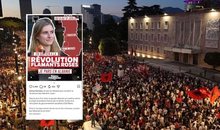
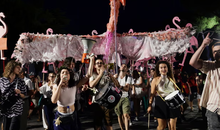
French MEP joins protests in Albania: Support for the "Pink Flamingo Revolution"
2026-07-09 19:28:07


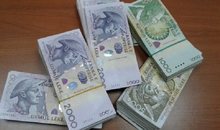
Has the lek strengthened or overvalued?
2026-07-09 17:58:05
The trial on the merits for Ilir Meta and Monika Kryemadhi is postponed
2026-07-09 16:47:58

The match between England and Norway risks being postponed, this is the reason
2026-07-09 16:12:46
Murder in Shkodra/ Relatives: Peaceful family, no problems
2026-07-09 16:10:02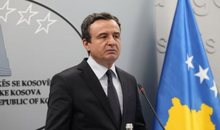
Kurti invites opposition leaders to a meeting to create new institutions
2026-07-09 15:43:05

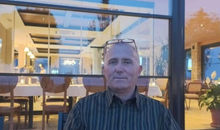
This is the 62-year-old man who killed his wife in Shkodra
2026-07-09 15:01:43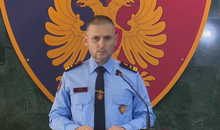

Domestic crime/ Wife killed with shotgun, perpetrator and victim identified
2026-07-09 14:05:18
Gunfire in Shkodra, one victim suspected
2026-07-09 13:49:41
Weapons cache discovered in Fier, Prosecution sends 38-year-old to trial
2026-07-09 13:35:48

Bota e muzikës në zi, ndahet nga jeta në moshën 75-vjeçare ikona Bonnie Tyler
2026-07-09 12:56:29
Monika Kryemadhi in the Criminal Court: The cell phone was seized illegally
2026-07-09 12:45:54
VALEN MP reacts after border detention: Albania is no one's property
2026-07-09 12:15:44
Albanian gang in Belgium sentenced for trafficking 7 tons of cocaine
2026-07-09 12:01:14
Justin Bieber, Shakira and Madonna to perform at 2026 World Cup final
2026-07-09 11:52:54
Euro falls, inflation rises and domestic production loses ground
2026-07-09 11:39:36
Trial at the GJKKO, Meta's new lawyer appears in the session
2026-07-09 11:29:47
Nighttime accident in Gramsh, man and woman injured
2026-07-09 11:20:25
Meta seeks 134 witnesses, GJKKO delivers decision today
2026-07-09 10:56:54

At the peak of the production season, vegetable prices 'fly'
2026-07-09 10:21:14
The African heat returns, the thermometer reaches 40 degrees this weekend
2026-07-09 10:08:08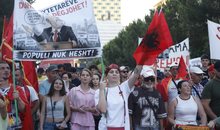
Opinions from 'anonymous' authors target Flamingo protests
2026-07-09 10:07:15
MEP Waitz: The law on protected areas endangers Albania's path to the EU
2026-07-09 09:52:55
"Le Courrier des Balkans": Edi Rama and the megalomania of power
2026-07-09 09:40:26
The economics of concerts, the prime minister's imaginary 100 million euros
2026-07-09 09:28:19
Erdogan's strange gift to NATO leaders
2026-07-09 09:11:15
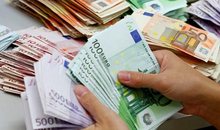
Foreign exchange, the rate at which foreign currencies are sold and bought
2026-07-09 08:30:41
“Uniteti i jashtëzakonshëm” i NATO-s dhe mesazhet kryesore nga samiti në Turqi
2026-07-09 08:11:17

Horoskopi, njihuni me parashikim e yjeve
2026-07-09 07:46:15
Alternime kthjellimesh e vranësirash, parashikimi i motit
2026-07-09 07:25:59
Posta e mëngjesit/ Me 2 rreshta: Çfarë pati rëndësi dje në Shqipëri
2026-07-09 07:02:12



Rama brings West in Tirana, using Eastern premises
2026-07-08 20:41:42


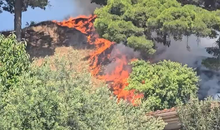
Fire on Kuzum Baba hill in Vlora, flames endanger homes and Tekke
2026-07-08 18:09:45

Shqipëria po plaket, qeveria pa plan
2026-07-08 15:57:26