 Flash News
VIDEO-scandal in Saranda/ Director of AMP Vlora and officials sexually harass tourists
"The New York Times" about Ye's concert: How Rama justifies the $4.5 million in funding
The suspected perpetrator of the murder in Laç is identified, he shot the 40-year-old 7 times near the palace
7 bullets on the doorstep, who is the 40-year-old with 4 surnames who was killed in Laç
Morning Post/ In 2 lines: What mattered yesterday in Albania
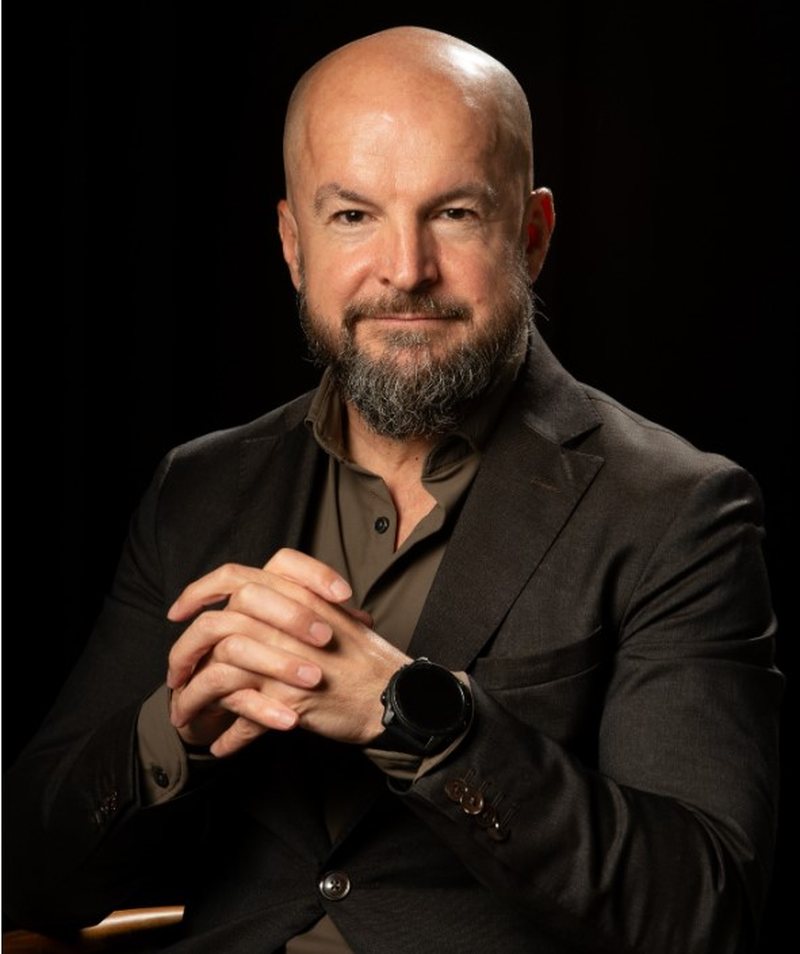
Alfred Lela
Elisa Spiropali, as of today the former Foreign Minister of Albania, has made public the virus of discomfort within the Socialist Party by choosing to self-identify as the “English-speaker” mentioned by the Prime Minister in his—characteristically long—speech before the parliamentary group.
The mention of the great antagonist, Berisha, was not meant to certify that “the Doctor’s words come true,” but rather to suggest that the rival blocs within the Socialist Party are ready to “embrace” even the “external enemy” to defeat an internal rival.
What Spiropali confirmed today through her stance is not the classic SP–Berisha divide, but the fact that Belinda’s growing weight has begun to tilt the balance that in the Socialist Party was once guaranteed by power rather than unity.
Rama’s insistence on keeping Balluku has begun to be read by several Socialist figures as the Prime Minister’s decision to produce new scapegoats. The difference this time is that, in the sacrificial ritual, the heads are no longer being demanded only for Rama, but also for Balluku. In other words, Elisa’s dissatisfaction—and that of others—is not directed solely at Rama for refusing to let Balluku go, as he once did with Tahiri, Beqaj, and others. It is also directed at the Deputy Prime Minister herself, who appears determined to drag Rama down with her, and with him the rest of them into the abyss of the post-power era.
The grimacing of the old Socialist elite, translated into plain terms, means: not “why are you leaving us in the hands of SPAK,” but “why are you leaving us—and yourself—in the hands of Belinda.”
Thus, a bloc of traditional Socialists has emerged in opposition to the group of “municipals,” the former associates of Rama from his days as mayor of Tirana. This divide can also be observed in recent appointments and replacements within the government, where the balance of power has generally left the traditional Socialists underweight.
What is new in these developments that has made Socialists more sensitive than in previous moments, when the same Rama decided who, how, and when to sacrifice?
It is not that Elisa and others suddenly woke up with a renewed understanding of the state. What is different this time has to do with the corrosion of power—an unmistakable scent that accompanies its end. Unlike the Democrats in 2013, some of whom were both satiated and exhausted and viewed their move into opposition almost as a political weekend, Socialist officials now face entirely different circumstances.
A capricious and unpredictable justice system, which has unsettled even their own leader—long seen as untouchable and beyond punishment—has forced many of them to reflect. Reflection without an exit strategy is an intellectual exercise, not a political strategy.
Under these conditions, Socialists must begin preparing for a party and a political environment that, in the years ahead, will determine not only who becomes the next leader, but also who escapes prison and who ends up there. Naturally, the successor will emerge from among those who manage to avoid prison.
Those who have managed to remain untouched by grand corruption may finally smile freely. Among that small number of Socialists may lie the real competition for the inheritance—provided they can neutralize the power of the large fortunes controlled by those who will be in prison and who will influence the race not physically, but financially.
Latest news

Heatwave hits Germany, over 5,400 heat-related deaths
2026-07-10 10:45:33

Land in "foreign hands"
2026-07-10 10:26:15
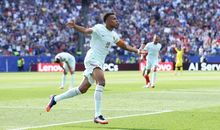
Mbappe the hero of France, the "Roosters" knock out Morocco in the quarterfinals
2026-07-10 09:54:33
Durrës/ 40-year-old man stabs his wife
2026-07-10 09:48:03



How much could the amount of drug money in the Albanian economy be?!
2026-07-10 09:08:34
Government reduces funds for farmers, increases ADF by 75 million euros
2026-07-10 08:55:46
Horoscope, get to know the star forecast
2026-07-10 08:32:54

Morning Post/ In 2 lines: What mattered yesterday in Albania
2026-07-10 07:52:04
A person was shot dead in Kurbin, first details
2026-07-09 22:54:48

Will the Police also stop those who criticize Rama online?
2026-07-09 21:57:02


FIFA decision shocks England, Quansah ruled out for two matches
2026-07-09 20:51:00

Protest/Pedagogue: 4 million euros for Kanye West is "the next concession"
2026-07-09 19:45:53
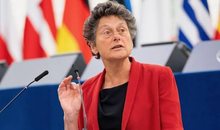
French MEP joins protests in Albania: Support for the "Pink Flamingo Revolution"
2026-07-09 19:28:07


Has the lek strengthened or overvalued?
2026-07-09 17:58:05

The trial on the merits for Ilir Meta and Monika Kryemadhi is postponed
2026-07-09 16:47:58

The match between England and Norway risks being postponed, this is the reason
2026-07-09 16:12:46
Murder in Shkodra/ Relatives: Peaceful family, no problems
2026-07-09 16:10:02
Kurti invites opposition leaders to a meeting to create new institutions
2026-07-09 15:43:05


This is the 62-year-old man who killed his wife in Shkodra
2026-07-09 15:01:43

Domestic crime/ Wife killed with shotgun, perpetrator and victim identified
2026-07-09 14:05:18
Gunfire in Shkodra, one victim suspected
2026-07-09 13:49:41
Weapons cache discovered in Fier, Prosecution sends 38-year-old to trial
2026-07-09 13:35:48

Bota e muzikës në zi, ndahet nga jeta në moshën 75-vjeçare ikona Bonnie Tyler
2026-07-09 12:56:29
Monika Kryemadhi in the Criminal Court: The cell phone was seized illegally
2026-07-09 12:45:54
VALEN MP reacts after border detention: Albania is no one's property
2026-07-09 12:15:44
Albanian gang in Belgium sentenced for trafficking 7 tons of cocaine
2026-07-09 12:01:14
Justin Bieber, Shakira and Madonna to perform at 2026 World Cup final
2026-07-09 11:52:54
Euro falls, inflation rises and domestic production loses ground
2026-07-09 11:39:36
Trial at the GJKKO, Meta's new lawyer appears in the session
2026-07-09 11:29:47
Nighttime accident in Gramsh, man and woman injured
2026-07-09 11:20:25
Meta seeks 134 witnesses, GJKKO delivers decision today
2026-07-09 10:56:54


At the peak of the production season, vegetable prices 'fly'
2026-07-09 10:21:14
The African heat returns, the thermometer reaches 40 degrees this weekend
2026-07-09 10:08:08
Opinions from 'anonymous' authors target Flamingo protests
2026-07-09 10:07:15
MEP Waitz: The law on protected areas endangers Albania's path to the EU
2026-07-09 09:52:55
"Le Courrier des Balkans": Edi Rama and the megalomania of power
2026-07-09 09:40:26
The economics of concerts, the prime minister's imaginary 100 million euros
2026-07-09 09:28:19
Erdogan's strange gift to NATO leaders
2026-07-09 09:11:15


Foreign exchange, the rate at which foreign currencies are sold and bought
2026-07-09 08:30:41
“Uniteti i jashtëzakonshëm” i NATO-s dhe mesazhet kryesore nga samiti në Turqi
2026-07-09 08:11:17

Horoskopi, njihuni me parashikim e yjeve
2026-07-09 07:46:15
Alternime kthjellimesh e vranësirash, parashikimi i motit
2026-07-09 07:25:59
Posta e mëngjesit/ Me 2 rreshta: Çfarë pati rëndësi dje në Shqipëri
2026-07-09 07:02:12




Rama brings West in Tirana, using Eastern premises
2026-07-08 20:41:42

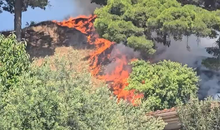
Fire on Kuzum Baba hill in Vlora, flames endanger homes and Tekke
2026-07-08 18:09:45

Shqipëria po plaket, qeveria pa plan
2026-07-08 15:57:26