 Flash News
VIDEO-scandal in Saranda/ Director of AMP Vlora and officials sexually harass tourists
"The New York Times" about Ye's concert: How Rama justifies the $4.5 million in funding
The suspected perpetrator of the murder in Laç is identified, he shot the 40-year-old 7 times near the palace
7 bullets on the doorstep, who is the 40-year-old with 4 surnames who was killed in Laç
Morning Post/ In 2 lines: What mattered yesterday in Albania
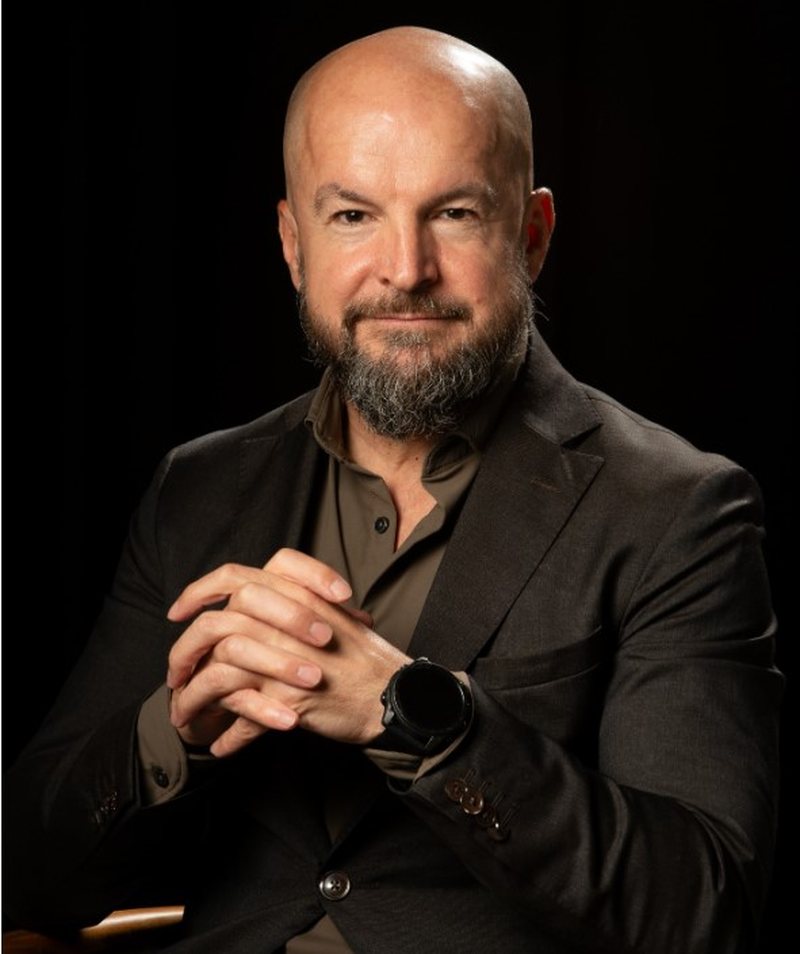
Alfred Lela
Three or four German flags at Sunday’s protest were treated as “foreign bodies” by a segment of the political commentariat — that old sludge tied to the government, as much by conviction as by interest.
The presence of the tricolour was a novelty, given that the preferred flags of opposition protesters have traditionally been the national one, the Democratic Party flag, the American flag, and the European one.
Replacing the American banner with the German one does not represent any shift in the opposition’s narrative, nor in the protesters’ alignment. The collective intuition of a mass like the opposition is sensitive, at times bordering on paranoia — and not without reason.
Democrats in particular have been tossed around, often carelessly and sometimes harshly, during these 13 years in opposition, to the point that they have frequently felt like strangers in their own country and within Albania’s political spectrum. Being blue was not in fashion. Being pink was.
They have faced bullying rhetoric — “you will eat grass” — and, above all, a double standard from foreign representatives in Albania or visitors from Western chancelleries.
History (or karma) has taken its revenge in cases such as Yuri Kim, Gabriel Escobar, Miroslav Lajčák, or Federica Mogherini. Each of them has, at times, scandalized Albania’s opposition with positions perceived as openly one-sided, becoming part of the very controversy they were meant to arbitrate.
But that is the past.
The present — particularly over the past year — has hinted at a return to normalcy for supporters of the Democratic Party and the broader opposition. It began with the new U.S. administration following Trump’s return, the role of Chris LaCivita as campaign strategist, and a noticeable recalibration in the public posture of the U.S. Embassy, moving away from its earlier habit of focusing criticism on the opposition while largely sparing the government.
Still, among Democrats, there remains a persistent misunderstanding in their relationship with the international community. They expect the historical sympathy they received in the period 1990–1992 to continue indefinitely, while in reality the times have changed. Today’s global political elites are less ideological and anti-communist, and more stabilocratic and transactional.
This misunderstanding makes them both sensitive and insecure at the same time, as they continue to see themselves as the party born on “the right side of history.” From that perspective, they also frame the Socialist Party — the successor to the Party of Labour — measuring it with the yardstick of the Cold War and the years following the fall of the Wall.
Such a lens also explains the “change of flags,” which is neither a shift nor a declaration. It is simply a historical reflex.
A reflex of those who still see America through the lens of James Baker’s grand rally in Skanderbeg Square in 1991, and Germany through the era when its ambassador was Werner Daum.
Daum passed away last year in Albania and requested to be buried here.
In a twist of history — and perhaps as confirmation of why former communists, repackaged as socialists, remain in conflict with “the last German” — none of the majority’s representatives agreed to be involved in organizing or honoring the burial of the former German ambassador, a friend of Albania, when asked to do so.
He deserved, at the very least, a dignified farewell for that final wish alone.
It seems the socialists have still not forgiven “the first German,” Werner Daum, for helping break the communist stranglehold that their predecessors had over the country by inviting Albanians into the German embassy in July 1990.
In the end, it remains a clash — almost archetypal — between “Ballists” and “Partisans” when it comes to the West.
Everything has changed. And at the same time, nothing has.
Latest news

Heatwave hits Germany, over 5,400 heat-related deaths
2026-07-10 10:45:33

Land in "foreign hands"
2026-07-10 10:26:15
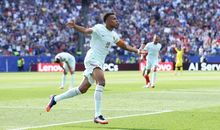
Mbappe the hero of France, the "Roosters" knock out Morocco in the quarterfinals
2026-07-10 09:54:33
Durrës/ 40-year-old man stabs his wife
2026-07-10 09:48:03


How much could the amount of drug money in the Albanian economy be?!
2026-07-10 09:08:34
Government reduces funds for farmers, increases ADF by 75 million euros
2026-07-10 08:55:46
Horoscope, get to know the star forecast
2026-07-10 08:32:54

Morning Post/ In 2 lines: What mattered yesterday in Albania
2026-07-10 07:52:04
A person was shot dead in Kurbin, first details
2026-07-09 22:54:48


Will the Police also stop those who criticize Rama online?
2026-07-09 21:57:02


FIFA decision shocks England, Quansah ruled out for two matches
2026-07-09 20:51:00
Protest/Pedagogue: 4 million euros for Kanye West is "the next concession"
2026-07-09 19:45:53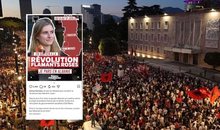
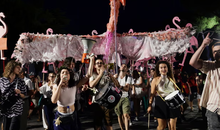
French MEP joins protests in Albania: Support for the "Pink Flamingo Revolution"
2026-07-09 19:28:07



Has the lek strengthened or overvalued?
2026-07-09 17:58:05

The trial on the merits for Ilir Meta and Monika Kryemadhi is postponed
2026-07-09 16:47:58
The match between England and Norway risks being postponed, this is the reason
2026-07-09 16:12:46
Murder in Shkodra/ Relatives: Peaceful family, no problems
2026-07-09 16:10:02
Kurti invites opposition leaders to a meeting to create new institutions
2026-07-09 15:43:05
This is the 62-year-old man who killed his wife in Shkodra
2026-07-09 15:01:43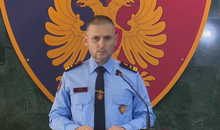

Domestic crime/ Wife killed with shotgun, perpetrator and victim identified
2026-07-09 14:05:18
Gunfire in Shkodra, one victim suspected
2026-07-09 13:49:41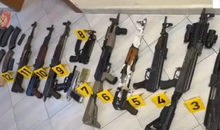
Weapons cache discovered in Fier, Prosecution sends 38-year-old to trial
2026-07-09 13:35:48

Bota e muzikës në zi, ndahet nga jeta në moshën 75-vjeçare ikona Bonnie Tyler
2026-07-09 12:56:29
Monika Kryemadhi in the Criminal Court: The cell phone was seized illegally
2026-07-09 12:45:54
VALEN MP reacts after border detention: Albania is no one's property
2026-07-09 12:15:44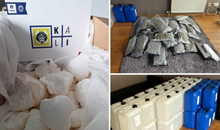
Albanian gang in Belgium sentenced for trafficking 7 tons of cocaine
2026-07-09 12:01:14
Justin Bieber, Shakira and Madonna to perform at 2026 World Cup final
2026-07-09 11:52:54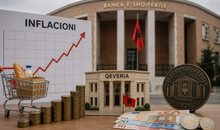
Euro falls, inflation rises and domestic production loses ground
2026-07-09 11:39:36
Trial at the GJKKO, Meta's new lawyer appears in the session
2026-07-09 11:29:47
Nighttime accident in Gramsh, man and woman injured
2026-07-09 11:20:25
Meta seeks 134 witnesses, GJKKO delivers decision today
2026-07-09 10:56:54

At the peak of the production season, vegetable prices 'fly'
2026-07-09 10:21:14
The African heat returns, the thermometer reaches 40 degrees this weekend
2026-07-09 10:08:08
Opinions from 'anonymous' authors target Flamingo protests
2026-07-09 10:07:15
MEP Waitz: The law on protected areas endangers Albania's path to the EU
2026-07-09 09:52:55
"Le Courrier des Balkans": Edi Rama and the megalomania of power
2026-07-09 09:40:26
The economics of concerts, the prime minister's imaginary 100 million euros
2026-07-09 09:28:19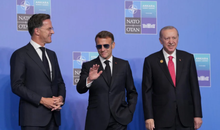
Erdogan's strange gift to NATO leaders
2026-07-09 09:11:15

Foreign exchange, the rate at which foreign currencies are sold and bought
2026-07-09 08:30:41
“Uniteti i jashtëzakonshëm” i NATO-s dhe mesazhet kryesore nga samiti në Turqi
2026-07-09 08:11:17

Horoskopi, njihuni me parashikim e yjeve
2026-07-09 07:46:15
Alternime kthjellimesh e vranësirash, parashikimi i motit
2026-07-09 07:25:59
Posta e mëngjesit/ Me 2 rreshta: Çfarë pati rëndësi dje në Shqipëri
2026-07-09 07:02:12




Rama brings West in Tirana, using Eastern premises
2026-07-08 20:41:42


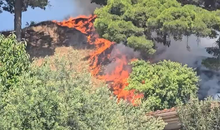
Fire on Kuzum Baba hill in Vlora, flames endanger homes and Tekke
2026-07-08 18:09:45


Shqipëria po plaket, qeveria pa plan
2026-07-08 15:57:26