 Flash News
VIDEO-scandal in Saranda/ Director of AMP Vlora and officials sexually harass tourists
"The New York Times" about Ye's concert: How Rama justifies the $4.5 million in funding
The suspected perpetrator of the murder in Laç is identified, he shot the 40-year-old 7 times near the palace
7 bullets on the doorstep, who is the 40-year-old with 4 surnames who was killed in Laç
Morning Post/ In 2 lines: What mattered yesterday in Albania
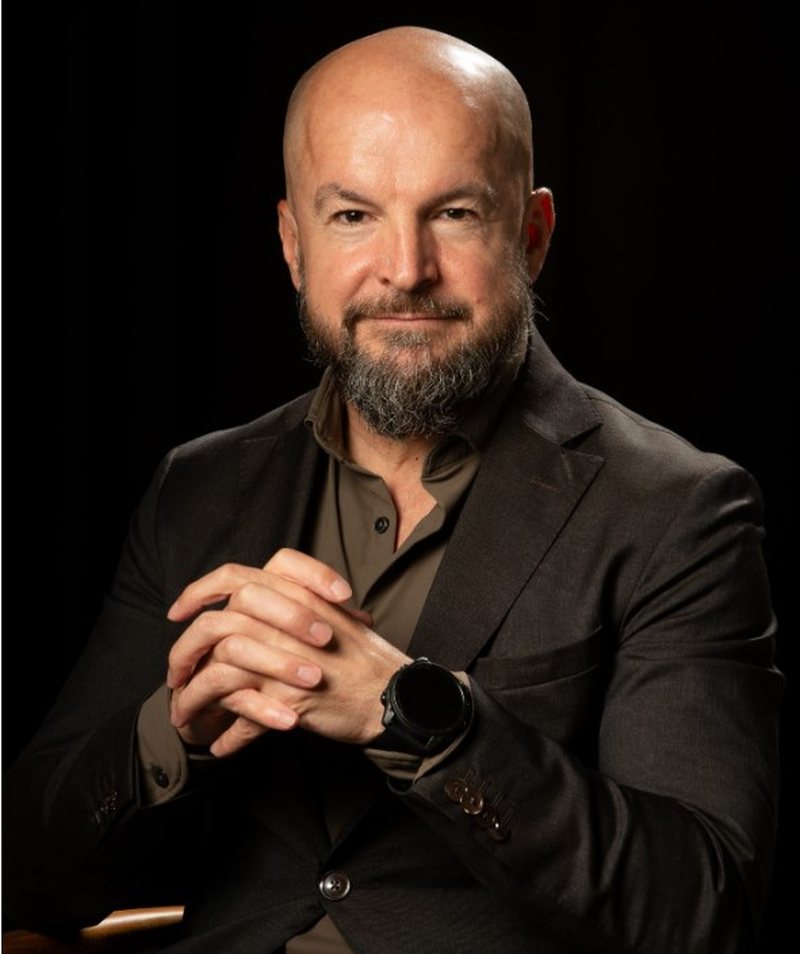
Alfred Lela
We Albanians, on this side of the border, don’t really know Gjakova; we know it vaguely, as a stop on the way to Valbona. It is, in fact, ironic how we pass through another state only to re-enter the “homeland,” simply because the road is shorter that way-what a herbarium of Albanian coincidences!).
My first image of Gjakova was shaped in childhood, through a poem by Kadare, where the poet played with the word “blood” hidden inside the city’s name — a town with a name cut in half, half word, half wound, half cry. At the same time, the song about the Gjakovar partisan girl, Ganimete Tërbeshi (Ganimet, moj krenaria jonë), echoed in my ears. Bajram Curri, more than a man or a hero, I knew as the name of a town, accompanied by that bewildering phrase I never understood — “karaduzë bajramcurri” — named after a mustachioed patriarch who, according to communist historiography, had been killed in a cave in Dragobia by Zog, the satrap, the worst of the wicked.
Later, I learned that Gjakova and Tropoja are, in fact, the same region, violently divided, and known as the Highlands of Gjakova. And even that President Berisha, in the early post-communist years, had once floated the idea of replacing the name Bajram Curri with Malësia e Gjakovës (which wouldn’t have been a bad idea).
What I learned about Gjakova in these last few days is quietly fascinating. For example, that Albanians from our side of the border are treated for free in the hospitals there; that Gjakova has an arts high school with more students than the one in Tirana; that it even has a university (which to me seems a bit excessive); and that for several years now, the November Days have been held there, organized by the Foundation for Gjakova, which includes my colleague Ermal Hasimja, a Gjakovar who has become Tirana-ized.
I write about this year’s November Days because I attended two of its stops: the concert of Ermonela Jaho and that of the former “Jericho” soloist, Petrit Çarkaxhia. Two different genres, but — without exaggeration — both cultural events that surpass the borders of Gjakova, and in Jaho’s case, even those of Kosovo or Albania.
More than the concerts themselves, it was the conception, the inner spirit moving the strings that would become material — that struck me. All this becomes an enterprise, private yet public, which speaks so clearly of the individual’s initiative in freedom, the desire to create things that go beyond oneself and belong to the community. Something that, here in Albania, we have forgotten in favor of quick profit, pride in the material, and a relentless erosion of what is immaterial (the “unreal estate,” as Octavio Paz calls it).
I have attended, for example, an event in a small northern town called “The Sofra,” but what sadness when you realized that the gathering, rather than being an expression of shared public life, of community values, of tradition’s veins, was a banquet of meat and raki for local officials or businessmen who had paid for the songs, for the meat, the raki, and the table itself.
Gjakova, with its November Days, was something else entirely: a sophistication without rhapsody, a city without pettiness, a good intention carried through to the end as such. So much so that, jokingly, I told Hasimja that in an eventual redrawing of borders, we should take Gjakova — to ruin it, of course, because on this side of the border, we fix nothing.
I write these lines with the humility of someone who bows before what is good and beautiful, who recognizes and accepts it when others create it. I would have liked very much to have had the time to attend, for example, the Arbëresh ensemble’s concert last weekend, or the Book Fair, organized in an entirely original way. Every publisher in the Fair hosts themselves in a bar or café in the Gjakova Bazaar, and there they present their books, readers, and authors — in that blend that has always accompanied them: coffee, tea, spirits, and books.
Imagine these dozens of literary islets glowing throughout Gjakova, called a Book Fair, compared to the Hani i Bishtanakës, which the annual fair in Tirana has become — a cramped holding pen, an auction of writers as horses and readers as clientele.
So, dear rediscovered city of Gjakova, from the Bazaar of Tirana — where right now a song in Arabic rises toward the sky while a drill sinks into my stomach — cheers, and God bless!
Latest news
Heatwave hits Germany, over 5,400 heat-related deaths
2026-07-10 10:45:33
Land in "foreign hands"
2026-07-10 10:26:15
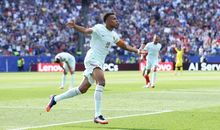
Mbappe the hero of France, the "Roosters" knock out Morocco in the quarterfinals
2026-07-10 09:54:33
Durrës/ 40-year-old man stabs his wife
2026-07-10 09:48:03
How much could the amount of drug money in the Albanian economy be?!
2026-07-10 09:08:34
Government reduces funds for farmers, increases ADF by 75 million euros
2026-07-10 08:55:46
Horoscope, get to know the star forecast
2026-07-10 08:32:54

Morning Post/ In 2 lines: What mattered yesterday in Albania
2026-07-10 07:52:04
A person was shot dead in Kurbin, first details
2026-07-09 22:54:48
Will the Police also stop those who criticize Rama online?
2026-07-09 21:57:02
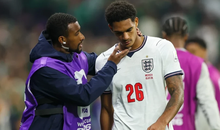
FIFA decision shocks England, Quansah ruled out for two matches
2026-07-09 20:51:00
Protest/Pedagogue: 4 million euros for Kanye West is "the next concession"
2026-07-09 19:45:53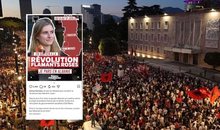
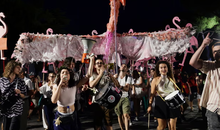
French MEP joins protests in Albania: Support for the "Pink Flamingo Revolution"
2026-07-09 19:28:07

Has the lek strengthened or overvalued?
2026-07-09 17:58:05
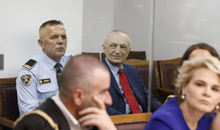
The trial on the merits for Ilir Meta and Monika Kryemadhi is postponed
2026-07-09 16:47:58
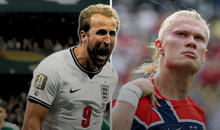
The match between England and Norway risks being postponed, this is the reason
2026-07-09 16:12:46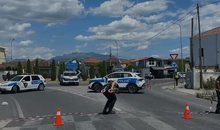
Murder in Shkodra/ Relatives: Peaceful family, no problems
2026-07-09 16:10:02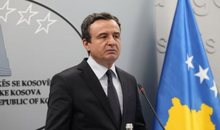
Kurti invites opposition leaders to a meeting to create new institutions
2026-07-09 15:43:05
This is the 62-year-old man who killed his wife in Shkodra
2026-07-09 15:01:43
Domestic crime/ Wife killed with shotgun, perpetrator and victim identified
2026-07-09 14:05:18
Gunfire in Shkodra, one victim suspected
2026-07-09 13:49:41
Weapons cache discovered in Fier, Prosecution sends 38-year-old to trial
2026-07-09 13:35:48
Bota e muzikës në zi, ndahet nga jeta në moshën 75-vjeçare ikona Bonnie Tyler
2026-07-09 12:56:29
Monika Kryemadhi in the Criminal Court: The cell phone was seized illegally
2026-07-09 12:45:54
VALEN MP reacts after border detention: Albania is no one's property
2026-07-09 12:15:44
Albanian gang in Belgium sentenced for trafficking 7 tons of cocaine
2026-07-09 12:01:14
Justin Bieber, Shakira and Madonna to perform at 2026 World Cup final
2026-07-09 11:52:54
Euro falls, inflation rises and domestic production loses ground
2026-07-09 11:39:36
Trial at the GJKKO, Meta's new lawyer appears in the session
2026-07-09 11:29:47
Nighttime accident in Gramsh, man and woman injured
2026-07-09 11:20:25
Meta seeks 134 witnesses, GJKKO delivers decision today
2026-07-09 10:56:54

At the peak of the production season, vegetable prices 'fly'
2026-07-09 10:21:14
The African heat returns, the thermometer reaches 40 degrees this weekend
2026-07-09 10:08:08
Opinions from 'anonymous' authors target Flamingo protests
2026-07-09 10:07:15
MEP Waitz: The law on protected areas endangers Albania's path to the EU
2026-07-09 09:52:55
"Le Courrier des Balkans": Edi Rama and the megalomania of power
2026-07-09 09:40:26
The economics of concerts, the prime minister's imaginary 100 million euros
2026-07-09 09:28:19
Erdogan's strange gift to NATO leaders
2026-07-09 09:11:15
Foreign exchange, the rate at which foreign currencies are sold and bought
2026-07-09 08:30:41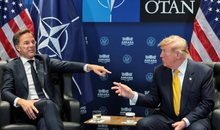
“Uniteti i jashtëzakonshëm” i NATO-s dhe mesazhet kryesore nga samiti në Turqi
2026-07-09 08:11:17
Horoskopi, njihuni me parashikim e yjeve
2026-07-09 07:46:15
Alternime kthjellimesh e vranësirash, parashikimi i motit
2026-07-09 07:25:59
Posta e mëngjesit/ Me 2 rreshta: Çfarë pati rëndësi dje në Shqipëri
2026-07-09 07:02:12

Rama brings West in Tirana, using Eastern premises
2026-07-08 20:41:42
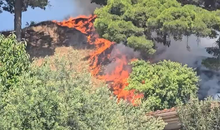
Fire on Kuzum Baba hill in Vlora, flames endanger homes and Tekke
2026-07-08 18:09:45

Shqipëria po plaket, qeveria pa plan
2026-07-08 15:57:26