 Flash News
VIDEO-scandal in Saranda/ Director of AMP Vlora and officials sexually harass tourists
"The New York Times" about Ye's concert: How Rama justifies the $4.5 million in funding
The suspected perpetrator of the murder in Laç is identified, he shot the 40-year-old 7 times near the palace
7 bullets on the doorstep, who is the 40-year-old with 4 surnames who was killed in Laç
Morning Post/ In 2 lines: What mattered yesterday in Albania
The story that today's portrait of Ilir Meta tells us about tomorrow

Politiko
2026-04-27 16:58:59
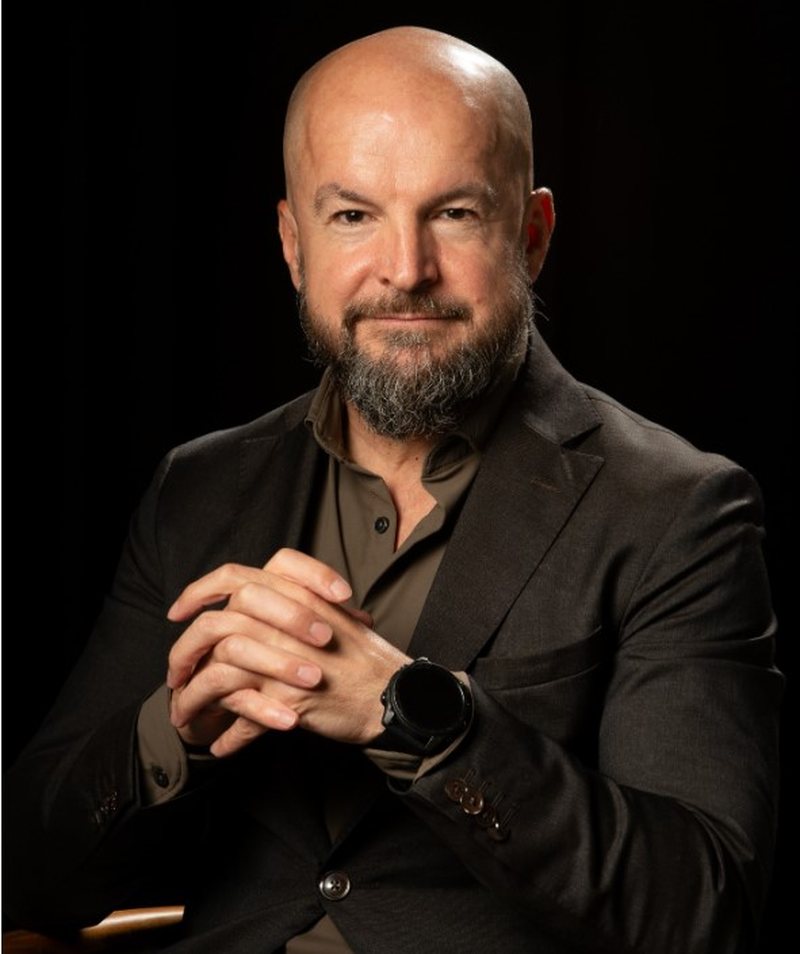
Alfred Lela
Today, Ilir Meta’s face revealed the prison he is living through. In a country accustomed to senior officials who, once jailed, suddenly fall ill, discover convenient medical conditions, file endless complaints, and occasionally obtain privileges, many had dismissed the former president’s letters from prison as staged episodes meant to secure leave, public sympathy, or judicial leniency.
As we saw today, Ilir Meta was not lying.
His portrait — where exhaustion was more visible than defeat, misunderstanding more present than evil — seemed to carry from the other world of prison a cry on behalf of those who are arrested before they are investigated, judged before they are tried, publicly lynched before they are convicted, and only later, perhaps, perhaps rehabilitated.
Meta has asked for two elementary, fundamental, and universal things that the Republic has failed to guarantee him: an open public trial, where he can defend himself publicly just as he has been publicly condemned, and normal prison conditions. We know the answer to both requests. As for the second, no answer was needed: it was written on the Munch-like face of the former president.
But Meta also carries a third decoration bestowed on him by the Republic he once served in several of its highest offices: an entirely unnecessary, theatrical, and violent arrest by the State Police.
By any measure, Ilir Meta has been subjected to two forms of violence: physical and symbolic. My impression is that the second has weighed more heavily on the former weightlifter who entered politics — a sport in which the higher one rises, the lower one risks falling.
Today he stands as one martyr among others of a justice reform that has produced mountains of case files, levels of pre-trial detention unseen elsewhere in Europe, contradictory political arrests, but no real solutions.
This should not surprise anyone. The reform itself was presented as the solution. History has repeated often enough that when one option is offered as the only solution, it eventually becomes the problem. And lest these lines be mistaken for a form of pessimistic antidote, it can be said without cynicism: no final solution is likely to come.
At best, there may be a kind of reckoning. And it will reach even those who designed the reform as a weapon against others and a shield for themselves.
Among the four principal leaders of Albania’s transition era, each in his own way has tasted punishment. Rama remains untouched. That is a matter of time and limits — neither of which can be erased by financial power, however much the prime minister may hope otherwise.
It is also a matter of place.
And Albania is precisely that place. Especially for those who claim to love it so much that, in their hatred, they would turn it upside down to build another Albania. From zero. In their own image.
Albania can not be reborn. At most, it can be reimagined.
Latest news
Heatwave hits Germany, over 5,400 heat-related deaths
2026-07-10 10:45:33
Land in "foreign hands"
2026-07-10 10:26:15
Mbappe the hero of France, the "Roosters" knock out Morocco in the quarterfinals
2026-07-10 09:54:33
Durrës/ 40-year-old man stabs his wife
2026-07-10 09:48:03
How much could the amount of drug money in the Albanian economy be?!
2026-07-10 09:08:34
Government reduces funds for farmers, increases ADF by 75 million euros
2026-07-10 08:55:46
Horoscope, get to know the star forecast
2026-07-10 08:32:54

Morning Post/ In 2 lines: What mattered yesterday in Albania
2026-07-10 07:52:04
A person was shot dead in Kurbin, first details
2026-07-09 22:54:48
Will the Police also stop those who criticize Rama online?
2026-07-09 21:57:02
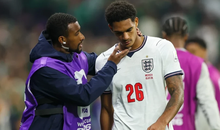
FIFA decision shocks England, Quansah ruled out for two matches
2026-07-09 20:51:00
Protest/Pedagogue: 4 million euros for Kanye West is "the next concession"
2026-07-09 19:45:53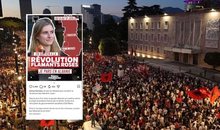
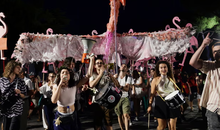
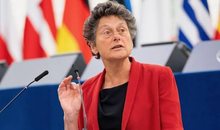
French MEP joins protests in Albania: Support for the "Pink Flamingo Revolution"
2026-07-09 19:28:07

Has the lek strengthened or overvalued?
2026-07-09 17:58:05
The trial on the merits for Ilir Meta and Monika Kryemadhi is postponed
2026-07-09 16:47:58
The match between England and Norway risks being postponed, this is the reason
2026-07-09 16:12:46
Murder in Shkodra/ Relatives: Peaceful family, no problems
2026-07-09 16:10:02
Kurti invites opposition leaders to a meeting to create new institutions
2026-07-09 15:43:05
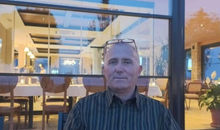
This is the 62-year-old man who killed his wife in Shkodra
2026-07-09 15:01:43
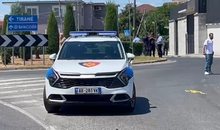
Domestic crime/ Wife killed with shotgun, perpetrator and victim identified
2026-07-09 14:05:18
Gunfire in Shkodra, one victim suspected
2026-07-09 13:49:41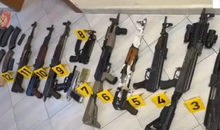
Weapons cache discovered in Fier, Prosecution sends 38-year-old to trial
2026-07-09 13:35:48
Bota e muzikës në zi, ndahet nga jeta në moshën 75-vjeçare ikona Bonnie Tyler
2026-07-09 12:56:29
Monika Kryemadhi in the Criminal Court: The cell phone was seized illegally
2026-07-09 12:45:54
VALEN MP reacts after border detention: Albania is no one's property
2026-07-09 12:15:44
Albanian gang in Belgium sentenced for trafficking 7 tons of cocaine
2026-07-09 12:01:14
Justin Bieber, Shakira and Madonna to perform at 2026 World Cup final
2026-07-09 11:52:54
Euro falls, inflation rises and domestic production loses ground
2026-07-09 11:39:36
Trial at the GJKKO, Meta's new lawyer appears in the session
2026-07-09 11:29:47
Nighttime accident in Gramsh, man and woman injured
2026-07-09 11:20:25
Meta seeks 134 witnesses, GJKKO delivers decision today
2026-07-09 10:56:54

At the peak of the production season, vegetable prices 'fly'
2026-07-09 10:21:14
The African heat returns, the thermometer reaches 40 degrees this weekend
2026-07-09 10:08:08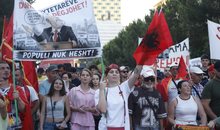
Opinions from 'anonymous' authors target Flamingo protests
2026-07-09 10:07:15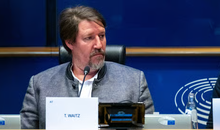
MEP Waitz: The law on protected areas endangers Albania's path to the EU
2026-07-09 09:52:55
"Le Courrier des Balkans": Edi Rama and the megalomania of power
2026-07-09 09:40:26
The economics of concerts, the prime minister's imaginary 100 million euros
2026-07-09 09:28:19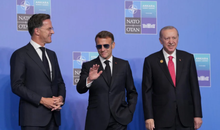
Erdogan's strange gift to NATO leaders
2026-07-09 09:11:15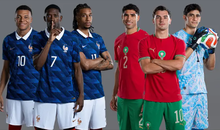
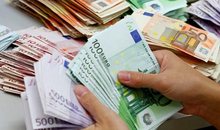
Foreign exchange, the rate at which foreign currencies are sold and bought
2026-07-09 08:30:41
“Uniteti i jashtëzakonshëm” i NATO-s dhe mesazhet kryesore nga samiti në Turqi
2026-07-09 08:11:17
Horoskopi, njihuni me parashikim e yjeve
2026-07-09 07:46:15
Alternime kthjellimesh e vranësirash, parashikimi i motit
2026-07-09 07:25:59
Posta e mëngjesit/ Me 2 rreshta: Çfarë pati rëndësi dje në Shqipëri
2026-07-09 07:02:12

Rama brings West in Tirana, using Eastern premises
2026-07-08 20:41:42
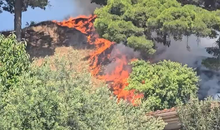
Fire on Kuzum Baba hill in Vlora, flames endanger homes and Tekke
2026-07-08 18:09:45

Shqipëria po plaket, qeveria pa plan
2026-07-08 15:57:26