 Flash News
VIDEO-scandal in Saranda/ Director of AMP Vlora and officials sexually harass tourists
"The New York Times" about Ye's concert: How Rama justifies the $4.5 million in funding
The suspected perpetrator of the murder in Laç is identified, he shot the 40-year-old 7 times near the palace
7 bullets on the doorstep, who is the 40-year-old with 4 surnames who was killed in Laç
Morning Post/ In 2 lines: What mattered yesterday in Albania
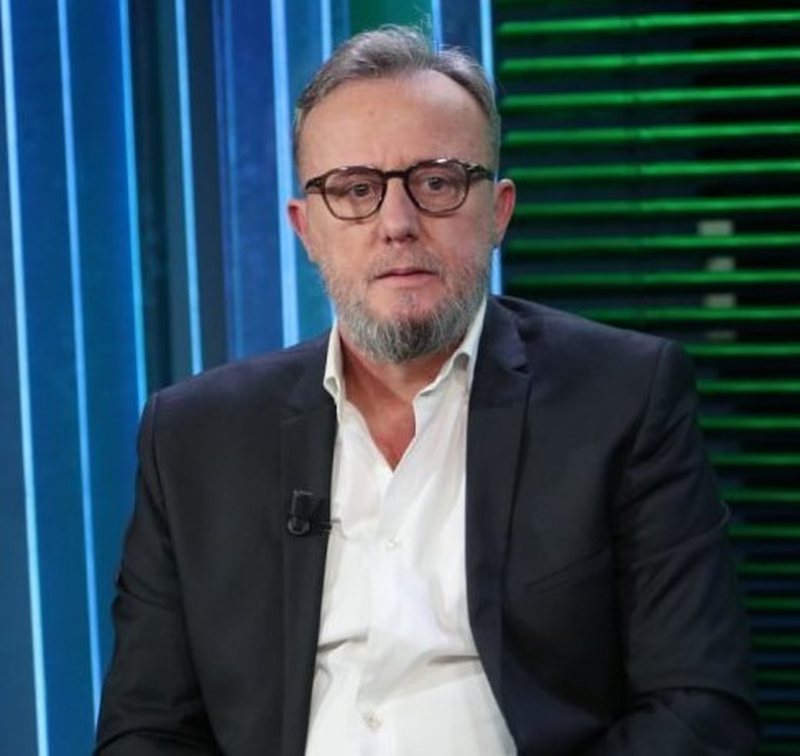
Armand Maho
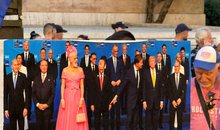
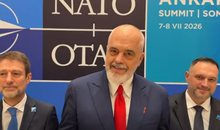
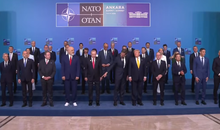
The famous writer Samuel Johnson’s remark that “patriotism is the last refuge of scoundrels” gained renewed meaning at the Washington forum, where Edi Rama’s political prostitution (a term he himself once used) in pursuit of domestic credibility appears to have further complicated—at least politically—the situation of the four former KLA members currently on trial in The Hague before the Kosovo Specialist Chambers.
By asking the American President to intervene, in a forum where many of the world’s autocrats were gathered—figures broadly rejected by the very European Union Rama seeks to join—he revealed how he uses justice in his own country and, at the same time, attempted to subtly challenge the authority of the American President in relation to Europe.
The phrase, “For God’s sake, intervene before something bad happens,” may mislead certain commentators and feed his loyal media machinery, which presents him as a great nationalist. But at such a delicate moment for Kosovo’s four former leaders, it marked yet another diplomatic and political blunder.
This is because, in matters of justice, even within his own country, the American President does not hold absolute power—let alone in Europe. In the United States, a district judge can suspend the implementation of an executive order within his or her jurisdiction, and judicial decisions take precedence over political acts. To publicly request such intervention places the President in an awkward position before the world.
Secondly, directly or indirectly, such statements could create a situation that might be perceived as influencing the Court’s decision-making. The Kosovo Specialist Chambers are funded by the European Union, which has spent approximately €500 million to date. Hashim Thaçi, for example, was formally notified of his indictment in June 2020 while traveling by plane to Washington for a meeting with President Trump—a fact widely known, as the aircraft departed from Tirana.
On the other hand, Edi Rama himself was among the most vocal supporters in 2015 of establishing the Special Prosecutor’s Office in Pristina to try KLA members, in part to gain credibility with international actors—and also with Aleksandar Vučić, who strongly lobbied for its creation. At the same forum was Vjosa Osmani, President of Kosovo, representing a state directly affected by the Hague proceedings. Rama’s intervention, therefore, appeared entirely inappropriate and is perceived as an attempt to curry favor with international leaders for personal political benefit.
This political misstep at such a moment is not accidental. It reflects the conduct of leaders who, to protect themselves and reshape domestic narratives, gamble with the fate of four individuals—former political allies—at a critical juncture. In their confrontation with the Court, these defendants must also navigate the diplomatic perceptions of key funding states such as Germany, the Netherlands, France, and the United Kingdom, whose political climates inevitably shape broader contexts.
Moreover, the composition of the forum itself suggested that participation was based less on democratic values than on narrow political interests and expectations of U.S. backing—support that, in Rama’s case, was notably absent. The American President’s mention of his name appeared purely protocol-driven, unlike the explicit expressions of support offered to others.
Rama’s framing of the issue at that meeting seemed designed to relativize his own domestic justice problems by shifting responsibility toward Europe. It was no coincidence that he mentioned Special Counsel Jack Smith, who, in fact, began his prosecutorial career in international tribunals long before becoming involved in investigations concerning former President Trump. Naturally, Rama did not mention his acquaintance Charles McGonigal, whom Trump has frequently cited as an example of corruption in the so-called “Russiagate” investigations.
Many leaders with questionable democratic records were present at that forum, yet it was Rama who stood out. Others may face democratic deficits at home, but they have not been accused of direct cooperation with transnational criminal networks, nor of attempting to insert themselves rhetorically into American electoral politics. Rama’s move risked placing the fate of the four former KLA figures in the service of his own political rehabilitation.
For that reason, he did not appear as a statesman seeking allies or partners, but rather as a leader seeking external validation to offset domestic vulnerabilities.
Latest news
Heatwave hits Germany, over 5,400 heat-related deaths
2026-07-10 10:45:33
Land in "foreign hands"
2026-07-10 10:26:15
Mbappe the hero of France, the "Roosters" knock out Morocco in the quarterfinals
2026-07-10 09:54:33
Durrës/ 40-year-old man stabs his wife
2026-07-10 09:48:03

How much could the amount of drug money in the Albanian economy be?!
2026-07-10 09:08:34
Government reduces funds for farmers, increases ADF by 75 million euros
2026-07-10 08:55:46
Horoscope, get to know the star forecast
2026-07-10 08:32:54

Morning Post/ In 2 lines: What mattered yesterday in Albania
2026-07-10 07:52:04
A person was shot dead in Kurbin, first details
2026-07-09 22:54:48
Will the Police also stop those who criticize Rama online?
2026-07-09 21:57:02

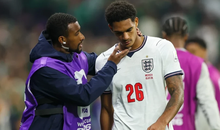
FIFA decision shocks England, Quansah ruled out for two matches
2026-07-09 20:51:00
Protest/Pedagogue: 4 million euros for Kanye West is "the next concession"
2026-07-09 19:45:53
French MEP joins protests in Albania: Support for the "Pink Flamingo Revolution"
2026-07-09 19:28:07

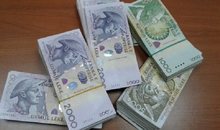
Has the lek strengthened or overvalued?
2026-07-09 17:58:05
The trial on the merits for Ilir Meta and Monika Kryemadhi is postponed
2026-07-09 16:47:58
The match between England and Norway risks being postponed, this is the reason
2026-07-09 16:12:46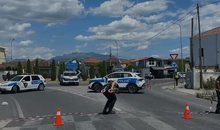
Murder in Shkodra/ Relatives: Peaceful family, no problems
2026-07-09 16:10:02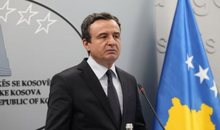
Kurti invites opposition leaders to a meeting to create new institutions
2026-07-09 15:43:05
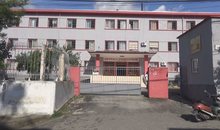
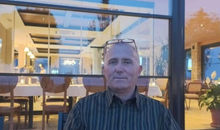
This is the 62-year-old man who killed his wife in Shkodra
2026-07-09 15:01:43

Domestic crime/ Wife killed with shotgun, perpetrator and victim identified
2026-07-09 14:05:18
Gunfire in Shkodra, one victim suspected
2026-07-09 13:49:41
Weapons cache discovered in Fier, Prosecution sends 38-year-old to trial
2026-07-09 13:35:48
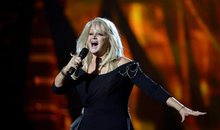
Bota e muzikës në zi, ndahet nga jeta në moshën 75-vjeçare ikona Bonnie Tyler
2026-07-09 12:56:29
Monika Kryemadhi in the Criminal Court: The cell phone was seized illegally
2026-07-09 12:45:54
VALEN MP reacts after border detention: Albania is no one's property
2026-07-09 12:15:44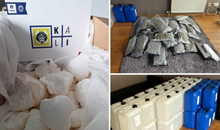
Albanian gang in Belgium sentenced for trafficking 7 tons of cocaine
2026-07-09 12:01:14
Justin Bieber, Shakira and Madonna to perform at 2026 World Cup final
2026-07-09 11:52:54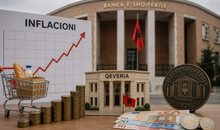
Euro falls, inflation rises and domestic production loses ground
2026-07-09 11:39:36
Trial at the GJKKO, Meta's new lawyer appears in the session
2026-07-09 11:29:47
Nighttime accident in Gramsh, man and woman injured
2026-07-09 11:20:25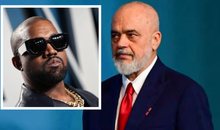
Meta seeks 134 witnesses, GJKKO delivers decision today
2026-07-09 10:56:54

At the peak of the production season, vegetable prices 'fly'
2026-07-09 10:21:14
The African heat returns, the thermometer reaches 40 degrees this weekend
2026-07-09 10:08:08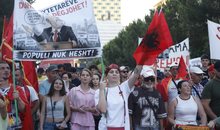
Opinions from 'anonymous' authors target Flamingo protests
2026-07-09 10:07:15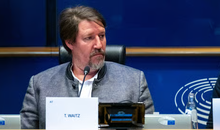
MEP Waitz: The law on protected areas endangers Albania's path to the EU
2026-07-09 09:52:55
"Le Courrier des Balkans": Edi Rama and the megalomania of power
2026-07-09 09:40:26
The economics of concerts, the prime minister's imaginary 100 million euros
2026-07-09 09:28:19
Erdogan's strange gift to NATO leaders
2026-07-09 09:11:15
Foreign exchange, the rate at which foreign currencies are sold and bought
2026-07-09 08:30:41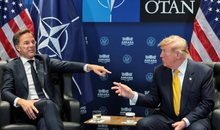
“Uniteti i jashtëzakonshëm” i NATO-s dhe mesazhet kryesore nga samiti në Turqi
2026-07-09 08:11:17
Horoskopi, njihuni me parashikim e yjeve
2026-07-09 07:46:15
Alternime kthjellimesh e vranësirash, parashikimi i motit
2026-07-09 07:25:59
Posta e mëngjesit/ Me 2 rreshta: Çfarë pati rëndësi dje në Shqipëri
2026-07-09 07:02:12

Rama brings West in Tirana, using Eastern premises
2026-07-08 20:41:42
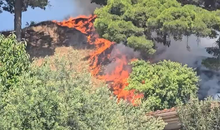
Fire on Kuzum Baba hill in Vlora, flames endanger homes and Tekke
2026-07-08 18:09:45

Shqipëria po plaket, qeveria pa plan
2026-07-08 15:57:26