 Flash News
VIDEO-scandal in Saranda/ Director of AMP Vlora and officials sexually harass tourists
"The New York Times" about Ye's concert: How Rama justifies the $4.5 million in funding
The suspected perpetrator of the murder in Laç is identified, he shot the 40-year-old 7 times near the palace
7 bullets on the doorstep, who is the 40-year-old with 4 surnames who was killed in Laç
Morning Post/ In 2 lines: What mattered yesterday in Albania
Alfred Lela
Kosova is new in everything, except its aspirations. As it marks today the anniversary of February 17, eighteen years ago, when Hashim Thaçi proclaimed in the Assembly hall the independent and democratic state, the youngest country in Europe has much to note.
Above all, what one analyst has called “the smallest state with the biggest democracy in the Balkans,” an expression in which there is no wordplay at all.
The republic of fewer than two million inhabitants, part of whom belong to ethnic communities other than the Albanian majority, in less than two decades of political and institutional life defined by electoral cycles, has become an example for a region where elections remain the Achilles’ heel.
In an almost “Scandinavian” ritual, Kosova holds elections, closes voting at the scheduled hour, produces results by midnight, and by the next morning, winners and losers have exchanged congratulations, remaining opponents while recognizing the foundation of democracy: without free elections, opponents become enemies.
Strikingly, for our peninsula, where electoral confrontations drag on endlessly, in Kosova, when results are inconclusive or open to doubt, new elections are simply held.
Even dramatic events, such as the arrest of leading figures of the political wing of the former Kosovo Liberation Army, which weighed heavily on Pristina’s political landscape, did not undermine the electoral process. Though wounded, not only politically but at the very heart of its founding myth, Kosova continues to look forward without forgetting how much of its origin is tied to struggle, sacrifice, and survival.
This phoenix-like spirit rising from the ashes of history can be seen not only in elections but also in football. Even though Kosova has provided Albania with some of its most talented players in recent decades, it has managed to build a national team with dignity, now hoping through playoff matches to take a place at the World Cup.
The beauty of this journey stands on its own.
Kosova today is a serious country, a republic standing on its own feet, a state sitting at the table of nations like Cinderella who has finally found the shoe history once stole from her.
Nowhere is the Republic more serious than in its high political representation, embodied in the figures of Vjosa Osmani and Albin Kurti.
At Davos, beside President Trump, President Osmani made every Albanian proud — with the composure of a woman who knows her place, the elegance of a stateswoman worthy of the country she represents, and above all, the self-confidence of someone who knows she represents the best of her people, whose codes say that both men and women must carry themselves with dignity. Unlike many Balkan leaders who often display excessive deference toward leaders of great powers, especially Americans, Osmani seemed calm and assured, flowing with the strength and grace of the river she carries in her name, Vjosa.
As for Albin Kurti, it can be said briefly that he has lived the central maxim of Vetëvendosje: “you must not steal your own house.” This may explain why, in confrontations with the great powers, he appears untroubled — and, some say, stubborn for a leader of a small country. They may look down on Kosova for its size, but regarding the stature of character, they have little to say. A man who does not steal from his own house or his own people honors both himself and Kosova.
This is Kosova today — the same Kosova whose possible union with Albania was once met with unease in Tirana. History, however, has changed direction.
Be that as it may, we wish the “most beautiful eighteen-year-old of them all” many millennia of life.
Latest news

Heatwave hits Germany, over 5,400 heat-related deaths
2026-07-10 10:45:33
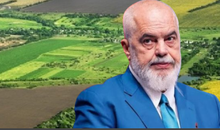
Land in "foreign hands"
2026-07-10 10:26:15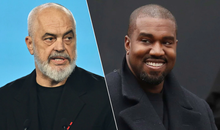
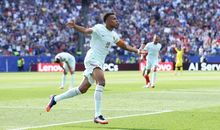
Mbappe the hero of France, the "Roosters" knock out Morocco in the quarterfinals
2026-07-10 09:54:33
Durrës/ 40-year-old man stabs his wife
2026-07-10 09:48:03

How much could the amount of drug money in the Albanian economy be?!
2026-07-10 09:08:34
Government reduces funds for farmers, increases ADF by 75 million euros
2026-07-10 08:55:46
Horoscope, get to know the star forecast
2026-07-10 08:32:54

Morning Post/ In 2 lines: What mattered yesterday in Albania
2026-07-10 07:52:04
A person was shot dead in Kurbin, first details
2026-07-09 22:54:48

Will the Police also stop those who criticize Rama online?
2026-07-09 21:57:02


FIFA decision shocks England, Quansah ruled out for two matches
2026-07-09 20:51:00
Protest/Pedagogue: 4 million euros for Kanye West is "the next concession"
2026-07-09 19:45:53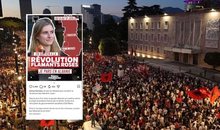
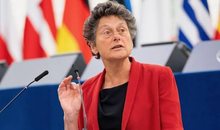
French MEP joins protests in Albania: Support for the "Pink Flamingo Revolution"
2026-07-09 19:28:07


Has the lek strengthened or overvalued?
2026-07-09 17:58:05
The trial on the merits for Ilir Meta and Monika Kryemadhi is postponed
2026-07-09 16:47:58
The match between England and Norway risks being postponed, this is the reason
2026-07-09 16:12:46
Murder in Shkodra/ Relatives: Peaceful family, no problems
2026-07-09 16:10:02
Kurti invites opposition leaders to a meeting to create new institutions
2026-07-09 15:43:05
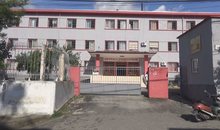
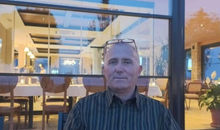
This is the 62-year-old man who killed his wife in Shkodra
2026-07-09 15:01:43

Domestic crime/ Wife killed with shotgun, perpetrator and victim identified
2026-07-09 14:05:18
Gunfire in Shkodra, one victim suspected
2026-07-09 13:49:41
Weapons cache discovered in Fier, Prosecution sends 38-year-old to trial
2026-07-09 13:35:48
Bota e muzikës në zi, ndahet nga jeta në moshën 75-vjeçare ikona Bonnie Tyler
2026-07-09 12:56:29
Monika Kryemadhi in the Criminal Court: The cell phone was seized illegally
2026-07-09 12:45:54

VALEN MP reacts after border detention: Albania is no one's property
2026-07-09 12:15:44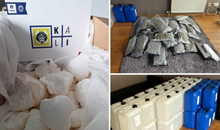
Albanian gang in Belgium sentenced for trafficking 7 tons of cocaine
2026-07-09 12:01:14
Justin Bieber, Shakira and Madonna to perform at 2026 World Cup final
2026-07-09 11:52:54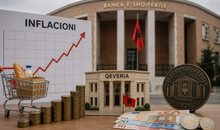
Euro falls, inflation rises and domestic production loses ground
2026-07-09 11:39:36
Trial at the GJKKO, Meta's new lawyer appears in the session
2026-07-09 11:29:47
Nighttime accident in Gramsh, man and woman injured
2026-07-09 11:20:25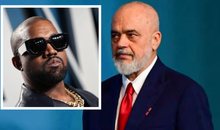
Meta seeks 134 witnesses, GJKKO delivers decision today
2026-07-09 10:56:54

At the peak of the production season, vegetable prices 'fly'
2026-07-09 10:21:14
The African heat returns, the thermometer reaches 40 degrees this weekend
2026-07-09 10:08:08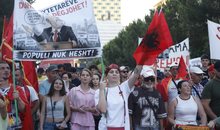
Opinions from 'anonymous' authors target Flamingo protests
2026-07-09 10:07:15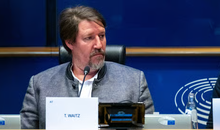
MEP Waitz: The law on protected areas endangers Albania's path to the EU
2026-07-09 09:52:55
"Le Courrier des Balkans": Edi Rama and the megalomania of power
2026-07-09 09:40:26
The economics of concerts, the prime minister's imaginary 100 million euros
2026-07-09 09:28:19
Erdogan's strange gift to NATO leaders
2026-07-09 09:11:15
Foreign exchange, the rate at which foreign currencies are sold and bought
2026-07-09 08:30:41
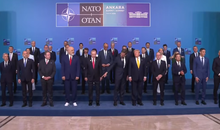
“Uniteti i jashtëzakonshëm” i NATO-s dhe mesazhet kryesore nga samiti në Turqi
2026-07-09 08:11:17

Horoskopi, njihuni me parashikim e yjeve
2026-07-09 07:46:15
Alternime kthjellimesh e vranësirash, parashikimi i motit
2026-07-09 07:25:59
Posta e mëngjesit/ Me 2 rreshta: Çfarë pati rëndësi dje në Shqipëri
2026-07-09 07:02:12

Rama brings West in Tirana, using Eastern premises
2026-07-08 20:41:42
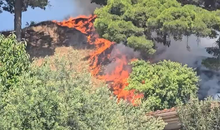
Fire on Kuzum Baba hill in Vlora, flames endanger homes and Tekke
2026-07-08 18:09:45

Shqipëria po plaket, qeveria pa plan
2026-07-08 15:57:26