 Flash News
VIDEO-scandal in Saranda/ Director of AMP Vlora and officials sexually harass tourists
"The New York Times" about Ye's concert: How Rama justifies the $4.5 million in funding
The suspected perpetrator of the murder in Laç is identified, he shot the 40-year-old 7 times near the palace
7 bullets on the doorstep, who is the 40-year-old with 4 surnames who was killed in Laç
Morning Post/ In 2 lines: What mattered yesterday in Albania
Alfred Lela
Some journalists, nudged by their editors or by the crude evidence that names generate clicks, will not hesitate to ask—as they did today at the opposition leader's press conference—for the name of a "technical prime minister." They are joined by a handful of opposition figures who, impatient and naïve in the way protagonism so often is, want to be part of events that have not yet been born.
In Berisha's response lies the narrative line the opposition must follow if it does not wish to serve Edi Rama. Because every pseudo-event, every hybrid piece of news layered on top of the hundred and one scandals already on the table and kept alive by the government's propaganda machine, serves one purpose only: to shrink the weight of real scandals and replace what is alarming with something ridiculous.
There is nothing new in the fact that whenever parliamentary elections approach, whenever it is time for a President, an Ombudsman, or any post that involves a hint of competition, the public's ears and the appetite of careerists rise above Mount Dajti and turn into antennas transmitting that old Albanian desire: to be seen, to exist, to be talked about.
But this does not serve the cause—or the objectives—of the opposition. Replacing the opposition's project for an interim government without Rama at its head, one that would allow a cooling-off period for the engine meticulously tuned to rig elections through theft, with a parade of names—serious men or charlatans, ambitious women or desperate public wives who do or do not want to become "technical prime ministers"—turns the opposition's odyssey toward free and fair elections into a governmental vaudeville where some are flattered and everyone is deceived.
What is not being asked for is a technical prime minister. What is not being asked for is a caretaker government to simply pass the time. What is not being asked for is a handshake agreement, after which those same hands are wrapped around the throat of elections. What is being asked for is a serious and genuine ceasefire—not between parties, not between the Democratic Party and the Socialist Party, not between Berisha and Rama—but between the idea of a government emerging from free elections and a parapolitical group that behaves like a government but is, in essence, nothing more than a gang of gangsters.
Names are merely decoys, meant to confuse a disoriented public that forgets that names carry no more weight or meaning than those Edi Rama casually utters at his party congresses, while senior Socialist figures are seen bewildered, sweating, soaked—without even knowing why, how, or for what.
This technique must not be allowed to be used against the Democratic Party as well. The desires of certain opposition figures—nostalgic for office and indulging not-so-youthful dreams of becoming prime ministers or directors—must not replace what is common and has only one name: the removal of a government that, through theft and corruption, has betrayed Albanians without distinction of political belief, religion, or region, and has emasculated the country.
The idea of a technical government is not a resting stop to catch one's breath, but a transit station where the journey does not stop, but continues—toward sending Edi Rama into political retirement, or an asylum, and toward restoring in Albania the sacred institution of free elections.
Where people choose freely, without fear, and are not torn apart like fighting dogs.
Latest news

Heatwave hits Germany, over 5,400 heat-related deaths
2026-07-10 10:45:33
Land in "foreign hands"
2026-07-10 10:26:15
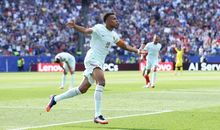
Mbappe the hero of France, the "Roosters" knock out Morocco in the quarterfinals
2026-07-10 09:54:33
Durrës/ 40-year-old man stabs his wife
2026-07-10 09:48:03
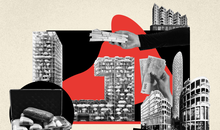
How much could the amount of drug money in the Albanian economy be?!
2026-07-10 09:08:34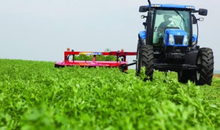
Government reduces funds for farmers, increases ADF by 75 million euros
2026-07-10 08:55:46
Horoscope, get to know the star forecast
2026-07-10 08:32:54

Morning Post/ In 2 lines: What mattered yesterday in Albania
2026-07-10 07:52:04
A person was shot dead in Kurbin, first details
2026-07-09 22:54:48
Will the Police also stop those who criticize Rama online?
2026-07-09 21:57:02

FIFA decision shocks England, Quansah ruled out for two matches
2026-07-09 20:51:00
Protest/Pedagogue: 4 million euros for Kanye West is "the next concession"
2026-07-09 19:45:53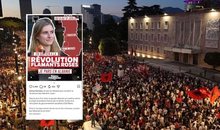
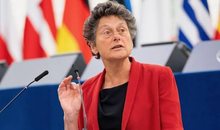
French MEP joins protests in Albania: Support for the "Pink Flamingo Revolution"
2026-07-09 19:28:07

Has the lek strengthened or overvalued?
2026-07-09 17:58:05
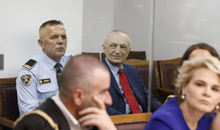
The trial on the merits for Ilir Meta and Monika Kryemadhi is postponed
2026-07-09 16:47:58
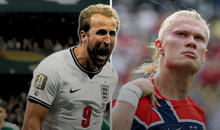
The match between England and Norway risks being postponed, this is the reason
2026-07-09 16:12:46
Murder in Shkodra/ Relatives: Peaceful family, no problems
2026-07-09 16:10:02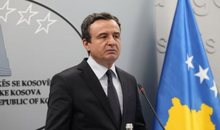
Kurti invites opposition leaders to a meeting to create new institutions
2026-07-09 15:43:05
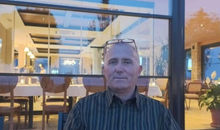
This is the 62-year-old man who killed his wife in Shkodra
2026-07-09 15:01:43

Domestic crime/ Wife killed with shotgun, perpetrator and victim identified
2026-07-09 14:05:18
Gunfire in Shkodra, one victim suspected
2026-07-09 13:49:41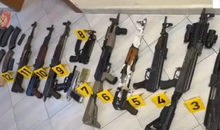
Weapons cache discovered in Fier, Prosecution sends 38-year-old to trial
2026-07-09 13:35:48
Bota e muzikës në zi, ndahet nga jeta në moshën 75-vjeçare ikona Bonnie Tyler
2026-07-09 12:56:29
Monika Kryemadhi in the Criminal Court: The cell phone was seized illegally
2026-07-09 12:45:54

VALEN MP reacts after border detention: Albania is no one's property
2026-07-09 12:15:44
Albanian gang in Belgium sentenced for trafficking 7 tons of cocaine
2026-07-09 12:01:14
Justin Bieber, Shakira and Madonna to perform at 2026 World Cup final
2026-07-09 11:52:54
Euro falls, inflation rises and domestic production loses ground
2026-07-09 11:39:36
Trial at the GJKKO, Meta's new lawyer appears in the session
2026-07-09 11:29:47
Nighttime accident in Gramsh, man and woman injured
2026-07-09 11:20:25
Meta seeks 134 witnesses, GJKKO delivers decision today
2026-07-09 10:56:54

At the peak of the production season, vegetable prices 'fly'
2026-07-09 10:21:14
The African heat returns, the thermometer reaches 40 degrees this weekend
2026-07-09 10:08:08
Opinions from 'anonymous' authors target Flamingo protests
2026-07-09 10:07:15
MEP Waitz: The law on protected areas endangers Albania's path to the EU
2026-07-09 09:52:55
"Le Courrier des Balkans": Edi Rama and the megalomania of power
2026-07-09 09:40:26
The economics of concerts, the prime minister's imaginary 100 million euros
2026-07-09 09:28:19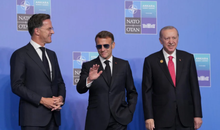
Erdogan's strange gift to NATO leaders
2026-07-09 09:11:15

Foreign exchange, the rate at which foreign currencies are sold and bought
2026-07-09 08:30:41
“Uniteti i jashtëzakonshëm” i NATO-s dhe mesazhet kryesore nga samiti në Turqi
2026-07-09 08:11:17

Horoskopi, njihuni me parashikim e yjeve
2026-07-09 07:46:15
Alternime kthjellimesh e vranësirash, parashikimi i motit
2026-07-09 07:25:59
Posta e mëngjesit/ Me 2 rreshta: Çfarë pati rëndësi dje në Shqipëri
2026-07-09 07:02:12


Rama brings West in Tirana, using Eastern premises
2026-07-08 20:41:42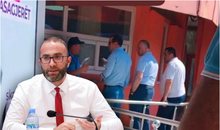
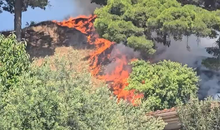
Fire on Kuzum Baba hill in Vlora, flames endanger homes and Tekke
2026-07-08 18:09:45

Shqipëria po plaket, qeveria pa plan
2026-07-08 15:57:26