 Flash News
VIDEO-scandal in Saranda/ Director of AMP Vlora and officials sexually harass tourists
"The New York Times" about Ye's concert: How Rama justifies the $4.5 million in funding
The suspected perpetrator of the murder in Laç is identified, he shot the 40-year-old 7 times near the palace
7 bullets on the doorstep, who is the 40-year-old with 4 surnames who was killed in Laç
Morning Post/ In 2 lines: What mattered yesterday in Albania
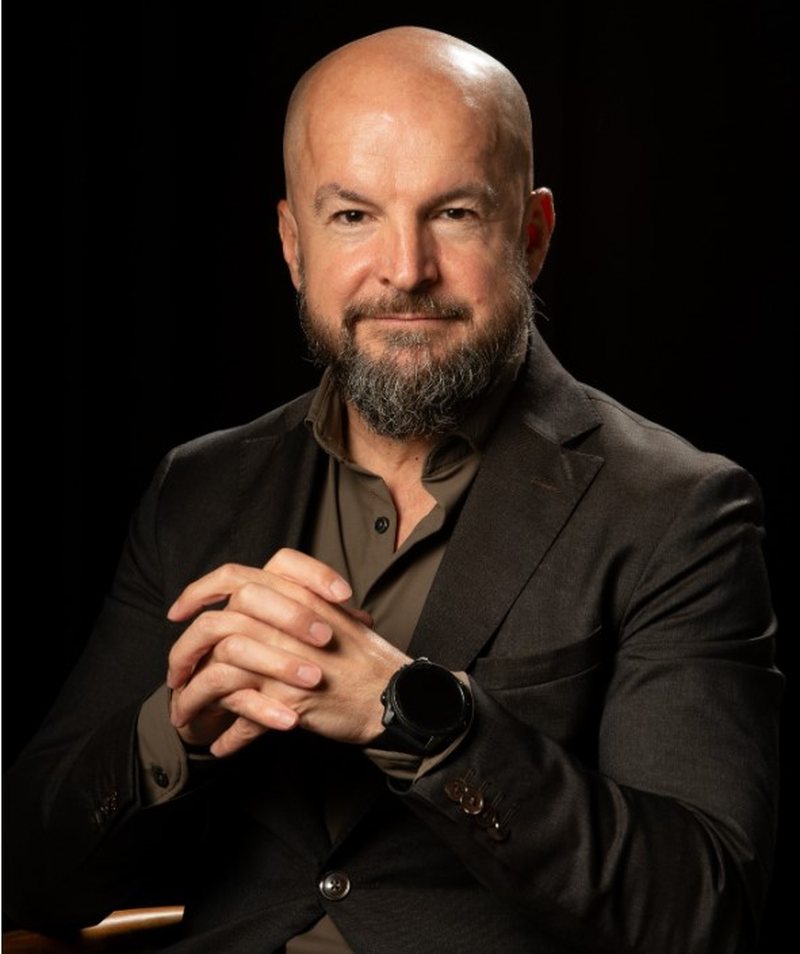
Alfred Lela
Every time Albania confronts Nature—or what are referred to as “acts of God”—it loses. And this happens regardless of political alignment: whether one supports the government or opposes it. It is precisely here that the biblical principle applies: “Render unto Caesar what is Caesar’s, and unto God what is God’s.” This is the fairest measure for apportioning responsibility for the water catastrophe into which the country has sunk.
That is to say: to distinguish where the power of Nature ends—against which human beings have their limits—and where the shortcomings, negligence, and incompetence of Caesar begin.
In our case, 'Caesar' is the man at the head of the executive power: Edi Rama.
Starting from the end, it is enough to look at the floods of these days and the Prime Minister’s reaction to understand that we are dealing either with a man whose fuse has blown, or with someone who lives in a parallel reality, or with a ruler who simply does not care anymore—embodying that Tirana archetype of shamelessness: “I have no shame; there’s nothing you can do to me.”
The Prime Minister’s public stance—toward Nature, toward people submerged up to their chests along with their homes, and toward critics and the opposition alike—can be summed up in a primitive formula: “God is to blame. The people are to blame. The opposition is to blame.”
Not a single grain of self-reflection.
Not a single thread of responsibility.
Not a single sign of self-criticism.
This case lies at the very edge of logical absurdity. To illustrate his own innocence, Rama habitually compares himself to other countries: “these things happen elsewhere too.” Yesterday, in an Andreottian moment—they blame me even for the Punic Wars—he said he could not understand why they do not also hold him responsible for floods in Italy or Montenegro. In other words, floods happen there too.
Yes—but:
First, you are the Prime Minister of Albania.
Second, citizens want to know what is happening around them—where they live, where their families, neighborhoods, cities, and state are affected. This is why international news appears at the end of newscasts, except in spectacular cases with global impact.
Third, because the taxpayer demands the return of his tax precisely on days like these. This is why taxes are paid every day. This is the essence of the democratic relationship between government and citizen: services in exchange for taxes.
Fourth, no one blames “Caesar” for failing to stop the rain. Citizens react to the absence of Caesar’s hand on the shoulder of those affected: to the lack of means to fight fires, to rescue those trapped under rubble, to compensate for damage caused by floods.
Because people see and hear. They see the Prime Minister speaking about satellites, drones, artificial intelligence, and multi-hundred-million-euro projects for total surveillance. And they rightly ask:
why are these funds not used for real safety, for emergency capacity, for a state that does not put out fires with tree branches and does not dig earthquake rubble with pickaxes?
Citizens ask of “Caesar” not miracles, but his duty. And whether he plays the fool or plays the incompetent, he is in breach of the contract with citizens.
Rama does not recognize this contract—because he himself has broken it. The contract is broken the moment the tax collector takes your tax and uses it to buy the very citizen who paid it. When party operatives arrive with bags of cash. When the Prime Minister arrives with a “pension bonus.” When fines are forgiven in the middle of an election campaign.
This is not charity.
It is bribery with your own money.
This is the double taxation system built by Edi Rama: he raises taxes to buy votes, and buys votes in order to raise taxes. And the duty to govern a safe country, with a cabinet that assumes responsibility, he replaces with monologues on Facebook and Instagram.
This is why, every time Albania confronts Nature, it loses.
Because “Caesar” long ago abandoned his duty—and chose to play God.
Latest news
Heatwave hits Germany, over 5,400 heat-related deaths
2026-07-10 10:45:33
Land in "foreign hands"
2026-07-10 10:26:15

Mbappe the hero of France, the "Roosters" knock out Morocco in the quarterfinals
2026-07-10 09:54:33
Durrës/ 40-year-old man stabs his wife
2026-07-10 09:48:03


How much could the amount of drug money in the Albanian economy be?!
2026-07-10 09:08:34
Government reduces funds for farmers, increases ADF by 75 million euros
2026-07-10 08:55:46
Horoscope, get to know the star forecast
2026-07-10 08:32:54

Morning Post/ In 2 lines: What mattered yesterday in Albania
2026-07-10 07:52:04
A person was shot dead in Kurbin, first details
2026-07-09 22:54:48


Will the Police also stop those who criticize Rama online?
2026-07-09 21:57:02


FIFA decision shocks England, Quansah ruled out for two matches
2026-07-09 20:51:00
Protest/Pedagogue: 4 million euros for Kanye West is "the next concession"
2026-07-09 19:45:53
French MEP joins protests in Albania: Support for the "Pink Flamingo Revolution"
2026-07-09 19:28:07


Has the lek strengthened or overvalued?
2026-07-09 17:58:05

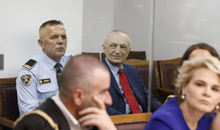
The trial on the merits for Ilir Meta and Monika Kryemadhi is postponed
2026-07-09 16:47:58

The match between England and Norway risks being postponed, this is the reason
2026-07-09 16:12:46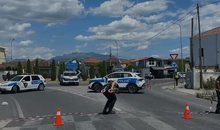
Murder in Shkodra/ Relatives: Peaceful family, no problems
2026-07-09 16:10:02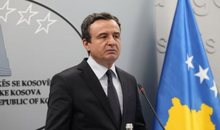
Kurti invites opposition leaders to a meeting to create new institutions
2026-07-09 15:43:05
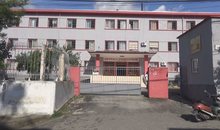

This is the 62-year-old man who killed his wife in Shkodra
2026-07-09 15:01:43

Domestic crime/ Wife killed with shotgun, perpetrator and victim identified
2026-07-09 14:05:18
Gunfire in Shkodra, one victim suspected
2026-07-09 13:49:41
Weapons cache discovered in Fier, Prosecution sends 38-year-old to trial
2026-07-09 13:35:48

Bota e muzikës në zi, ndahet nga jeta në moshën 75-vjeçare ikona Bonnie Tyler
2026-07-09 12:56:29
Monika Kryemadhi in the Criminal Court: The cell phone was seized illegally
2026-07-09 12:45:54

VALEN MP reacts after border detention: Albania is no one's property
2026-07-09 12:15:44
Albanian gang in Belgium sentenced for trafficking 7 tons of cocaine
2026-07-09 12:01:14
Justin Bieber, Shakira and Madonna to perform at 2026 World Cup final
2026-07-09 11:52:54
Euro falls, inflation rises and domestic production loses ground
2026-07-09 11:39:36
Trial at the GJKKO, Meta's new lawyer appears in the session
2026-07-09 11:29:47
Nighttime accident in Gramsh, man and woman injured
2026-07-09 11:20:25
Meta seeks 134 witnesses, GJKKO delivers decision today
2026-07-09 10:56:54


At the peak of the production season, vegetable prices 'fly'
2026-07-09 10:21:14
The African heat returns, the thermometer reaches 40 degrees this weekend
2026-07-09 10:08:08
Opinions from 'anonymous' authors target Flamingo protests
2026-07-09 10:07:15
MEP Waitz: The law on protected areas endangers Albania's path to the EU
2026-07-09 09:52:55
"Le Courrier des Balkans": Edi Rama and the megalomania of power
2026-07-09 09:40:26
The economics of concerts, the prime minister's imaginary 100 million euros
2026-07-09 09:28:19
Erdogan's strange gift to NATO leaders
2026-07-09 09:11:15


Foreign exchange, the rate at which foreign currencies are sold and bought
2026-07-09 08:30:41
“Uniteti i jashtëzakonshëm” i NATO-s dhe mesazhet kryesore nga samiti në Turqi
2026-07-09 08:11:17
Horoskopi, njihuni me parashikim e yjeve
2026-07-09 07:46:15
Alternime kthjellimesh e vranësirash, parashikimi i motit
2026-07-09 07:25:59
Posta e mëngjesit/ Me 2 rreshta: Çfarë pati rëndësi dje në Shqipëri
2026-07-09 07:02:12



Rama brings West in Tirana, using Eastern premises
2026-07-08 20:41:42


Fire on Kuzum Baba hill in Vlora, flames endanger homes and Tekke
2026-07-08 18:09:45

Shqipëria po plaket, qeveria pa plan
2026-07-08 15:57:26