 Flash News
VIDEO-scandal in Saranda/ Director of AMP Vlora and officials sexually harass tourists
"The New York Times" about Ye's concert: How Rama justifies the $4.5 million in funding
The suspected perpetrator of the murder in Laç is identified, he shot the 40-year-old 7 times near the palace
7 bullets on the doorstep, who is the 40-year-old with 4 surnames who was killed in Laç
Morning Post/ In 2 lines: What mattered yesterday in Albania
Alfred Lela
The capture of Nicolás Maduro by U.S. forces and his transfer to New York were greeted in Albania not as distant foreign news but as a moment of projected deliverance. What thrilled the public was not the Hollywood choreography of a Latin American strongman’s arrest, but the hope—barely disguised—that history might repeat itself closer to home.
The gossip circulating in Tirana is neither accidental nor naive. It reflects a growing perception that Prime Minister Edi Rama has fallen out of favor with the Trump administration, despite clumsy attempts to reach the White House through intermediaries in Central Europe and the Middle East. That estrangement rests on three solid pillars: the McGonigal affair, where Rama appears as more than a background character; his public mockery of a gaffe by President Donald Trump; and the Trump administration’s uncompromising war on drugs—an area where Rama’s government has chosen appeasement.
What is increasingly clear, even if never stated officially, is that Tirana now hosts a government structurally penetrated by narcotics interests. The designation by the US Administration of Luftar Hysa as the “accountant” of the Sinaloa cartel and the recently emerging file on Ergys Agasi—Rama’s confidant and informal liaison with criminal networks—are not isolated incidents but symptoms of systemic decay.
Washington’s posture toward Albania’s May 11 elections made this evident. The U.S. State Department congratulated “the Albanian people,” pointedly omitting the government. This was not diplomatic nuance but deliberate distance—a break from similar statements in Latin America, where governments, however flawed, were still named.
At the core lies what may be called the “Trump Doctrine”: a blunt, values-driven crusade against cartels, narco-states, and the political protection that sustains them. Statements by the U.S. Embassy, Chargé d’Affaires Nancy Van Horn, and successive American envoys since Trump’s return consistently hammer the same message—no tolerance for organized crime masquerading as governance.
Rama may not be Maduro. But in Washington’s eyes, he increasingly resembles a leader who rejects the rules-based order not only abroad but at home. The results are visible. Under Maduro, Venezuela lost eight million people. Under Rama, Albania has lost one-third of its population—a demographic catastrophe unmatched in Europe.
The Albanian public’s excitement, however desperate it may seem, is understandable. In captured states where elections are ritualized frauds and crime merges with power, hope becomes the penultimate refuge. The last is divine intervention.
Albanians did not cheer the arrest of Maduro. They cheered the possibility that someone, somewhere, still has the power to remove rulers who have abolished fear, law, and accountability. It is a bleak hope—but one born of exhaustion, not fantasy.
Latest news

Heatwave hits Germany, over 5,400 heat-related deaths
2026-07-10 10:45:33
Land in "foreign hands"
2026-07-10 10:26:15

Mbappe the hero of France, the "Roosters" knock out Morocco in the quarterfinals
2026-07-10 09:54:33
Durrës/ 40-year-old man stabs his wife
2026-07-10 09:48:03



How much could the amount of drug money in the Albanian economy be?!
2026-07-10 09:08:34
Government reduces funds for farmers, increases ADF by 75 million euros
2026-07-10 08:55:46
Horoscope, get to know the star forecast
2026-07-10 08:32:54

Morning Post/ In 2 lines: What mattered yesterday in Albania
2026-07-10 07:52:04
A person was shot dead in Kurbin, first details
2026-07-09 22:54:48


Will the Police also stop those who criticize Rama online?
2026-07-09 21:57:02


FIFA decision shocks England, Quansah ruled out for two matches
2026-07-09 20:51:00

Protest/Pedagogue: 4 million euros for Kanye West is "the next concession"
2026-07-09 19:45:53
French MEP joins protests in Albania: Support for the "Pink Flamingo Revolution"
2026-07-09 19:28:07


Has the lek strengthened or overvalued?
2026-07-09 17:58:05

The trial on the merits for Ilir Meta and Monika Kryemadhi is postponed
2026-07-09 16:47:58

The match between England and Norway risks being postponed, this is the reason
2026-07-09 16:12:46
Murder in Shkodra/ Relatives: Peaceful family, no problems
2026-07-09 16:10:02
Kurti invites opposition leaders to a meeting to create new institutions
2026-07-09 15:43:05


This is the 62-year-old man who killed his wife in Shkodra
2026-07-09 15:01:43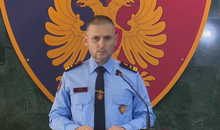

Domestic crime/ Wife killed with shotgun, perpetrator and victim identified
2026-07-09 14:05:18
Gunfire in Shkodra, one victim suspected
2026-07-09 13:49:41
Weapons cache discovered in Fier, Prosecution sends 38-year-old to trial
2026-07-09 13:35:48

Bota e muzikës në zi, ndahet nga jeta në moshën 75-vjeçare ikona Bonnie Tyler
2026-07-09 12:56:29
Monika Kryemadhi in the Criminal Court: The cell phone was seized illegally
2026-07-09 12:45:54
VALEN MP reacts after border detention: Albania is no one's property
2026-07-09 12:15:44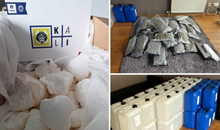
Albanian gang in Belgium sentenced for trafficking 7 tons of cocaine
2026-07-09 12:01:14
Justin Bieber, Shakira and Madonna to perform at 2026 World Cup final
2026-07-09 11:52:54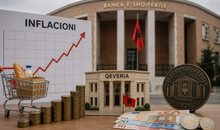
Euro falls, inflation rises and domestic production loses ground
2026-07-09 11:39:36
Trial at the GJKKO, Meta's new lawyer appears in the session
2026-07-09 11:29:47
Nighttime accident in Gramsh, man and woman injured
2026-07-09 11:20:25
Meta seeks 134 witnesses, GJKKO delivers decision today
2026-07-09 10:56:54

At the peak of the production season, vegetable prices 'fly'
2026-07-09 10:21:14
The African heat returns, the thermometer reaches 40 degrees this weekend
2026-07-09 10:08:08
Opinions from 'anonymous' authors target Flamingo protests
2026-07-09 10:07:15
MEP Waitz: The law on protected areas endangers Albania's path to the EU
2026-07-09 09:52:55
"Le Courrier des Balkans": Edi Rama and the megalomania of power
2026-07-09 09:40:26
The economics of concerts, the prime minister's imaginary 100 million euros
2026-07-09 09:28:19
Erdogan's strange gift to NATO leaders
2026-07-09 09:11:15

Foreign exchange, the rate at which foreign currencies are sold and bought
2026-07-09 08:30:41
“Uniteti i jashtëzakonshëm” i NATO-s dhe mesazhet kryesore nga samiti në Turqi
2026-07-09 08:11:17

Horoskopi, njihuni me parashikim e yjeve
2026-07-09 07:46:15
Alternime kthjellimesh e vranësirash, parashikimi i motit
2026-07-09 07:25:59
Posta e mëngjesit/ Me 2 rreshta: Çfarë pati rëndësi dje në Shqipëri
2026-07-09 07:02:12




Rama brings West in Tirana, using Eastern premises
2026-07-08 20:41:42


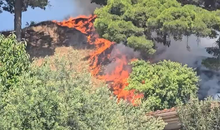
Fire on Kuzum Baba hill in Vlora, flames endanger homes and Tekke
2026-07-08 18:09:45


Shqipëria po plaket, qeveria pa plan
2026-07-08 15:57:26